|
In reality, all-optical computing is mostly a terrible idea: fundamentally, it cannot reach the integration density of electronics. It boils down to the elementary differences between Fermions (electrons, neutrons, etc.) and Bosons (photons, etc.). Their intrinsic behavior determines the interaction with matter, i.e. conductive/absorptive properties. As a result, optical wires (waveguides) have to be sized roughly at a wavelength (hundreds of nm), whereas electrical wires can be much smaller (<30nm and below). Suppose you want to build an amplifier: all the claimed speed benefits of this optical device would vanish in the path delay of the feedback loop. But just like graphene, carbon nanotubes, and other fads, you can publish fancy papers with it. |
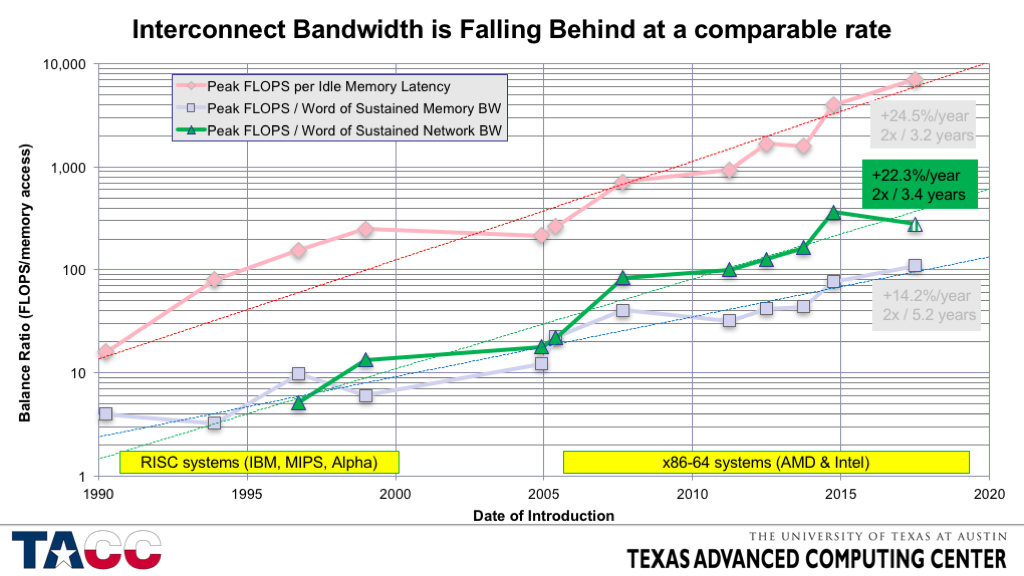
The keyword here is ‘all’. There are some things optical computing is bad at. However there are some things it is unparalleled at. For example, light can multiplex. It can have much lower energy losses. It can run at much higher frequencies. It is by far the best way to transmit information at extremely high data rates. Even within a chip, free space optical communication has massive theoretical potential.
Your comment would have been an excellent one without the last sentence.