Hacker News new | ask | show | jobs
by ericlavigne 1740 days ago
The most damaging hurricanes rely heavily on warm water over their last 2-3 days before landfall. Suppose we focused these bright cloud emitters on the water in front of a tropical storm, as a way to prevent it from strengthening into a hurricane?

Imagine the city of Miami deciding that eliminating local hurricanes would benefit its local real estate market. They invest in a fleet of hurricane blockers to be deployed off their coast during hurricane season to reduce the odds of getting hit by any hurricane, and almost guarantee no more cat 5 hurricanes. This project is worth it for Miami because it has a dramatic effect on home values and insurance costs... And the world also benefits from the cooling that Miami's hurricane shield produces.

5 comments

Thank you for this, it connects the dots between the economic value of carbon capture and its price. If it's worth it for a second tier city to spend $X billion on heat mitigation, then it's worth the similar amount to reduce the cause by the corresponding magnitude. There's some net-present-value math to be done, but that's for the CFOs.
I think you're overestimating Miami's budget... sure, there are a lot of wealthy people living there, but that doesn't mean the city itself is that wealthy.

BTW, if sea levels rise, property values in Miami are liable to go down the drain anyway, hurricanes or no hurricanes...

Probably not within the municipal budget of Miami, but Florida has a lot of clout in National Politics dues to the electoral college. Florida is the second largest net recipient of Federal tax dollars (after VA (proximity to DC)). If the cost of hurricane mitigation is less than the cost damages to coastal real estate in Florida then it would still be a good move on balance.
If sea levels rise there will be less available property which will ultimately cause property values to increase.
This assumes the demand for property stays the same. Is it likely, once it becomes obvious there's a chance your property will be destroyed by rising sea levels?
I used to think that obviously coastal real estate would plummet in value after a few high profile losses. After this pandemic I no longer think it will happen except very, very slowly. But the beaches will be gone for perhaps centuries, the sand will wash away / get covered in water. Sand does not form in a day. I have seen this in areas of Greece where there were earthquakes decades ago. Not even a hint of a beach remains.
Judging by these figures, looks like this will be a major issue very soon. https://sealevel.nasa.gov/understanding-sea-level/by-the-num...
How now somehow the hurricanes still happens, but they go in directions where those clouds are not, hitting parts of the world that can't afford them.
The Salter Sink is an interesting idea in hurricane prevention

http://large.stanford.edu/courses/2020/ph240/scott2/

protip: New York City gets hit by hurricanes more than Miami

but its just a tiny current consistently protecting Miami at the last minute, for now

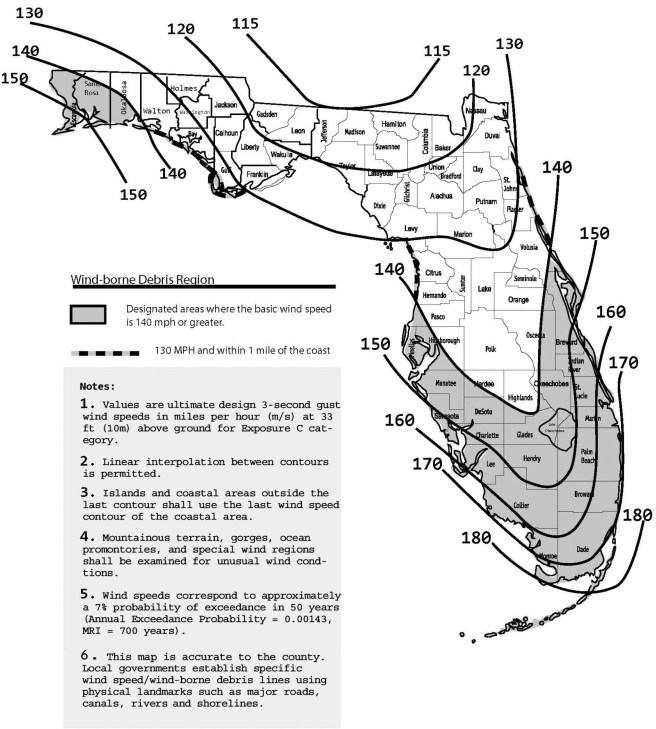
Cite? Prevailing building code design criteria[1][2] suggests otherwise.

[1] https://cdn-codes-pdf.iccsafe.org/bundles/document/new_docum... 2017 Florida Residential Code Fig 301.2(4) Ultimate Design Wind Speeds V_{ult}

[2] https://cdn-codes-pdf.iccsafe.org/bundles/document/new_docum... 2020 New York Residential Code Fig R301.2(5)B Regions Where Wind Design is Required

https://www.groundworkscompanies.com/about/articles/worst-us...

I don't know GP is measuring, but indeed the value at risk in NYC is higher than Miami. But the way they wrote it, they weren't saying that, and there are more properties at risk in Miami.

no, I was just wrong, your source shows Miami still gets hit more