Hacker News new | ask | show | jobs
by FatalLogic 1869 days ago
It's strange that the planes were supposed to be flying parallel and yet the damage to both planes in the photos suggests a collision at right angles

Remarkable that the Metroliner held together, despite that terrible damage, and they landed it safely

edit: interesting photo of the landing from the Reddit thread linked elsewhere https://imgur.com/gallery/yKPOWR0

2 comments

The Cirrus overshot the centerline of the runway it was supposed to land on. The common way for these situations is for the plane to be on an intercept angle towards the centerline. That's a max 30 degree angle for an instrument approach, but this was a visual approach so it could have been a sharper angle. All it takes to make this mistake in a Cirrus (and other G1000 avionics type small airplanes) is to forget 1 button on the autopilot mode. If it isn't set to capture the final approach track (either GPS or ILS) it will continue straight ahead which in this case means into the side of another airplane.

One thing that makes it more likely is that US air traffic control makes heavy use of visual approaches, and then it's allowed to point two aircraft at collision courses on the same altitude because they can see each other. The European way to do this is to have them intercept at different altitudes so if one overshoots they pass over/under. But it results in lower capacity per runway than the US system.

Indeed.

Something else I'd like to point out is that it might seem easy to 'blame the Cirrus' pilot or them call out for inattention, but doing so by itself isn't helpful. Aviation is so safe partly because it has managed to turn a culture of blame into a culture of continuous improvement and shared learning: I'd be very surprised if the airport's procedures came out of this unmodified, for example.

I’ve probably mentioned this book on HN a hundred times but “Black Box Thinking” discusses the aviation culture of avoiding blame and making sure a problem isn’t repeated and how other industries (like medicine) would benefit hugely from a similar approach. It’s really interesting.
I'm not sure how scalable this is in modern penny-pinching times. In the old days, airlines had to prove they were safe to attract business and this involved accepting that certain practices were harmful and they were therefore improved.

Once we got to the 1980s, we had so many airlines trying to survive that corners were cut, recommendations were not followed and various accidents were essentially negligent.

Now that lots of smaller airlines have been merged into larger ones, we now have Boeing type problems where the cost of manufacture, safety and development is so much higher than before, no-one wants to put a new plane through the whole approvals process, we just want to re-badge a 737 and get it into service.

Similar things happen on the railways in the UK where we have the RAIB to do a similar "no-blame" analysis of a crash/accident yet still time and time again, the same problems surface - lack of preparation, lack of training and lack of following procedures.

I agree and it’s somewhat addressed in the book - if you find the premise at all interesting you should definitely read it, even if you’re skeptical of the practicality of implementing the philosophy (for lack of a better word) it’s interesting and the examples are compelling.

Some of the examples are whole-cloth cultural changes of entire industries (usually commercial flight actually, IIRC), but some are small, simple, changes that can be implemented by one or two people and still have a dramatic impact. One of the smaller-scale examples from the book that really stuck out was the attitude & approach of a surgeon in an operating room. When surgeons approach mistakes from the perspective of “okay, this happened, let’s focus on how we fix it” mistakes are reported to the surgeon quickly, the surgeon gets accurate information quickly, and can respond appropriately. Result: more mistakes are reported but the surgeon has fewer complications and better outcomes.

When surgeons approach mistakes by getting angry or assigning blame to the nurse who did X or the resident who did Y those surgeons have fewer (reported) mistakes but worse outcomes. Why? People don’t fess up because they fear the consequences. And when a mistake is identified, people don’t give accurate and complete information because their primary concern is KYA rather than fixing the problem at hand.

Would also help computer "science" as well :p
>> I'd be very surprised if the airport's procedures came out of this unmodified, for example.

I'm curious. The airport is at about 5900ft and they were at 6400. If that's AGL for them that seems like a long and high approach. If not, then they were going to do a 3 mile straight in at 500 feet AGL? Either interpretation doesn't fit my (limited, student) experience.

KAPA is indeed 5900 MSL, and those heights are also all MSL.

Looking at the FAA's charts, https://aeronav.faa.gov/d-tpp/2104/05715R17L.PDF, this combination of heights and distances isn't totally crazy -- I state without proof (and wait to be corrected!) that the approach is modified because it is a relatively high altitude airport and there may be quite steeply changing terrain underneath. I've never flown there (not even on X-plane) and I'm a low-hours UK person.

I haven't done the trig and meterological lookup to work out what their AGL altitude was on that day, but at the very least it's not crazy-wrong from the published chart...

If the 1 button on autopilot mode is the red autopilot disconnect, “time to hand-fly” button, I agree with you.

This turn to final (with the unusual additional warning to “do not fly through final”) is a visual maneuver and I’d expect most every pilot to be hand-flying at that point. (My autopilot and navigator is capable to make that intercept, but it’s way more tedious and distracting to program it than to just fly it.)

In the airline world it would at the very least be encouraged and in many cases mandatory to have the underlying approach programmed for this anyway. Even more so if told not to fly through final you would have the localizer up and monitor it.

In a Cirrus with what is probably a GFC 700 with flight director capabilities I would expect any competent instrument rated pilot to have the FD on and approach mode armed (the 1 missing button I meant) exactly to avoid this mistake.

Great to hand fly, but in a capable airplane just plain stupid not to use all the tools. And even mandatory on the professional side of things in many cases.

NB: There is no instrument approach to 17R @ KAPA.

I agree I'd have an extended centerline up (it's up by default if I zoom the MFD in close enough in my lesser-equipped A36), but this is a fully visual maneuver.

Almost no one is going to define a user waypoint near the touchdown zone for 17R and pull an OBS line off that just so they can use the FD/AP to make an entirely routine turn to final.

That makes things a lot harder for the Cirrus pilot. Easy to get the lineup slightly wrong with for example some wind correction in from far away. Crazy that ATC had them do this at the same altitude as conflicting traffic with no underlying approach as a safety net. You can ask someone not to go through final, but that's very easy to miss judge from a couple of miles away.
Slightly harder? I'd agree with that. A lot harder? 20 hour student pilots make visual turns from base to final from 3 miles out every day. This is not Top Gun material.
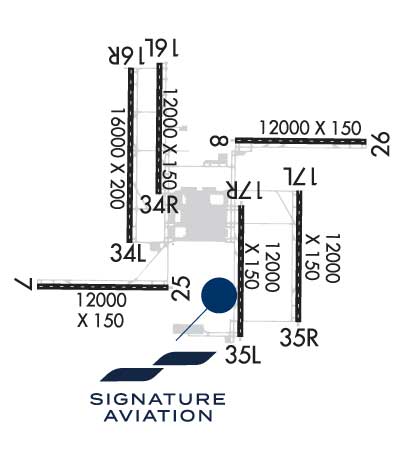
Looking at the youtube video of the radar with the radio sound that someone posted below, the Cirrus is cleared to runway 17R but he turns to runway 17L. There are 3 possibilities : 1- he mistakes one runway for the other visually, 2- he wrongly thinks he is cleared for the 17L runway 3- or he makes a too wide turn going for the 17R, intruding the 17L area.

The cirrus is the one that makes the mistake.

The 17 runways are quite close laterally (700’) , it may be either way a bad maneuver (overshooting) or chosing the wrong runway.

https://es.flightaware.com/resources/airport/APA/APD/AIRPORT...

The metro was not expecting another traffic in approach for his runway (I understand that they were in different frequencies with different controllers).

During the approach the upper-right side relative angle position in the window of the metro, makes the cirrus hard to spot. I guess he didn’t see the cirrus at all or just barely before the crash.

The cirrus is looking at the runway to his right and the other traffic probably the whole time, the metro is in front of him, so he doesn’t see the Metro till he is on top of him.

Usually with parallel runways, traffics are kept at different altitudes till they are aligned with their runways. This way if they make a mistake, they are separated by 1000’ vertically with the airplane flying parallel.

In this case the cirrus was cleared to visual approach and informed of the cessna he had to follow first. Once he says he has the cessna in sight, he is cleared to visual approach following the cessna. In the same comunication he is informed of the metro flying to the other runway and he replies traffic in sight again.

My guess is that he either has the metro in sight at the beginning and then he forgets about it during the maneuver, or he gives traffic in sight two times.

Thinking that the second part of the message is for the same aircraft (the cessna) he doesn’t even recognize what the controller is telling him about the metro. This is possible if he is too busy flying the maneuver and not paying proper attention to the radio, he hears “cleared for approach” and “traffic” but he mentally don’t really process the information the controller is giving him. A kind of sensory overload.

In airliners we have mandatory TCAS (traffic collision avoidance system) installed that shows you the near traffics in the screen and give you coordinated (between the traffics) automatic avoidance guidance and alarms( one traffic climbs and the other descends or keeps altitude).

In busy airports TCAS maneuver happen relatively often (a handfull of times a year) but nowadays is much harder to have a collision or a close call.

Also when two pilots are in the cockpit (like airliners) it’s easier that one is concentrated in flying and the other in the communications. It’s very common to correct and be corrected all the time during the flight.

It will be interesting to read the official report.

Edit: Kudos to the Metro pilot who was super calmed in the radio while declaring emergency and landing the plane. That is really difficult.

Edit 2: correcting the airport , KAPA (I talked about KDEN initially which has the same runways but with a bigger separation). This does make a difference regarding the mistake.

  Thank you Denvercoder9 for the heads up.
> I understand that they were in different frequencies with different controllers.

If that is so, then it seems from the recording that the Metroliner pilot was only informed about the Cessna ahead of him and on approach to 17R, not of the Cirrus.

The Cirrus pilot is told about the Metroliner in an exchange that goes thus:

TWR: "Cirrus 6DJ, traffic you're following just turned right base there ahead and to your right at 6600', Cessna."

6DJ: "I have traffic in sight, 6DJ."

TWR: "Cirrus 6DJ, follow them, runway 17R, cleared to land. Additional traffic north shore, it's a Metroliner for the parallel runway."

6DJ: "Traffic in sight, cleared to land 17R, 6DJ."

Now, does that second "traffic in sight" refer to both aircraft, or only to the Cessna he had just been cleared to follow? It would be unambiguous if he had replied "two in sight", but if, for whatever reason, the mention of the Metroliner (in the same call as the clearance was given) had not registered, the Cirrus pilot would not have been aware that more than one other aircraft needed his attention. And if the Metroliner communication was being conducted on a different frequency, neither pilot would have had any other opportunity to become aware of the other airplane, except by seeing it - and, in addition to the Metroliner pilot presumably being in the left seat, the Cirrus was banked right, turning final, and one might guess its pilot was probably looking at the runways and/or the Cessna ahead.

Putting this together, I suspect the Cirrus pilot never registered the presence of the Metroliner until the collision - and I doubt the Metroliner pilot saw the Cirrus even after the collision, given that he thought he had an engine failure (he might have seen it earlier, when it was heading north on downwind, and assumed it was behind him.)

This does not alter the fact that the Cirrus pilot overshot the 17R approach while turning onto final, and it is this which caused the collision. One other fact, pointed out by several commentators: the Cirrus was travelling at about 160 kts at the time, so any delay in turning final results in being out of position more quickly than in your average small, single-engined airplane.

160 kts (around 140 indicated) does not seem like a remotely appropriate airspeed to join a pattern full of Cessnas in closed traffic.

SR22 Vs0 is 59 knots (call it 60 to make the math easier). 1.3 x Vs0 is a reasonable "over the fence" speed, so 78 knots (call it 80) indicated would be good on short final, maybe 90 on base-to-final. (Instead, they were descending and thus accelerating slightly and hit 169 knots on the base leg.)

Bombing into the pattern over 50 knots faster than appropriate (70 knots faster than the traffic you're following and 40 knots faster than the much larger and on-profile Metro on the parallel) might be contributing, but certainly suggests to me that the Cirrus crew was behind the airplane.

https://globe.adsbexchange.com/?icao=a4eabe,a2cee7,a90ffa&la...

“ Putting this together, I suspect the Cirrus pilot never registered the presence of the Metroliner until the collision - and I doubt the Metroliner pilot saw the Cirrus even after the collision, given that he thought he had an engine failure”

This is what I think aswell. The overshoot may be either way a miss identification of the runway, or just a poorly executed turn to final of the 17R. The investigation is going to be interesting.

> The 17 runways are quite separated laterally so it’s more probable that he was wrongly going for the 17L thinking he was aiming for the correct runway.

> https://flttrack.fltplan.com/AirportDiagrams/KDENapt.jpg

This is the diagram for a different airport (Denver International, KDEN). The accident happened at Centennial Airport (KAPA), where the two runways are only separated by about 700 feet.

17R is shorter and narrower than 17L. If the pilot mistook 17R for a taxiway, it would have been a mirror-image situation to the relatively recent one at SFO, were an airliner was making its approach to a taxiway.
Thank you! I should have checked. Then he may have overshoot going for the correct runway. Thankfully both pilots will be able to testify.