| Looking at the youtube video of the radar with the radio sound that someone posted below, the Cirrus is cleared to runway 17R but he turns to runway 17L.
There are 3 possibilities :
1- he mistakes one runway for the other visually,
2- he wrongly thinks he is cleared for the 17L runway
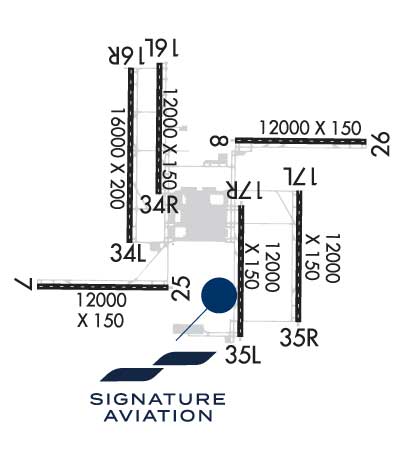
3- or he makes a too wide turn going for the 17R, intruding the 17L area. The cirrus is the one that makes the mistake. The 17 runways are quite close laterally (700’) , it may be either way a bad maneuver (overshooting) or chosing the wrong runway. https://es.flightaware.com/resources/airport/APA/APD/AIRPORT... The metro was not expecting another traffic in approach for his runway (I understand that they were in different frequencies with different controllers). During the approach the upper-right side relative angle position in the window of the metro, makes the cirrus hard to spot. I guess he didn’t see the cirrus at all or just barely before the crash. The cirrus is looking at the runway to his right and the other traffic probably the whole time, the metro is in front of him, so he doesn’t see the Metro till he is on top of him. Usually with parallel runways, traffics are kept at different altitudes till they are aligned with their runways. This way if they make a mistake, they are separated by 1000’ vertically with the airplane flying parallel. In this case the cirrus was cleared to visual approach and informed of the cessna he had to follow first. Once he says he has the cessna in sight, he is cleared to visual approach following the cessna. In the same comunication he is informed of the metro flying to the other runway and he replies traffic in sight again. My guess is that he either has the metro in sight at the beginning and then he forgets about it during the maneuver, or he gives traffic in sight two times. Thinking that the second part of the message is for the same aircraft (the cessna) he doesn’t even recognize what the controller is telling him about the metro. This is possible if he is too busy flying the maneuver and not paying proper attention to the radio, he hears
“cleared for approach” and “traffic” but he mentally don’t really process the information the controller is giving him. A kind of sensory overload. In airliners we have mandatory TCAS (traffic collision avoidance system) installed that shows you the near traffics in the screen and give you coordinated (between the traffics) automatic avoidance guidance and alarms( one traffic climbs and the other descends or keeps altitude). In busy airports TCAS maneuver happen relatively often (a handfull of times a year) but nowadays is much harder to have a collision or a close call. Also when two pilots are in the cockpit (like airliners) it’s easier that one is concentrated in flying and the other in the communications. It’s very common to correct and be corrected all the time during the flight. It will be interesting to read the official report. Edit: Kudos to the Metro pilot who was super calmed in the radio while declaring emergency and landing the plane. That is really difficult. Edit 2: correcting the airport , KAPA (I talked about KDEN initially which has the same runways but with a bigger separation). This does make a difference regarding the mistake. Thank you Denvercoder9 for the heads up.
|
If that is so, then it seems from the recording that the Metroliner pilot was only informed about the Cessna ahead of him and on approach to 17R, not of the Cirrus.
The Cirrus pilot is told about the Metroliner in an exchange that goes thus:
TWR: "Cirrus 6DJ, traffic you're following just turned right base there ahead and to your right at 6600', Cessna."
6DJ: "I have traffic in sight, 6DJ."
TWR: "Cirrus 6DJ, follow them, runway 17R, cleared to land. Additional traffic north shore, it's a Metroliner for the parallel runway."
6DJ: "Traffic in sight, cleared to land 17R, 6DJ."
Now, does that second "traffic in sight" refer to both aircraft, or only to the Cessna he had just been cleared to follow? It would be unambiguous if he had replied "two in sight", but if, for whatever reason, the mention of the Metroliner (in the same call as the clearance was given) had not registered, the Cirrus pilot would not have been aware that more than one other aircraft needed his attention. And if the Metroliner communication was being conducted on a different frequency, neither pilot would have had any other opportunity to become aware of the other airplane, except by seeing it - and, in addition to the Metroliner pilot presumably being in the left seat, the Cirrus was banked right, turning final, and one might guess its pilot was probably looking at the runways and/or the Cessna ahead.
Putting this together, I suspect the Cirrus pilot never registered the presence of the Metroliner until the collision - and I doubt the Metroliner pilot saw the Cirrus even after the collision, given that he thought he had an engine failure (he might have seen it earlier, when it was heading north on downwind, and assumed it was behind him.)
This does not alter the fact that the Cirrus pilot overshot the 17R approach while turning onto final, and it is this which caused the collision. One other fact, pointed out by several commentators: the Cirrus was travelling at about 160 kts at the time, so any delay in turning final results in being out of position more quickly than in your average small, single-engined airplane.