|
|
|
|
|
|
by OrbitRock
1895 days ago
|
|
|
I disagree on the first note. The human footprint already covers nearly the entirety of the planet. Conservation of systems that are within or directly adjacent to that footprint is actually very important. Extraordinary amounts of biodiversity are contained in these areas and we need to study how to reconcile our land use with the needs of that biodiversity. We shouldn’t ignore it out of a fear that people will get the wrong idea. |
|
|

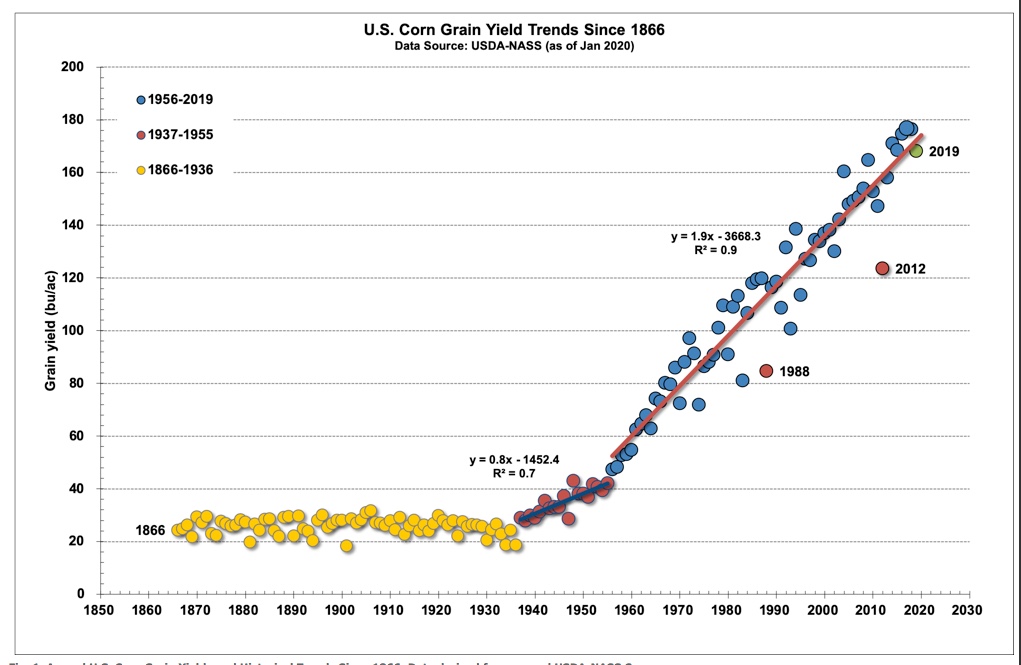
Grow food in vats, and the vast majority of the planet can just be like National Parks.
But I do think we can think of smart ways to ensure biodiversity under, say, solar arrays. Solar arrays are (or can be made to be) biologically inert. If they are high enough, they can act as a sort of technological canopy over a biodiverse forest floor. And that would only be a small portion of the planet (the rest would be National Parks). We’d use solar electricity to produce food super efficiently from vats. About 2000-4000W nameplate solar per person (at least in the 30N to 30S latitude that most people live in) should be enough to provide the macronutrients for the average person. At high efficiency, that’s about 10 square meters per person at noon. That’s just 100,000 square kilometers to feed 10 billion people, compared to over 50,000,000 square kilometers used for agriculture today (which is half of the habitable land surface of ~100 million km^2). It can be over the ocean, too. That’s just 0.02% of the Earth’s surface.