|
|
|
|
|
|
by Robotbeat
1893 days ago
|
|
|
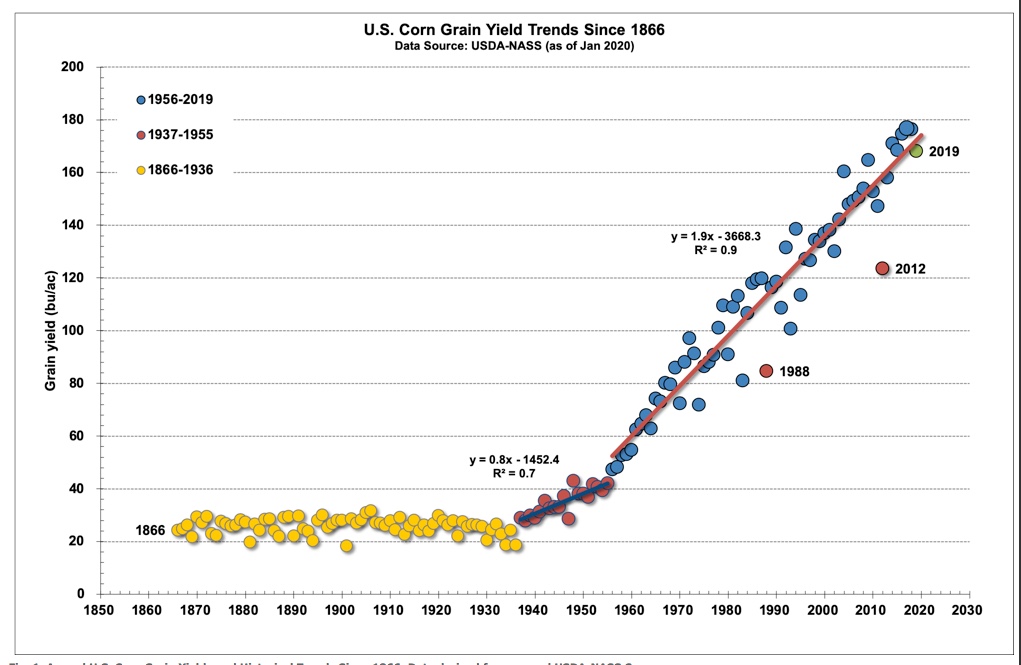
That “cow pasture/range” chunk is largely extremely low productivity scrub land owned by the federal government and leased basically for free by cattle folk. We could convert all of it to national parks without much more than a blip in food calories produced in the US. As far as actually farmed land, productivity has increased by an order of magnitude, MUCH faster than population, so we actually farm less land than in the 40s in spite of having a much larger population that eats more. We burn that corn in our cars, for goodness sake. The land area use for ethanol corn in our country is more than enough area to convert the entire nation’s electric production to solar. Corn yields: https://extension.entm.purdue.edu/newsletters/pestandcrop/wp... |
|
|
Agreed!
I would emphasize restoration and protection in almost every case.
Just that there’s also ways we can work towards conservation on land that is being utilized too.
You talked about farms but there’s also: managed forests, anywhere anything is grazing, private lands, fisheries, artificial reefs and kelp forests, any area we already use which we can also stack on an incidental conservation benefit ontop of (as you mentioned renewable energy infrastructure will be a big one, the book I mention is full of other surprising examples such as military bases), things like wildlife underpasses, suburban lawns, and so on. This adds up to a lot of land.
I hope we protect half of the land and ocean like Edward O. Wilson and other major biologists recommend, but also I think it’s smart to look at everything and not just protected areas.