I'm not sure what country you're referring to. In most jurisdictions I'm familiar with, if you exchange cash currencies and buy something (classic example; a cup of coffee), you are not expected to enumerate that transaction in your tax statement and calculate acquisition cost and liquidation P&L for each individual transactions.
For bitcoin, you do (again, highly depending on country).
This is the difference between classifying it as an asset or a currency. You may still be liable for taxes on your forex trading, but it's not the same kind of capital gains as for other asset classes.
In every place with an income tax, there are rules for taxing income. If you made money, don't expect to think you're so clever that the IRS or equivalent will say "Well, you got us! Enjoy your income without paying taxes."
I'll give you an example that pre-dates bitcoin:
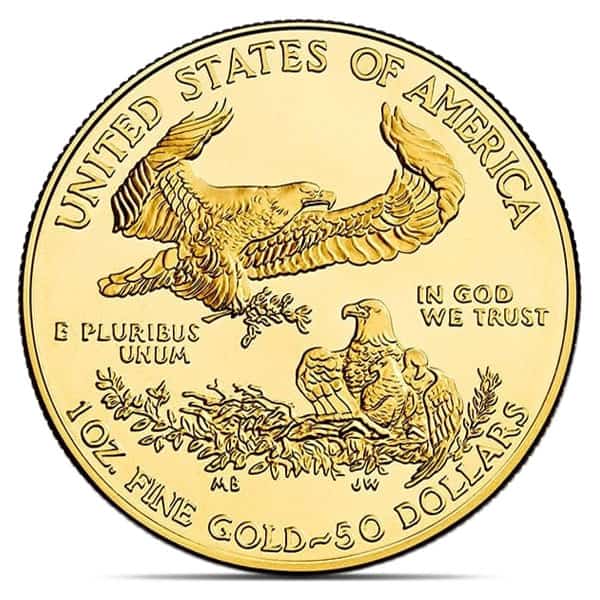
There are U.S. Gold coins that have denominations, for example $50
People have tried to pay others with these coins arguing that the face value is $50, so the income tax should be $50, and not the $1500 or whatever an ounce of gold was worth at the time. Guess what? They didn't get away with it. See:
The comment you’re replying to is not implying that profits should be exempt from taxes, or have them lowered.
It’s the mechanisms around capital gains tax (which is a particular kind of tax) compared to the requirements around profit made from appreciation of, say, fiat currencies. In fact, it’s completely different from income tax that you’re talking about.
It’s not so much about having to pay taxes but on what amounts and overhead in how reporting is made.
The hampering of growth (in terms of e.g. retail payments) and adoption is not due to the monetary cost of taxation, but on the mechanisms of them. Hell, you could keep or even increase the tax rate, but make it liable even just by holding cryptocurrency and having it appreciate (as opposed to “at liquidation”) and it would have the complete opposite effect.
Now if only more governments would accept taxes paid in bitcoin (:
Yeah, the problem is that you cannot spend your Bitcoin directly. If you could use your dollars to buy Bitcoin and then proceed to buy a pizza you wouldn't have to pay taxes.
In practice the only ones who are actively using their Bitcoin for consumer spending use a credit card where they deposit their cryptocurrency. Since the credit card company is automatically converting your cryptocurrency back to dollars you have to pay taxes on the gains.
Actually, no, that’s exactly the problem. Directly spending your bitcoin to buy a pizza would trigger a taxable event for the buyer. Enforcement of this might be weak so far, but technically that’s the case.