Hacker News new | ask | show | jobs
by thomc 2027 days ago
My wife gave me my Christmas present (a telescope) a little early this year so that I could practice and hopefully be ready for this event. I've had a few sessions already and it feels really special out in the cold night looking up at Mars and other planets whiz by. It does need some preparation though. I've got my site on a hill selected with no obstructions, the telescope has been collimated (calibrated), red dot finder is alligned, I've learnt how to setup the equatorial mount and polar align it, and I have my blue filter for clearer visuals of Saturn and Jupiter. Meanwhile I'm out in the back garden checking for clear skies any chance I get.

One thing to know though, you won't see the planets as they often appear in pictures, those are usually made from hundreds of long exposure shots stacked and processed to bring out the detail. You pretty much just see small bright spots in the sky with a little surface detail if your optics are good enough. There is something about seeing far away planets with your own eyes however which feels magic and photos can't compare to the experience.

4 comments

Sounds like you've made a good start, if you're a first time scope owner. Even a modest telescope can provide you views of the solar system as well as deep sky objects that can take your breath away. If I could, a couple suggestions that can enhance your enjoyment of your scope as you become familiar with it and the sky.

First, keep a log of each viewing session. Note time and date, location, sky conditions, what you viewed. If you're so inclined, make sketches of what you see. Its nice, later on, to have a record of what you've look at and how it may have changed when you go back to it.

Second, find a local astronomy club you feel comfortable with. Most people will go out of their way to help a newbie. Attend any star parties that they may hold. They're great ways to see how others work and to see what other types of scopes can do. You will also learn how to better use what you have.

In any case, enjoy your scope. They can be great fun and they really bring home how wonderous the skies are.

Thanks for the suggestions, I will definitely take them on board!
Whilst on holiday in Tonga, I met an amateur astronomer with a decent telescope. I think he said it was "20cm". He was showing anyone interested Jupiter and Saturn, which I remember appearing about outstretched-finger-width.

Later, we somehow attached my camera to the telescope -- it must have just screwed on to the front, as you would attach a filter, since it's not a DSLR with a removable lens. It does have an excessively long zoom (600mm, it's a Sony RX10 Mk IV).

It took some fiddling to get the two devices to work together. We had to realign the telescope by finding stars on the camera's screen, work out where to manually focus the camera, and what settings (noise reduction etc, as well as ISO, aperture, shutter speed and so on) to use.

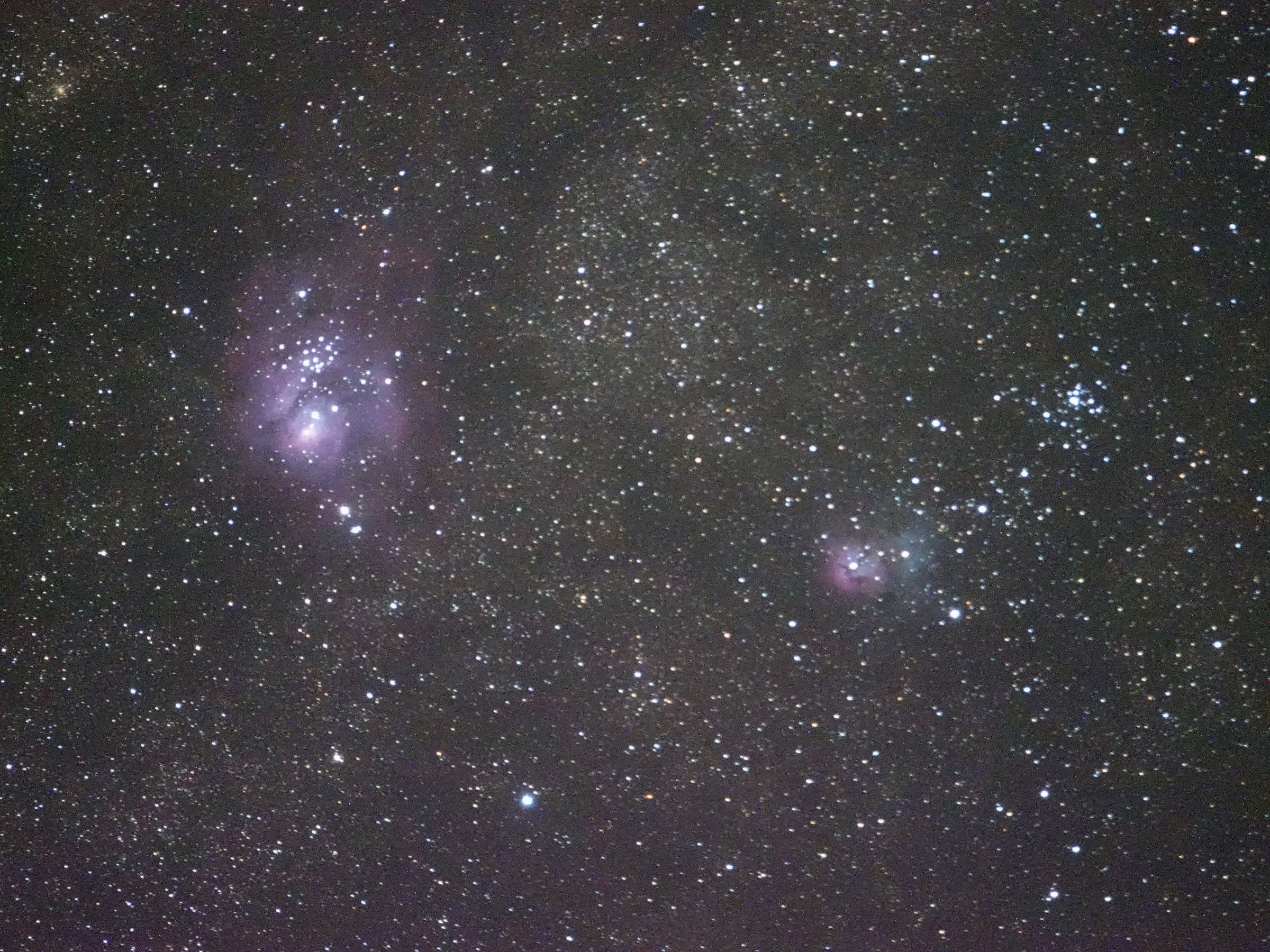
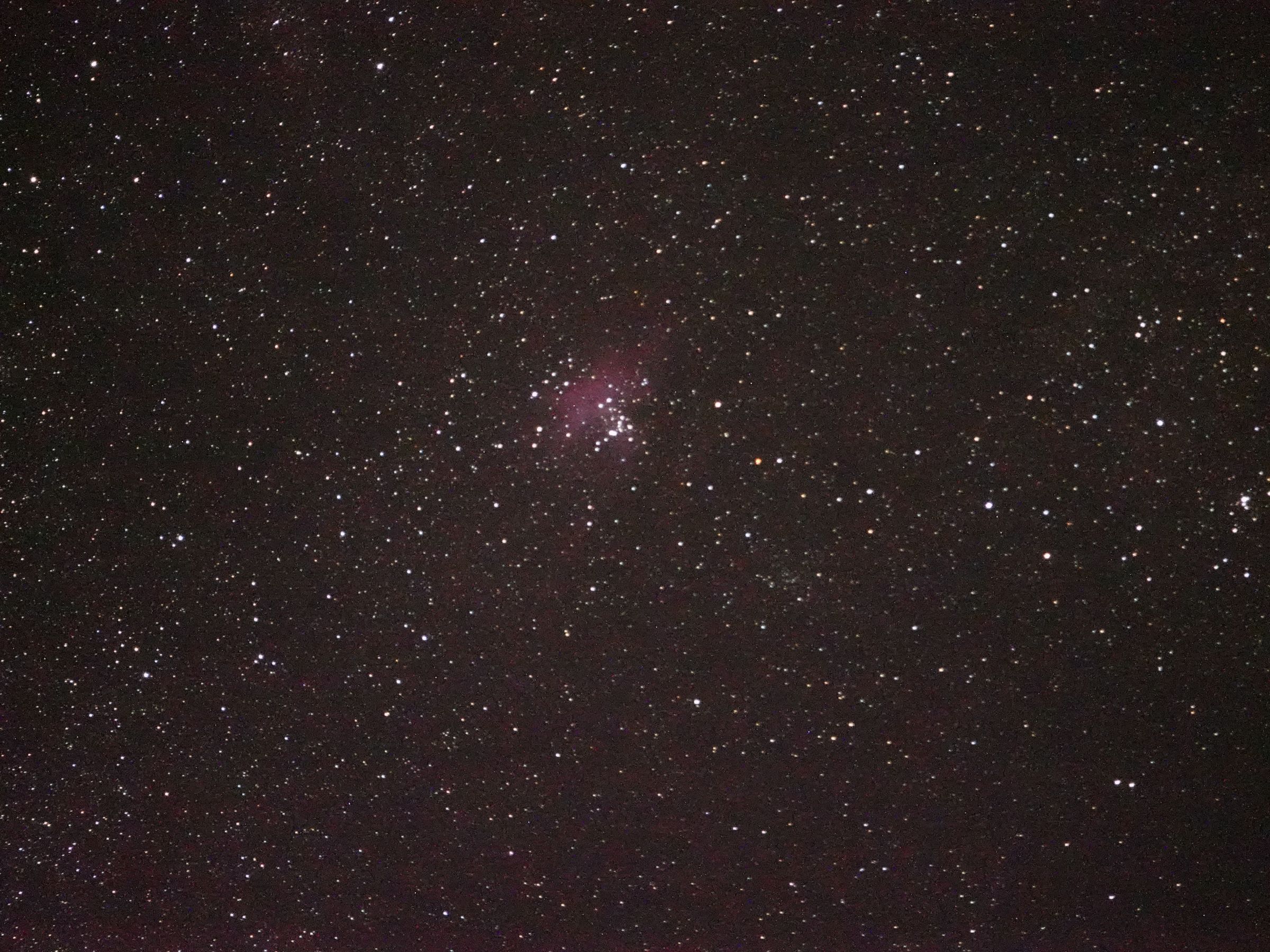
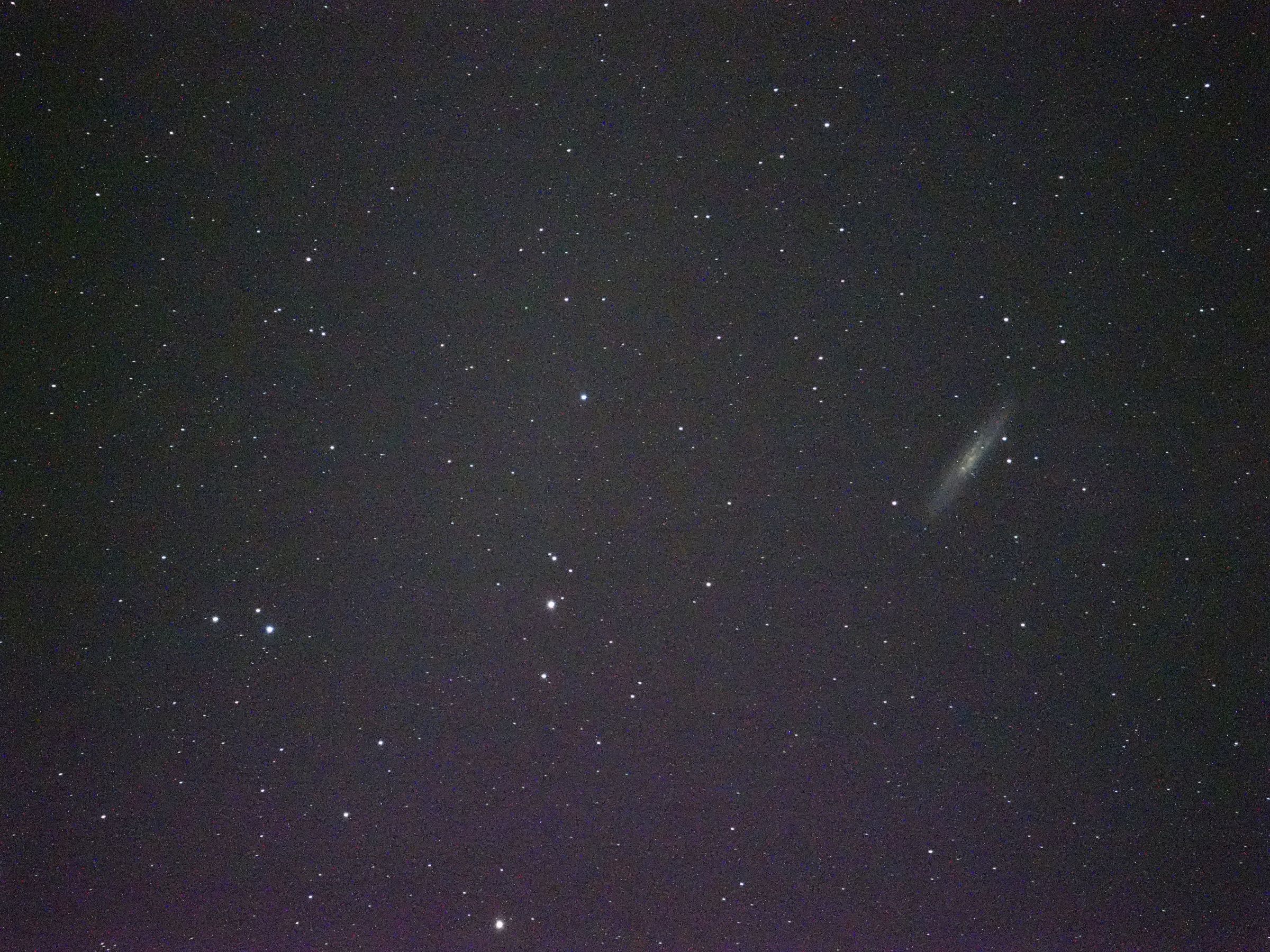
Combined, we were able to take these photographs of some nebulae[2-3] and a galaxy[4]. I don't remember, but I think the point was that these were not visible just by looking through the telescope.

It's a reasonably expensive camera, but gave noticeably better results than the astronomer's own Canon EOS 760D. If you don't have something similar, try borrowing a friend who likes wildlife / bird / sport photography or similar.

[2] https://matt.blissett.me.uk/photos/2018/2018-09-04-1/13.jpg?...

[3] https://matt.blissett.me.uk/photos/2018/2018-09-04-1/12.jpg?...

[4] https://matt.blissett.me.uk/photos/2018/2018-09-04-1/17.jpg?...

(All are 30s exposures at f4 with ISO 8000. Remove the ?w=2400&h=1800 if you want to see the original size. If someone recognizes the nebulae and galaxies, please let me know what they are -- I lost the notes I took at the time.)

Your third upload failed to analyze, so i tried it again[0], this time it succeeded. Nice.

[0] http://nova.astrometry.net/user_images/4205995#annotated

Thanks so much for showing me this service, it's great!
Very nice pictures. I replaced my old DSLR with a mirrorless Canon M50. I did get a T-Ring adapter to fit it to the scope in the future so I will definitely be giving that a go. As you say, some objects can't really be seen with a standard telescope whereas a camera with long exposure can soak in the light. In fact you don't even need a telescope for many of them, a 200mm quality lens will do fine from the pictures I've seen.
Very nice pics! One can also start out without spending much money by using a holder/adapter with a smartphone that has a decent camera. Night mode or astro mode is the minimum to make it useful. I think stacking can be done using video and post-editing if the camera app doesn't allow long exposures.
I got to play around with a very simple telescope since being a child, which is still around in my parents house - never enough to see much of the planets, so this was always a bit disapointing. But what was and is always stunning, are the details of the moon ... (you need a filter, though). You can see the shades of the crates moving for example.

Oh - and sunspots. Meaning you turn your telescope around and project the picture of the sun.

But one day soon, I am going to order a real one. (But I also always wanted to have my own observatory. And I guess, if I have that, .. I can't wait for my own space based telescope. Ah yes, the greed ..)

Anyway, enjoy what you have :)

I’ve lived almost this exact experience during winter after borrowing a telescope from a close relative.

I could make out the rings of Saturn from my backyard and it was a special type of magic, an unforgettable experience the first time it happened.

I bought myself my first scope this summer and have been watching both Saturn, juipter and now mars on occasion as they've precessed across the evening sky. Same feelings for me, it's magical to observe first hand with analogue optics and eyeball these planets :)