| Whilst on holiday in Tonga, I met an amateur astronomer with a decent telescope. I think he said it was "20cm". He was showing anyone interested Jupiter and Saturn, which I remember appearing about outstretched-finger-width. Later, we somehow attached my camera to the telescope -- it must have just screwed on to the front, as you would attach a filter, since it's not a DSLR with a removable lens. It does have an excessively long zoom (600mm, it's a Sony RX10 Mk IV). It took some fiddling to get the two devices to work together. We had to realign the telescope by finding stars on the camera's screen, work out where to manually focus the camera, and what settings (noise reduction etc, as well as ISO, aperture, shutter speed and so on) to use. Combined, we were able to take these photographs of some nebulae[2-3] and a galaxy[4]. I don't remember, but I think the point was that these were not visible just by looking through the telescope. It's a reasonably expensive camera, but gave noticeably better results than the astronomer's own Canon EOS 760D. If you don't have something similar, try borrowing a friend who likes wildlife / bird / sport photography or similar. [2] https://matt.blissett.me.uk/photos/2018/2018-09-04-1/13.jpg?... [3] https://matt.blissett.me.uk/photos/2018/2018-09-04-1/12.jpg?... [4] https://matt.blissett.me.uk/photos/2018/2018-09-04-1/17.jpg?... (All are 30s exposures at f4 with ISO 8000. Remove the ?w=2400&h=1800 if you want to see the original size. If someone recognizes the nebulae and galaxies, please let me know what they are -- I lost the notes I took at the time.) |
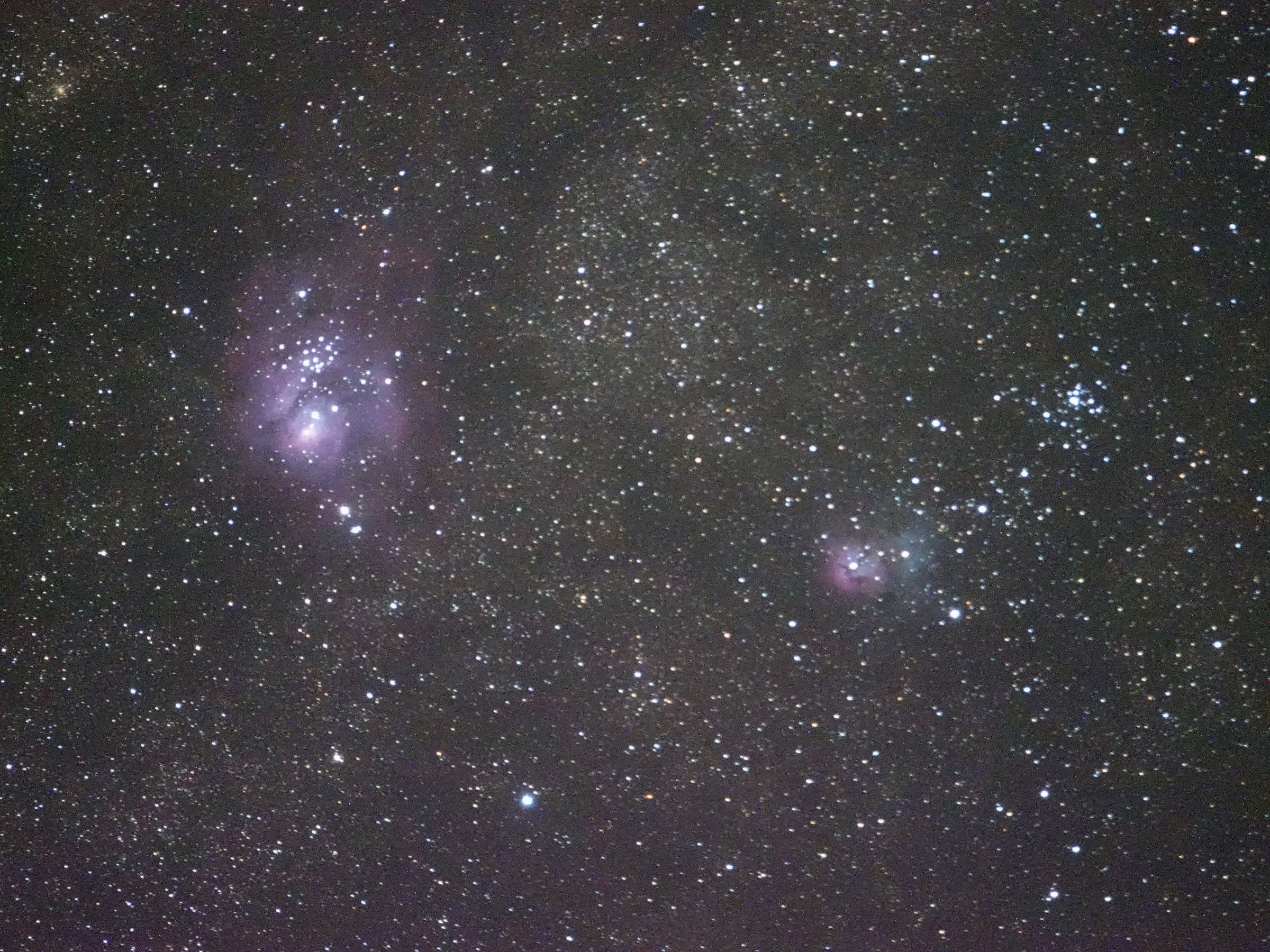
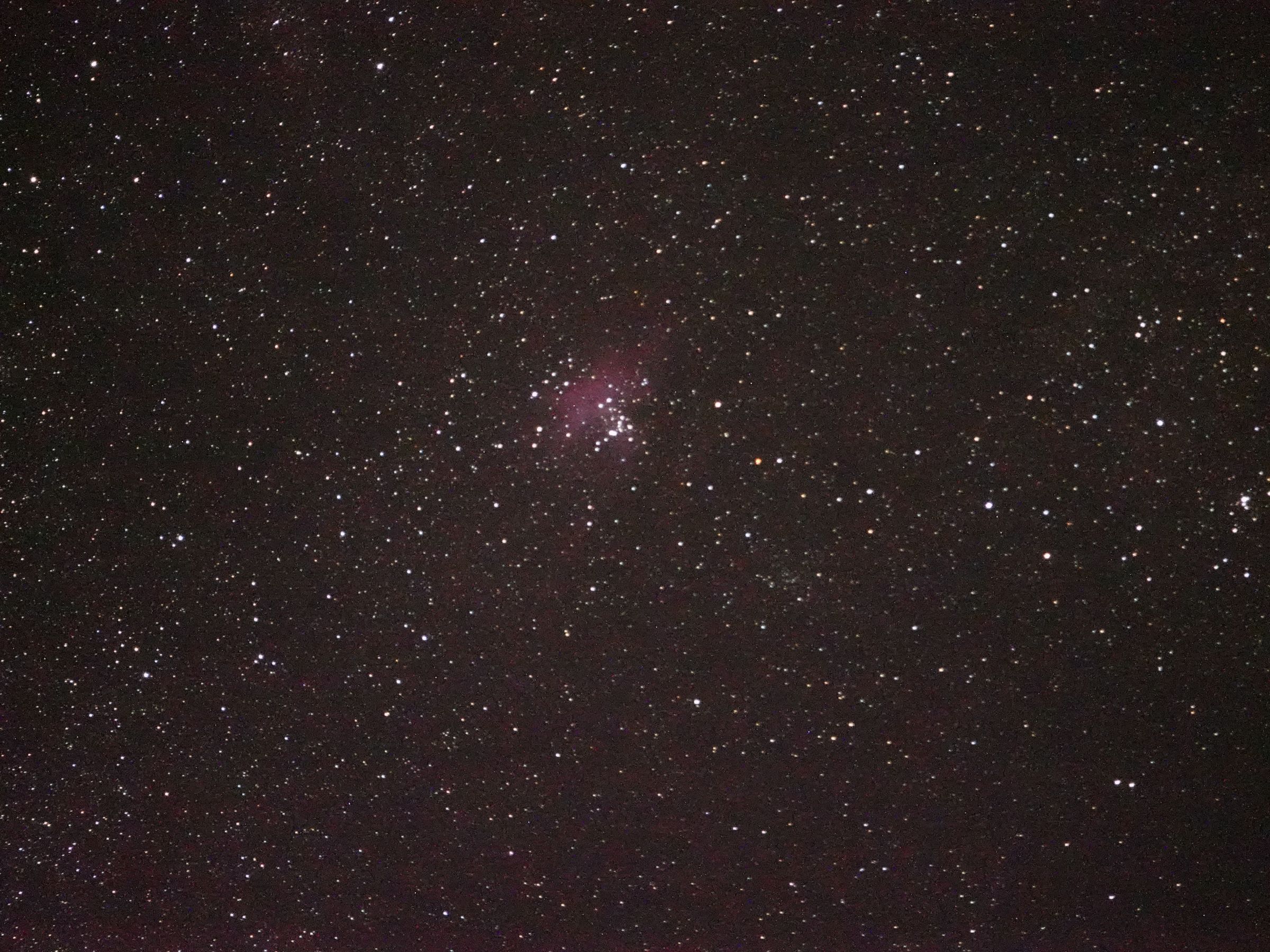
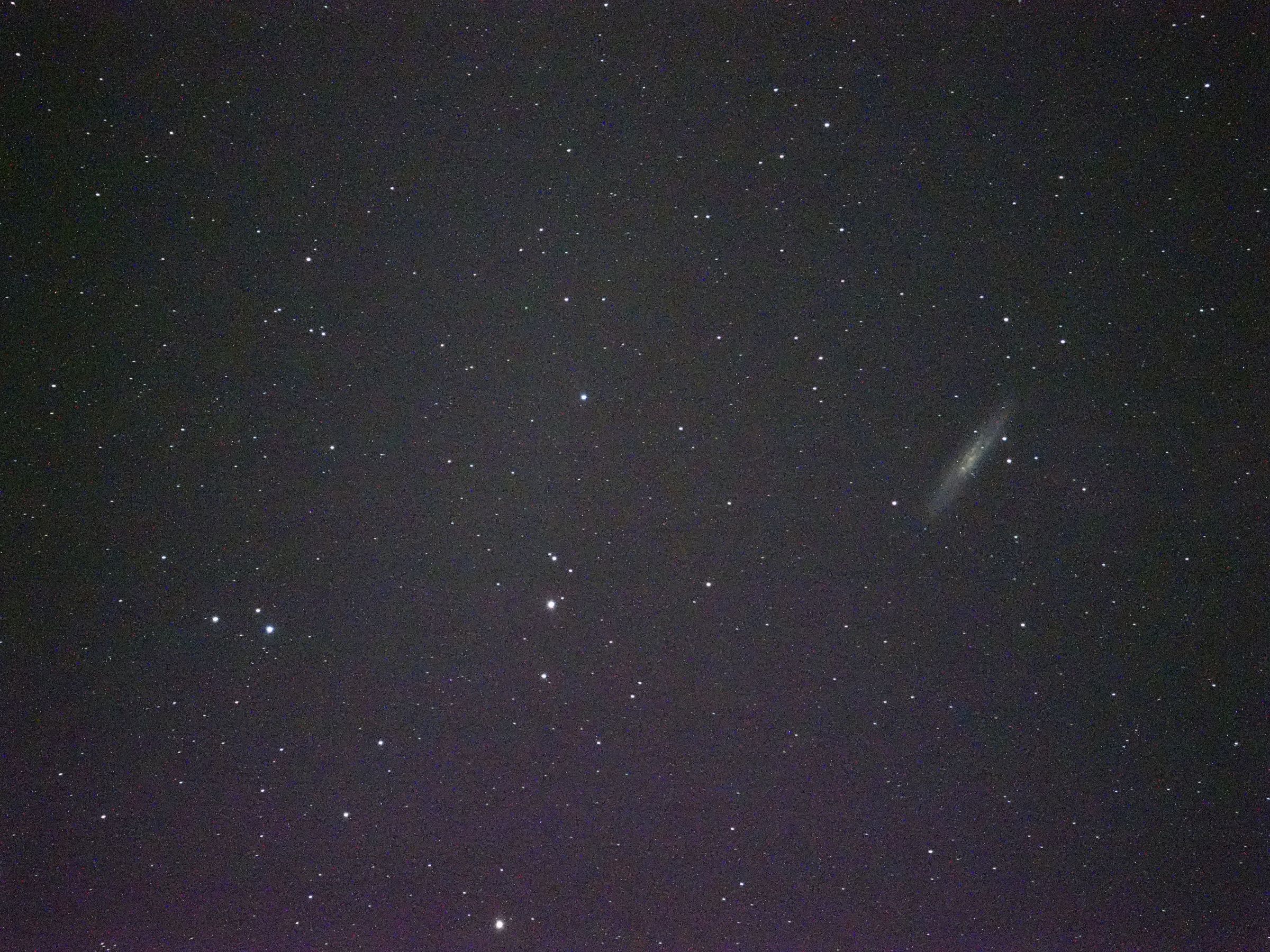
12.jpg [4] and 17.jpg [5] are still in the queue.
[1] http://nova.astrometry.net/user_images/4204596#annotated
[2] https://en.wikipedia.org/wiki/Lagoon_Nebula
[3] https://en.wikipedia.org/wiki/Trifid_Nebula
[4] http://nova.astrometry.net/user_images/4204609#original
[5] http://nova.astrometry.net/user_images/4204616#original