| > I'm saying that 'qualia' exist If by qualia you mean slight differences in information processing in human brains, then sure. If you mean anything more than that I would like a) a better definition than the one I have given b) some observational evidence for its existence. > My issue is with people who are confident that a big enough NN necessarily has consciousness. Not necessarily, just potentially. After all there will be many inefficient/barely-better-than-previously/outright detective big NNs on the path to AGI. If you're asking whether an intelligent NN will automatically be conscious then it depends on what we mean by "intelligent" and "conscious". A mathematical theorem prover may not need many facilities that a human mind has even though it still has to find many highly abstract and novel approaches to do its work. On the other hand an agent interacting with the physical world and other humans will probably benefit from many of the same principles and the mix of them is what we call consciousness. One problem with "consciousness" is that it's such an overloaded term. I recommend decomposing it into smaller features that we care about and then we can talk about whether another system has them. > Hell, maybe panpsychists are right and even a rock has some sort of consciousness. If we twist words far enough then of course they do. They are following the laws of physics after all which is information processing, going from one state to another. But then all physical systems do that and its usually not the kind of information processing we care that much about when talking about intelligences. Technically correct given the premise but useless. > I don't think it'd even be possible to identify such a part if it existed We're already making the assumption we have the technology to simulate a brain. If you have that ability you can also implement any debugging/observational tooling you need. AI research is not blind, co-developing such tooling together with the networks is happening today. https://openai.com/blog/introducing-activation-atlases/ |
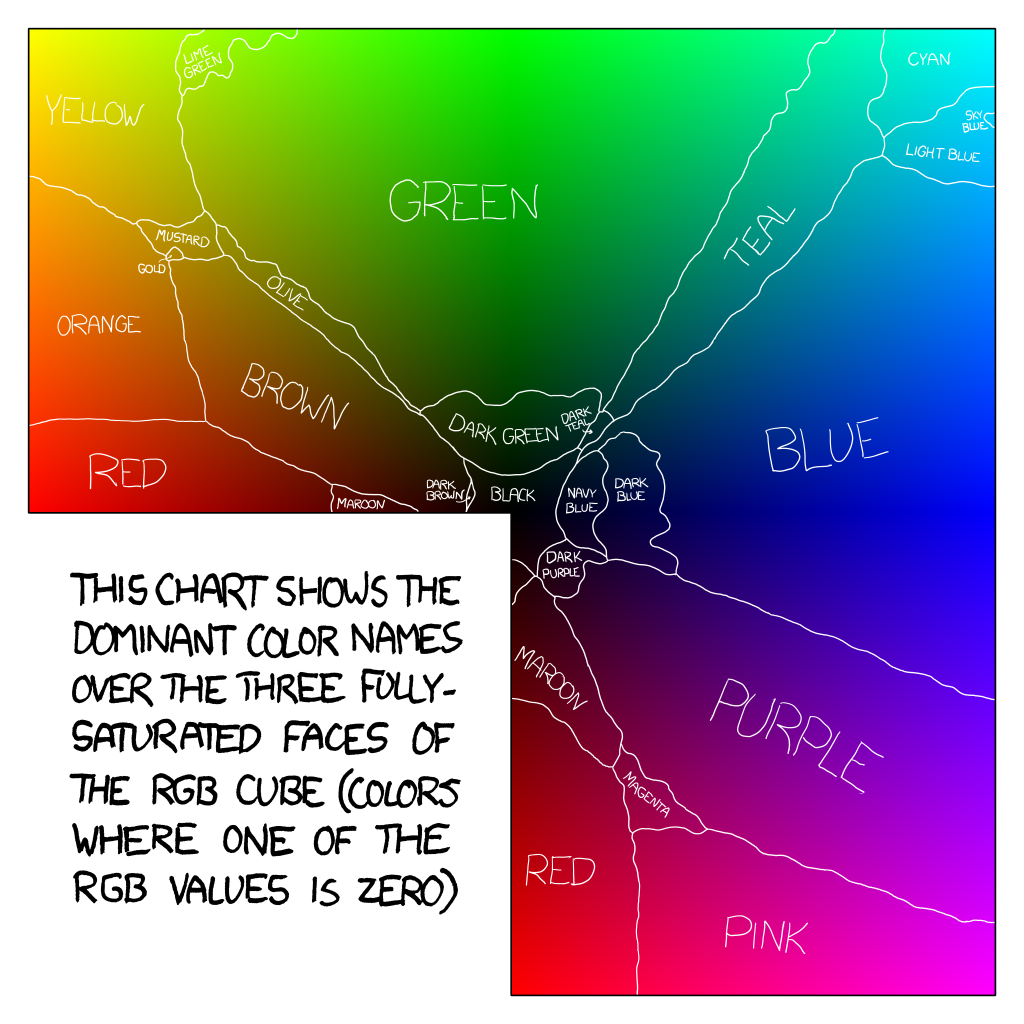
Subjective experiences i.e. how I actually experience sense data. There is no real, objective observational evidence and there can't be. How would you describe taste to a species of aliens that understands the processes that happen during tasting, but don't taste themselves? It's simply impossible. I know that I have personal, subjective experiences (the 'images I see' are not directly the sense data that I perceive), but I can only appeal to you emotionally to try and make you believe that it exists operating under the assumption that you too must have these experiences.
>One problem with "consciousness" is that it's such an overloaded term. I recommend decomposing it into smaller features that we care about and then we can talk about whether another system has them.
This entire discussion has been about consciousness in the philosophical meaning i.e. the ability to have some form of subjective experiences.
>If we twist words far enough then of course they do. They are following the laws of physics after all which is information processing, going from one state to another. But then all physical systems do that and its usually not the kind of information processing we care that much about when talking about intelligences. Technically correct given the premise but useless.
This isn't about twisting words, some people genuinely believe that everything is conscious with more complex system being more conscious.
>We're already making the assumption we have the technology to simulate a brain. If you have that ability you can also implement any debugging/observational tooling you need. AI research is not blind, co-developing such tooling together with the networks is happening today
The point is that it's about _subjective_ experiences.