|
|
|
|
|
|
by kllrnohj
2256 days ago
|
|
|
The specific issue is how userbenchmark weights CPUs seems to be very coupled to Intel's specific ideas on how many CPU cores there should be, or at least very firmly stuck in the 5 years ago. So last year the weights were 40% for single-core performance, 58% for quad-core, and 2% for "multi-core". The idea was this was supposed to be what games care about, but it isn't. Modern games have issues with even 6c/6t CPUs, such as the horrible 1% lows on the 9600K in Far Cry 5: https://www.gamersnexus.net/hwreviews/3407-intel-i5-9600k-cp... It looks like Userbench has since adjusted to weight up to 8 threads of performance? Which is maaaaybe less trash if all you care about is gaming. But the Core i5 series still tops charts on userbench despite reviewers no longer recommending the i5's due to performance inconsistency. They even make ludicrous claims like that the 9100F is perfectly fine for gaming, and is even 10% better than a 2700X. They seem to be basing this decision entirely on older games or games specifically built for as broad a userbase as possible (eg, CSGO, Fortnite & Overwatch). Meanwhile actual reviews say things like "The quad-core Core i3-9100F was hopeless in Battlefield V, pretty bad in Assassin’s Creed: Odyssey, fairly useless in The Division 2, and weak in Shadow of the Tomb Raider." https://www.techspot.com/review/1983-intel-vs-amd-budget-cpu... So even if you're an Intel fan, userbench is still a terrible way to pick a CPU. |
|
|

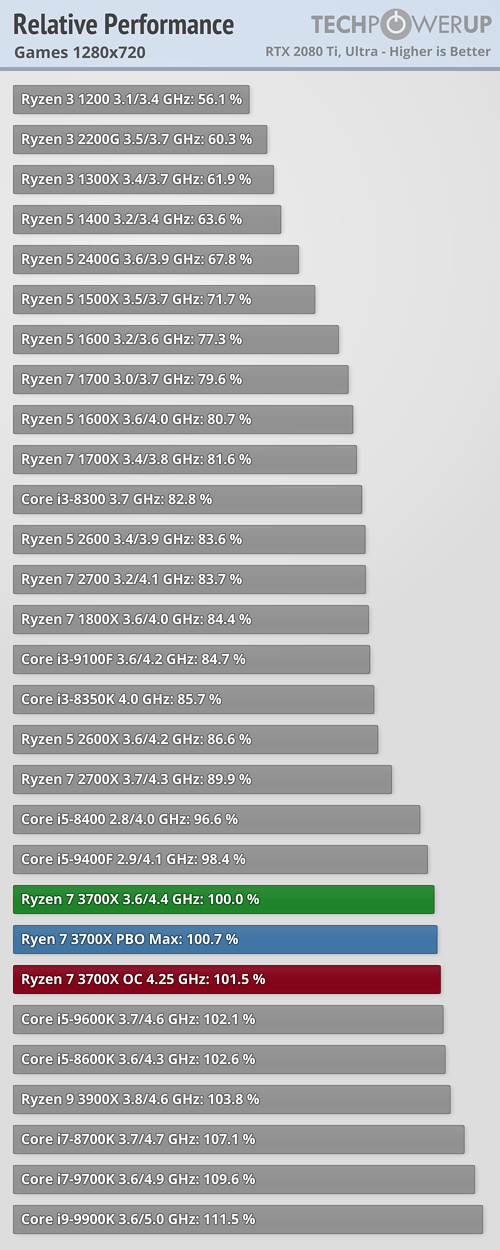
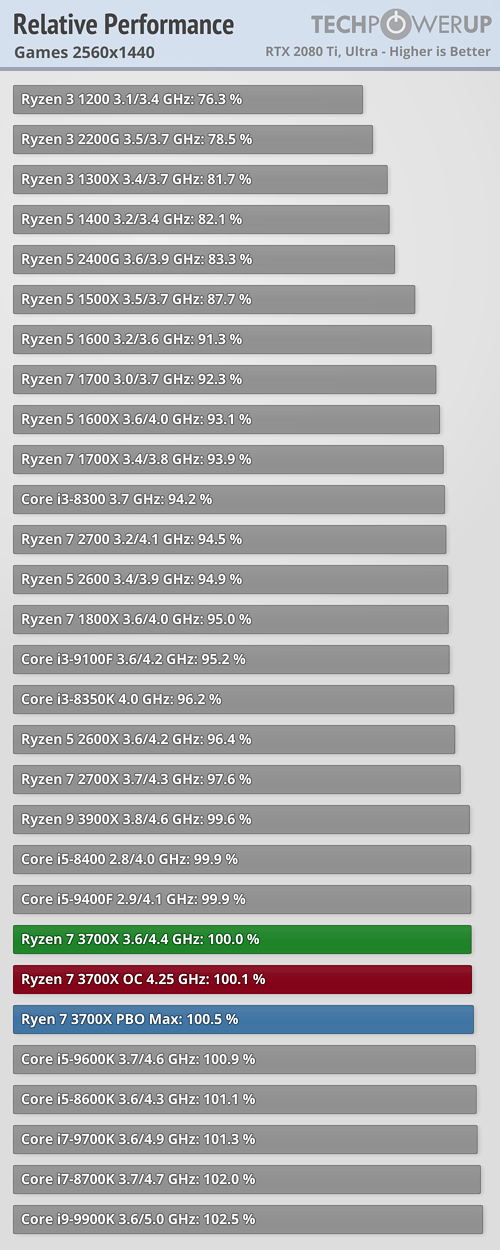

"fairly useless" here is over 60 fps average in the heavy titles and 90-110 fps in the multiplayer titles, with a similar ratio of minimums as the 1600 AF (so no more or less prone to stutter). And that's with them loading the dice by picking the absolute most thread-heavy games they could find, most games the 9100F does comparatively much better than that.
And the reality is that Zen1 and Zen+ actually are pretty weak in gaming. Zen2 made a ~30% improvement over Zen1 in gaming performance (much better than the "average" gains for other workloads), and it's still 10-15% behind the fastest Intel processors. Zen1 especially was hot garbage in gaming, those thread-heavy titles aren't representative of its average performance. About all you can say is that it aged better than the 4Cs that Intel had on the consumer platform at the time (or the 8100/9100F/etc that followed), an OC'd 8700K lays a smackdown on it and an OC'd 5820K remains extremely viable even today.
I'm not going to defend userbenchmark's composite scores, but gaming performance does heavily depend on per-core performance even today. Having 8 faster cores is still more desirable for gaming than 16 slower cores. And single-core performance is a good analogue of "per-core performance" so this number remains very relevant.