Hacker News new | ask | show | jobs
by sschueller 2309 days ago
The Swiss government issued the following guidelines [1] to prevent further spread of the virus. Masks are considered useless unless you are infected.

- Wash your hands thoroughly. https://www.youtube.com/watch?v=jvcvvRp3lsY

- Cough and sneeze into a paper tissue/handerchief or the crook of your arm. https://www.youtube.com/watch?v=M3_rFPtQgKE

- If you experience shortness of breath, have a cough or fever: • Stay at home. • Contact a doctor immediately by phone or call the coronavirus infoline. • Avoid contact with those around you. • Do not go directly to the doctor or to a hospital emergency room.

[1] https://www.bag.admin.ch/bag/en/home/krankheiten/ausbrueche-...

4 comments

Masks are considered useless unless you are infected.

That's not what the guidelines said. They guidelines were referring only to "hygienic masks" a.k.a. generic surgical masks:

The Federal Office of Public Health (FOPH) does not recommend that people who are well wear hygienic masks (surgical masks). If you are in good health, they do not protect you effectively against an infection with respiratory viruses (i.e. self protection). Wearing a mask therefore can give you a false sense of security.

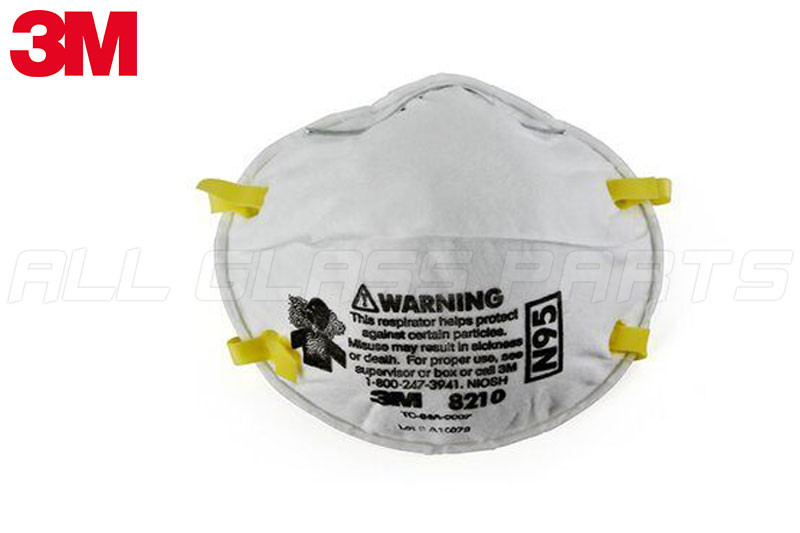
This is a known point. But they did not mention -- nor did they advise against the use of -- properly rated and certified masks (such as N95 masks). Which do provide some protection (albeit with caveats).

Also, just think for minute around the basic logic of what you're saying. If (properly rated and certified) masks provide "no protection" (for unprotected individuals) - then why are the health care workers using them?

They provide no /self/ protection. As I have said in multiple threads on this topic: we wear astm3 masks to protect /patients/ from /us/. A lot of hospital PPE is oriented towards /patient/ protection.

And N95s are heavy and uncomfortable. No one can wear them for long. But if anyone wants to, they’re welcome to it.

I have worn N95 masks for probably hundreds of hours due to having had a job in a factory with poor indoor air quality. Wearing them for 30-60 minutes during high risk activities like riding in a packed subway car would not be a problem for most people.
N95 masks are used in many industries to protect their wearers from particulates, including wet particulates. Many of them have check valves that make them useless for protecting other people from the wearer. We don't yet know how much protection they provide against SARS-CoV-2 infection, because we don't know how essential saliva droplets are to contagion, but they probably provide some.

Although there are different kinds of N95 masks, the most common kind weighs a few grams; this is not uncomfortable.

Have you worn an N95 for any particular amount of time? Honest question. Because Uou refer to a few grams as “not uncomfortable.”

I find N95 face masks insufferably hot and muggy, with their “few grams” hanging off my nose and ears eventually very annoying. I don’t know if any hc workers that find N95s tolerable for very long.

I've spent a summer in +30°C heat doing demolition and foam insulation in a house that had been through a fire. I had to wear a heavy half face cartridge respirator the whole time due to both the toxins from the fire, and the toxins from the foam insulation.

I wouldn't say that was fun. But it was tolerable. A N95 mask is fine by comparison - not much worse than a surgical mask.

That’s funny, because I wear the cartridge respirator outside of work for some hobbyist reno stuff I do, and find it much more tolerable than the N95. To each their own, I suppose.
Can you please clarify:

(1) Which category of mask are you saying provides "no" self protection -- ASTM 3 and N95? (I've read over your post multiple times, and not entirely clear).

(2) So to be clear - are you saying that N95s provide "no" self protection? Not just that they can be misused; or that protecting against surface droplets is more important; but literally "no" self protection?

(3) And if the answer to (2) is yes, can you provide a source or two we can use for further illumination on this topic?

I'm not trying to waste your time, here. I'd actually really appreciate your input.

Sorry if I was unclear. ASTM3s do not provide self protection. They are estimated to reduce ambient virion uptake by about 2/3 - which just isn’t enough to make a meaningful difference most of the time, as 1/3 of the usual droplet output is already more than is needed to cause infection.
Thanks for clarifying.
N95 masks may only be effective used with eye protection. Surgical masks may not help at all.

Looked for interventional studies testing whether face masks and eye protection work in humans to protect against airborne viral particles. A big issue with many such studies is that medical staff only use masks and/or eye protection at work, opening them to being infected outside of work.

Found a small study [1] getting around this problem by exposing subjects (n = 28, avg age 30.5 years) to monodispersed live attenuated influenza vaccine particles by placing them in front of a vibrating-orifice aerosol generator for 20 minutes, subsequently testing for infection using RT-PCR and culture in nasal washes.

RESULTS

- No precautions: 4 out of 4 infected.

- Ocular exposure only: 4 out of 4 infected.

- Surgical mask only (3M 1818): 5 out of 5 infected.

- Surgical mask with eye protection (Z87 Uvex non-vented): 5 out of 5 infected.

- N95 mask (3M 1860/1860S) only: 3 out of 5 infected.

- N95 mask with eye protection: 1 out of 5 infected.

1. Bischoff WE, Reid T, Russell GB, Peters TR. Transocular entry of seasonal influenza-attenuated virus aerosols and the efficacy of n95 respirators, surgical masks, and eye protection in humans. J Infect Dis. 2011;204(2):193–199.

Thanks for the great reference. I am tired of people saying how masks are inefficient and all, based only on speculations.
You can actually increase your odds of infection by different deceases by having a paper mask since they are often uncomfortable or fit poorly and people put their hands to the face to adjust them.
I've heard the opposite rationale. Having 'any' kind of mask decrease the number of times you touch your mouth or nose..
I concur. Wearing a mask makes it less likely you'll inadvertently touch your mouth, nose, or eyes.
This seems like an invented rationalization given that the average person touches their face up to 3000 times a day already (up to. It is trivial to find details of this range). If you adjust a mask a few times, but in return it stops you from touching your nose/mouth constantly, that's an enormous win.

And just to clarify, again people are talking about surgical masks. N95 masks, which are still "cheap paper masks", indisputably work. This is way beyond debate.

It is what I read by an associate in microbiology and infection control [1]. I tend to listen to experts but maybe he's wrong about the field he is studying, I'm not an expert :)

Translated from Norwegian:

- Does a facemask help against spreading virii?

- No, not when you are using it out among people. The point is that you will scratch your face and get your fingers in contact with your soft tissue. So it is counterproductive to use these regular paper masks, says associate in microbiology and infection control at the University of Southeast Norway, Jörn Klein.

[1] https://www.nettavisen.no/nyheter/smittevernforsker-munnbind...

>The point is that you will scratch your face and get your fingers in contact with your soft tissue.

So they're saying that... masks will help if you don't touch your face? Makes sense to me, the PPE that the CDC recommends involve a face shield in addition to a mask.

Again this is about "regular paper masks" -- not specially rated masks such as N95.

Also, it dodges the question of - "What if, being adults, we train ourselves not to scratch our face (in view of the seriousness of the issue)? Will masks help then?"

But we already touch our face endlessly. Again, this sounds like he invented this on the spot. This wasn't studied, isn't the result of an analysis, it's just a lazy response. Further, again he was talking about surgical masks.

Surgical masks don't work. Surgical masks are a subset of masks, and it is grossly inaccurate to extrapolate that out to "masks don't work".

I never claimed all masks don't work, I was talking about cheap paper masks. It might not have been clear enough in the original comment.
Citation for the 3000 value? That seems to be a meme : I can't find evidence for it. A study [1] found 23 times an hour which is 368 times in a 16 hour day.

https://www.ncbi.nlm.nih.gov/m/pubmed/25637115/

Tangent, but 3000 times per day is about once every 20s awake. That seems high?
The article I refer to in the sibling comment claims 23 times an hour on average so it would mean about 550 times during a day/night if you don't sleep. It sounds a bit more plausible.
That's the high, though apparently the average is more in the range of 550 times or so.
>Masks are considered useless unless you are infected

Considering there are multiple papers out of china which suggest the virus is aerosolized, I think it's irresponsible for anyone to claim masks are useless PPE. Anything less than n99 or p99 might be useless, but that's a different story.

There's also one paper which claims that treating a mask with saline solution makes it substantially more effective against viruses. I'll see if I can't dig it up.

Governments the world over have already demonstrated that they cannot be trusted to properly handle this virus.

Governments have other concerns besides your individual health. They need to prevent panic as much as possible, prevent economic collapse, etc. The response to events like this can be worse than the initial problem.

What do you think happens if the CDC says everyone needs to wear masks, you go to your local store, and there are no masks? There would be violence in the streets.

>They need to prevent panic as much as possible, prevent economic collapse, etc. The response to events like this can be worse than the initial problem.

If this event is half as bad as all the literature out of China is suggesting, panic is the least of our worries. What a responsible government should do is initiate some sort of recommendation for gradual stockpiling of goods - perhaps a lottery just to encourage the majority of people to calmly stock up in turns.

In any case the CDC has already issued warning to prepare for "severe disruption to everyday life." Now it's up to the ignorant population to wake up and realize that this isn't just another flu.

>If this event is half as bad as all the literature out of China is suggesting, panic is the least of our worries

No. The risk of dying from this disease is negligible for most American adults. The real issue with the corona virus is economic disruption and overburdening of the healthcare system. All of which is significantly exarbarated by panic.

>The real issue with the corona virus is economic disruption and overburdening of the healthcare system. All of which is significantly exarbarated by panic

Which is literally the point of my post. The population ideally will have started gradual, orderly preparation sooner. At this point it's better to have a short panic early rather than end up in a situation where the government kept quiet but suddenly the virus is here and people are running out of food and there's a mass panic.

The longer the government waits, the worse the outcome will be.

Say what you want, but 2% is not negligible. That's 1 of every 50 people. With 330,000,000 population that's over 6.5mil people.

Yes, the mortality changes with age younger people are about 0.2% but older are close to 15%.

Having health issues such as cardiovascular or diabetes increases the risk further, and Americans aren't the healthiest people.

You are mixing up several different measurements.

First, parent was talking about the risk to an individual adult person; you yourself note that varies with other parameters including age. This isn't comparable to the 2% figure.

Second, the mortality figure is 2% of people who are infected, not of the total population. So it's substantially less than 6.5 million people, unless literally everyone in the country catches the bug.

No. The risk of dying from this disease is negligible for most American adults.

Can you tell us please:

(1) What your numeric definition of "negligible" is

(2) And on what math this is estimate based?

current risk for healthy adults appears to be 0.1-0.2% which is comparable to a bad flu season while the chance of getting infected is lower by several magnitudes given how relatively few numbers of cases there are even if you assume there's a lot of asymptomatic cases.

If we take China as a comparison, a country with urban agglomerations of 50 million people and more and the 80k cases as rough estimate then the chance that you're even going to be infected in the US is marginal.

So unless you panic literally every time you leave your house I don't see why this is appropriate to cause a panic.

There simply is not enough supplies for everyone to slowly stockpile goods. Supply chains are already being disrupted. In China beekeepers are not able to get their bees to crops. The bees are starving. This will negatively impact global honey and crop yields for years. In Italy panic buys are already leaving shelves empty. If the government tells everyone to slowly stock up what will really happen is panic buys and wide spread violence.
The alternative is a mass panic when the virus arrives.
Exactly. If you have to choose between guaranteed mass panic today and probable mass panic tomorrow, always choose tomorrow. This is what the professionals at places like the CDC understand.
> Governments have other concerns besides your individual health.

Exactly. And that's why I'm gonna look out for myself.

Then why don't they have millions of masks stockpiled for an event like this?
They do. But they aren’t stockpiled for you: they are stockpiled for medical professionals.

And the 30 million the US has stockpiled is short by a factor of ten: https://time.com/5785223/medical-masks-coronavirus-covid-19/

In any case we need more than masks for this. Medical equipment like mechanical ventilators, intubators, and external oxygenation machines. Those will run out very quickly.
Aerosolization of coronavirus seems to be mostly limited to hospital operations such as intubation?

Anyhow, here in Hong Kong the virus has been, kind of, contained. Mask wearing, along with hand washing and other measures, have been adopted by the majority population.

One of the problems with the Wuhan virus is that there are quite a few asymptomatic cases, and AFAIK at least one preprint study has confirmed that these hosts can transmit the virus to others, making mask wearing for "healthy" people an even more desirable measure in preventing the virus from spreading.

Just because masks are not 100% effective doesn’t mean they’re not effective at all. The Surgeon General also dismissed masks and is spreading misinformation.
The Surgeon General dismissed medical masks, which are useless against this virus, they were not talking about masks that are sealed to your face and actually filter germs. Your post itself is misinformation.
I don't think most people know how to properly fit test an N95 respirator though.
Learning how is as easy as watching a 5 minute YouTube video. I have read this argument in other places and it is never mentioned that, while laypeople may not know how to properly wear a mask right now, it is not hard at all for them to learn.
Assuming they actually have one and not a fake one from amazon
If you think wearing a mask doesn’t reduce your risk, I have nothing to tell you. It’s so blatantly obvious.
Masks are considered useless unless you are infected.

This is a bizarre claim that can be countered against the reality that every front-line worker is equipped with a mask.

EDIT: Almost immediately I dropped to -2. Bizarre. Again, every health agency the world over equips health workers who deal with potential COVID-19 with N95+ masks. For some reason people desperately want to clutch onto the notion that it's useless because otherwise..uncomfortable and uncool mask, right? Another poster mentioned that the source didn't even state that about masks, but instead about surgical masks which is a tiny subset.

-Masks prevent aerosolized matter (e.g. a sneeze) from getting at mucous membranes (where it needs to get to yield an infection).

-Masks prevent you from touching your hands to the vulnerable areas of your face. It is effectively a check. So when you touch that door handle leaving the subway station it's far less likely you'll transfer to your mouth or nose, and we naturally touch our face thousands of times a day. Ideally one would have a mental process they follow where you clean thoroughly before taking it off.

Those alone seem like an absolutely enormous win for masks.

https://time.com/5785223/medical-masks-coronavirus-covid-19/

https://www.livescience.com/respirators-prevent-coronavirus-...

I'm certainly not at the point where I'm going to wear a mask in public, but the whole "Hurrr masks don't work at all" seems like either disinformation (e.g. stop buying all the masks because we want them), or people trying to comfort themselves in some bizarre way. Every bit of evidence says otherwise.

The moderation through this is absolutely cartoonish and ignorant.

There is terminological confusion. Several things are colloquially called ‘masks’. Surgical masks do not significantly protect the wearer. Filtering facepiece respirators do.¹ ² The parent comment's links refer to N95, so they mean the latter, which are protective (assuming they're worn properly and genuine³).

In addition, the permanent rubber units provide protection when fitted with suitable filters; NIOSH calls these half masks (as distinct from full facepieces, colloquially ‘gas masks’). Where I am, these are still languishing on the shelves⁴, which means that the sort of people who are willing to spend five minutes looking up that P95 ≥ N95 are not yet panicking.

¹ https://www.cdc.gov/niosh/npptl/pdfs/UnderstandDifferenceInf...

² https://www.fda.gov/medical-devices/personal-protective-equi...

³ https://knowits.niosh.gov/

https://www.canadiantire.ca/en/pdp/3m-performance-reusable-p...

Those paper masks do little if anything to help the wearer from taking in anything. They do not filter the air—they are far too porous and loose-fitting to filter. They do help prevent the wearer from spreading their germs and touching nose/mouth as you said, but they are not an effective air filtration device.
As mentioned by others, surgical masks don't filter, but N95 masks absolutely do and are what health care workers are being equipped with.

N95 masks just look like cheap little paper things that you stick on your face.

No they don’t. N95 are solid looking and sometimes have a plastic square housing on the front [0] and surgical masks are paper and pleated [1]

[0] https://images.app.goo.gl/RZAgMSssThGJQrnf6

[1] https://images.app.goo.gl/fRW2dmSxUo1Lm1Dh8

Yes, yes they do. I can find a million pictures of N95 masks that look just like a cheap little paper mask (not like surgical masks -- not rectangular. Just cheap and like it's made of paper similar to a paper filter).

https://cdn10.bigcommerce.com/s-rxcy1k/products/11668/images...

Now you seem to be just arguing for arguments sake or you’re the kind of person who can’t ever admit to making a mistake or being wrong.

Your linked image in no way objectively looks “just like” cheap square pleated surgical masks. https://i.ebayimg.com/images/g/LyoAAOSwMTFeMbmh/s-l300.png

Frankly it's your tone that sucks. People initially thought you were referring to the generic medical masks, which are useless unless you're already sick. Being clear in your initial comment would have helped with the confusion.
My first comment specifically indicated N95 masks.

Remarkably two people have criticized me for not being specific when replying to a blanket (and incorrect) post, when I was actually specific. Amazing.

Then again, the one guy claims that health-care workers only wear masks to protect patients, which is just cartoonishly incorrect (beyond in the abstract "protect patients by the healthcare workers not getting infected" way). To the point that is has to be malicious.

This whole discussion is beyond ignorant. It demonstrates, again, how painful any discussion outside of code is on HN. It's almost as bad as HN talking about AGW (where it turns out 80% of the residents here are deniers). Embarrassing.

It’s not cartoonishly incorrect, in fact it’s mostly correct. Healthcare workers wear masks mostly to protect their patients. They themselves may get some protection from splashing/spurting bodily or other fluids, but not from any airborne contaminants or infections.

> A. Masks were introduced into clinical practice at the beginning of the 20th century to protect patients from microorganisms being expelled from healthcare workers’ respiratory tracts during clinical procedures (Wilson, 2006).

https://www.nursingtimes.net/archive/when-should-staff-wear-...

Surgical masks. We all know that. Everyone knows that.

N95 masks are distinctly and absolutely worn to protect the wearer. N95 masks are recommended for front-line staff when dealing with viral outbreaks. H1N1, SARS, MERS, and now COVID-19 -- staff wear self-protection masks. During flu outbreaks front-line staff wear N95 for clinics.

This discussion -- what we are talking about -- is COVID-19. Every front-line staff dealing with this, worldwide, is equipped with an N95 mask, or there is a problem. Because when your front-line staff get sick things really break down.

Ok, yeah it sounds like there’s a terminology and context breakdown going on. Typical healthcare setting vs. current COVID-19 setting etc. When you said

> Then again, the one guy claims that health-care workers only wear masks to protect patients, which is just cartoonishly incorrect (beyond in the abstract "protect patients by the healthcare workers not getting infected" way). To the point that is has to be malicious.

it’s not clear which (COVID-19/typical healthcare) setting is being referred to (maybe same for comment you’re responding to as well).

Apologies for any confusion on my part.

Any post that fails to distinguish between N95 respirators and ASTM 3 surgical masks is too ignorant on this topic to make comments worthy of an upvote.

The Surgeon General, on the other hand, does understand the difference and made an appropriate comment.

I personally believe that any sort of cover or mask is likely to have an effect even if not 100%. However..:

This is a bizarre claim that can be countered against the reality that every front-line worker is equipped with a mask.

This is not necessarily to protect the front-line workers. Since the incubation period is so long, it makes sense for front-line workers to wear masks to prevent them infecting other people even if it has zero effect in preventing them being infected in the first place.

Agreed. Even before Covid it was standard for healthcare workers to wear masks. They constantly work with patients with compromised immune systems and the like. They could be be asymptomatic and wouldn't risk passing it to someone weaker
"EDIT: Almost immediately I dropped to -2. Bizarre."

I downvoted you because you talked about your downvotes.

If you're keeping track of scoring, HN is perhaps not the right community for you.

One thing I'm wondering about is "useless in what sense?"

Will they prevent you from getting sick? Unlikely unless it is N95 or even N100 PPE

But I'm been wondering if they are not useless in terms of the speed at which the human body experiences a high viral load.

If only one virus particle gets through that should be enough to infect if it takes root and multiplies, but going from one virus to tons in your body takes times since they have to multiply.

Compare that with an infected person coughing right in your face. In this situation, potentially thousands of virus particles will infect you. In this situation, the viral load your body experiences will climb high quickly.

The faster the viral load climbs the less time your immune system has to be able to develop antibodies and learn to fight off the infection.

I imagine this is not too dissimilar from how vaccines work.

If this is the case, that might explain why Li Wenliang died at 34 years of age. Being at the center of it all, it's likely he was exposed to many more virus particles than the typical person. I imagine this would be enough to trigger a cytokine storm if the viral load got high fast enough.

Disclaimer, IANAE (i am not an epidemiologist), I'm just reasoning from first principles here.