Hacker News new | ask | show | jobs
by whatshisface 2460 days ago
If it goes well, the history of quantum computing will be divided up in to three eras: the era of twisty philosophical arguments that it's working ("the molecule is simulating itself"), the era of academic arguments that it's working ("we can solve this one carefully constructed problem") and the era of practical arguments ("Amazon is selling QC time for $20/kilogate-bit, what do you mean it's not possible?"). Quantum supremacy marks the transition from the first era to the second.
8 comments

The third stage is the hardest. Thermonuclear energy production has been sitting in "theoretically possible, but economically unviable" for decades, tons of technologies like supersonic commercial flight has been achieved and then scrapped because of practical concerns, many other technologies struggle with passing economic viability barrier. Taking that into account, getting from 2nd to 3rd stage would be the hardest task. Comparing to classic computers, their practical usability has been clear since Babbage time, so far it's not the case for QC.
> Comparing to classic computers, their practical usability has been clear since Babbage time

Is this true? I thought that in the 40s-50s there was some argument over whether practical computers could really be built given that vacuum tubes were so unreliable. Von Neumann wrote gave a series of lectures in 1952 (eventually transcribed into an article) showing how it could be done: http://arep.med.harvard.edu/gmc/Von_Neumann_1956ro.pdf , and the argument became more or less moot once transistors arrived).

There's perhaps an analogy here to be made with quantum error correction, but that seems to be a lot harder...

The first transistors are 1947. We don't use that sort of transistor today, but unlike the vacuum tube it would have been obvious that a computer built from these transistors was viable. You can't get to the iPhone from there, but room size machines that do arbitrary Turing computation are only expensive. So that means it's in the realm of supersonic flight. If you must do it you can, but maybe you'll decide it's too expensive.

By 1950 then, the only question is whether we should, not whether we can.

Check out this one: https://en.wikipedia.org/wiki/Tabulating_machine Yes, not exactly a computer, definitely not a von Neumann one, but close enough to see how such thing would be useful. Also according to Wikipedia, this is the first thing to ever be called "super computing" device. That's what I mean - there's a long history of continuosly improving practical devices that led to the modern computer. For QC, we don't have that history.
Depends on what you mean by "computer", but being able to reliably calculate even just simple arithmetic has clear benefits. In the 1800s there would be countless clerks doing some sort of bookkeeping who'd benefit from it.

I suppose double entry would be your error correction. That also benefits from having a calculating machine.

Supersonic commercial flight is one of the most interesting. I think two strange things happened. First we got the internet - and mobile phones and video conferences and this has eroded the value of rapid physical presence. Second, and I think this is more important, people have become more willing to sacrifice their time for their career/money/firm/dream vs. family/happiness/now.

An acquaintance flew Concorde a lot in the 80's, the reason - "I could get to Heathrow in the morning, fly to New York, do a meeting, fly back and get home the next morning". Another friend is a exec at a bank now and goes on month long odysseys to the USA, Asia and Australia. The contrast in perspective and commitment is striking, I don't think that Concorde would matter at all to these folks.

Could the improvements in Business and First Class travel, combined with the increased use of private jets (also NetJets) have contributed to the downfall of the Concorde?

The more comfortable you are in the flight, the less the actual number of hours flown bothers you.

Yes - especially in flight calling, in flight working (ppt!) and in flight internet. Flight time != downtime for these folks anymore - which means that the per hour saved calculations are not going to convince finance.
Here is the issue explained in 10-minute youtube format by Wendover Productions: https://www.youtube.com/watch?v=n1QEj09Pe6k
Also the fact that airports are still a big time sink even with all the priority passes in the world.

No amount of money makes getting from your front door to the airport not be a massive pain potentially taking over an hour if you have some bad luck

Passenger queues are not an issue when you are departing from a GAT in your private jet. ;)
Traffic to the airport is.
If you can serve ads any faster with it, you bet it's gonna get deployed to production faster than Nuclear Fusion ever had hope to be :-P
quantum computing dual-state ads doing A/B testing simultaneously... I don't know if any of that just made sense, but I bet you could get some VC funding if you pitched it!
I don't think it's true for quantum computers. Folding proteins and stuff is good use-case of the cause but the real drive is the military. Same as for gen-AI. If you don't r&d this but Chine does - you're fucked. So the only way to do not become in the disadvantageous position - is to reason it yourself.
> the real drive is the military

Although military investment has driven many different technologies over the years, ‘the military’ is actually a complex mix of the Armed forces themselves, government acquisition organisations, and prime contractors and their supply chains. The resultant acquisition processes of many countries are glacially slow, with sometimes decadal timescales from requirements definition to delivery of full operational capability. Military acquisition is not agile, except when urgent operational requirements force rapid tech change by taking acquisition shortcuts.

The military what? Comparing again to computing engines, even when computers were not at all like they are now, there were always lots of people queueing around them with workloads they want them to do now - and which computers could help them with as they are, not 200 years in the future. For QC, I do not see many users with workloads that can be served right now. I don't say it shouldn't be developed because of that - lots of things took time to bring to maturity - but we should be ready for it taking a long time to get to real usefullness.
If the military is paying for it then it's already in stage 3. Just because something isn't readily available to the public doesn't mean it's a failure - I can't buy a rocket but the various space programs still do lots of cool things and they have money to pay for it.
Military pays for a lot of stuff that then is not going anywhere. Just as other venture funds do. You can't win without taking some risks. But that doesn't mean everything the army pays for automatically is a great thing.
So relatively we will all be about the same, but in absolute terms we will all be worse off?

Where have I heard this before...

From what I've parsed of the paper, this appears to fall firmly in the first category. This is a quantum computer simulating a quantum circuit; it's like saying that swirly water in a sink is achieving fluid dynamics supremacy, because we can't compute the results as fast as the water moves. Q12 touches on this.

I'd be really interested to hear what Gil Kalai has to say on this particular subject; he's generally pretty fair minded while being of a QC skeptic. He has a response up [1] but I haven't read through it yet.

[1] https://gilkalai.wordpress.com/2019/09/23/quantum-computers-...

There is market for two, maybe three quantum computers on earth.
640 qubits ought to be enough for anybody
There was a market for two, maybe three classical computers until they became smaller, cheaper, and more general purpose.
I believe GP is referring to Thomas Watson's famous quote from the 1940s: "There is a world market for maybe five computers."
That's the joke.
Ken Olsen founder and CEO of Digital Equipment Corporation (DEC) in 1977: "There is no reason for any individual to have a computer in his home.”
There's plenty of active research into quantum computing meets machine learning. Any real progress here would create quite a market.
> Amazon is selling QC time for $20/kilogate-bit

Except that you'd only be able to pay with physical cash.

If all goes well, Google may be the last company. They'll just gobble up everybody else and become Skynet.
Maybe. I’m pretty sure this FAQ is as much about quantum computing skepticism as it is disbelief that a giant corporation is really as totally responsible for some invention as its brand management would lead headlines to believe.
What are the theoretical models for the energy cost of computing on a qubit? I'll be excited for QC when there is known way (even with some handwaving and future-tech plans) to compute a non-trivial result for a reasonable sum, such as "crack someone's private RSA key for under $10M of compute cost"
> when there is known way (even with some handwaving and future-tech plans) to compute a non-trivial result for a reasonable sum, such as "crack someone's private RSA key for under $10M of compute cost"

If you're willing to admit handwaving and future-tech plans, then you can be excited now. It's estimated that a few million physical qubits (corresponding to few thousand logical qubits) will be necessary to crack an RSA key. It's at least a decade away, maybe several, but few experts believe there are hard barriers to number of qubits or minimal cost.

> but few experts believe there are hard barriers to number of qubits or minimal cost.

both of them are very flexible, but also definitively non independent.

This paper doesn't address the main road block to practical prime factorization, because it chooses computations which aren't fatally compromised by decoherence of the qubit representation. So we're about as far from useful quantum computation as ever, although the paper does speculate that maybe we can find an innovative quantum-computation algorithm which is robust to that decoherence, and yet is useful in some way.
This depends on your definition of "trivial". But if we restrict it to factoring, no, there is no known path to QC factoring at the moment, none at all.
Factoring has already been done. For the size number factored it did use much more energy than it would have taken on a classical device, but it did utilize quantum effects/Shor’s algorithm:

https://en.m.wikipedia.org/wiki/Integer_factorization_record...

I don't understand. Factoring composite numbers into their primes is definitely a predicted use for QC in the future. Are you just saying the architecture of the machine powerful enough to do that is still uncertain?
I think it is analogous to fusion. Fusion definitely works (the Sun and hydrogen bomb) and power generation is a predicted use of fusion in the future. That doesn't mean we have known path to fusion for power generation.

To extend the analogy, quantum supremacy is like fusion for neutron source. There are commercial fusion devices to be used as neutron source.

> That doesn't mean we have known path to fusion for power generation.

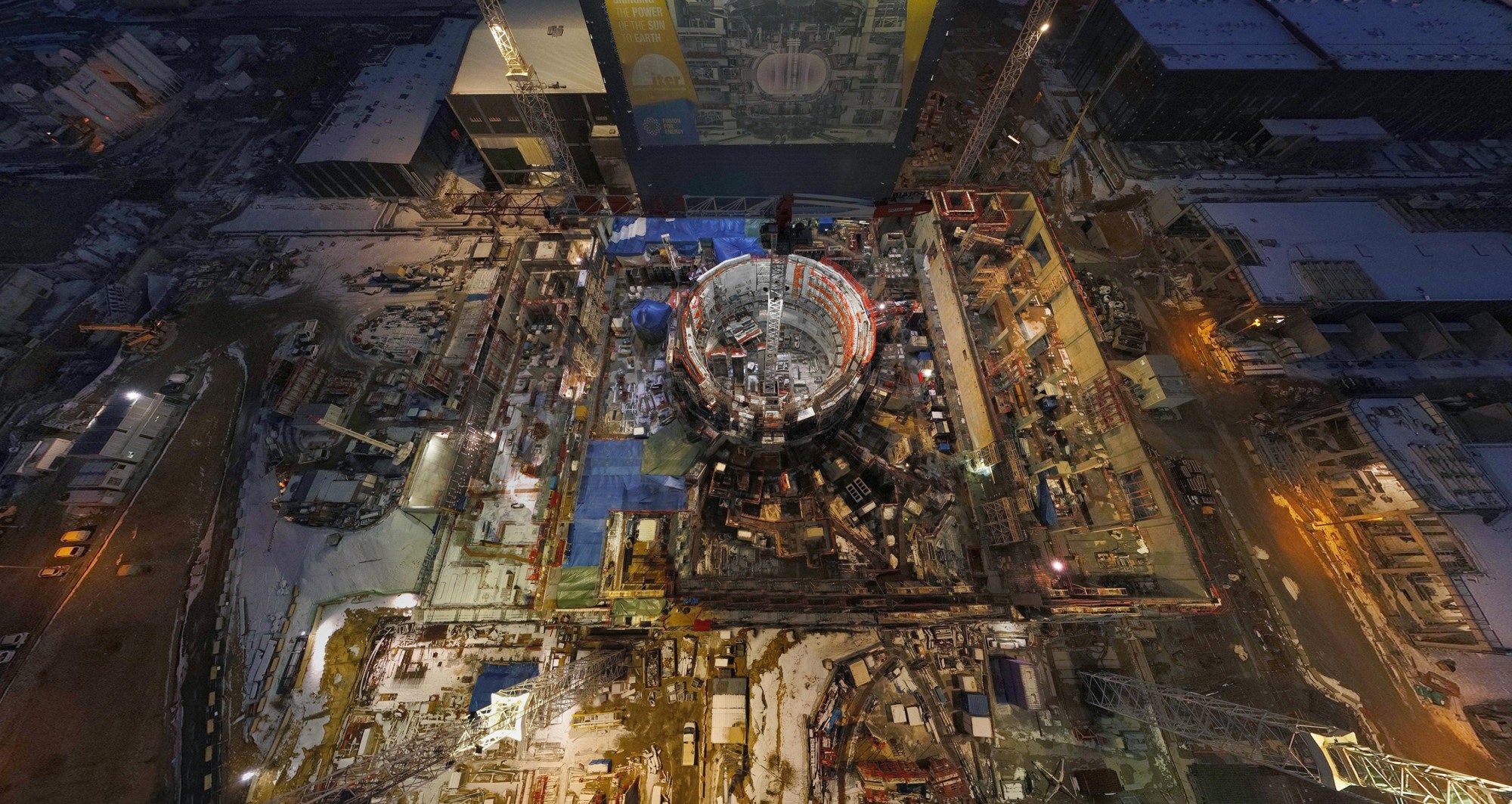
Perhaps this was just a poor example, but we absolutely have a path to fusion power generation. ITER [0][2] is under construction now, and is expected to be capable of 10x power returns. DEMO [1] should have 25x.

[0] https://en.wikipedia.org/wiki/ITER

[1] https://en.wikipedia.org/wiki/DEMOnstration_Power_Station

[2] https://media4.s-nbcnews.com/j/newscms/2017_52/2273651/17122... (worth a click)

From the ITER wiki link:

> ITER Project was initiated in 1988.

> The expected cost of ITER has risen from US$5 billion to US$20 billion, and the timeline for operation at full power was moved from the original estimate of 2016 to 2027.

> A technical concern is that the 14 MeV neutrons produced by the fusion reactions will damage the materials from which the reactor is built

... definitely not clear to me that this is a "clear path forward" to fusion power, but I was encouraged to learn that a project of this sort was underway.

I'm betting Commonwealth Fusion will beat ITER to commercial energy production. Throwing stronger magnets at the problem seems like a promising way to achieve stable fusion.

https://cfs.energy/technology/

Directly from ITER page:

https://www.iter.org/proj/inafewlines#2

"ITER will not capture the energy it produces as electricity, but—as first of all fusion experiments in history to produce net energy gain—it will prepare the way for the machine that can."

Let me repeat, the project will not produce any usable electricity. It's still an experiment.

And the start of the experiment is at the moment planned for 2025. The ITER project started in 2007. That's how much the preparations "just" for the experiment take, even if the previous experiments were done for decades.

Also from their FAQ:

https://www.iter.org/FAQ#collapsible_2

"one of the missions for the later stages of ITER operation is to demonstrate the feasibility of one or more concepts of tritium production through the Test Blanket Module (TBM) program."

Namely, it's an experiment that "in the later stages" should manage to give results that would allow the development of the technology for tritium breeding. Without tritium breeding fusion can't be used commercially.

The path for experiments is known, but it's still far from confirmed that the desired results are achievable, as we'll need a lot of new developments which we don't have at the moment for that.

Also DEMO can be fully developed only once ITER succeeds, it needs the results from ITER.

It's simply very hard, and achievable as an experiment. The still open question is if its really commercially viable, in the sense, if the "hard" stuff can become manageable enough to be useful.

Everything hinges on what you mean by the very vague term "known path". Every technology more than a few years out requires currently unknown problems to be solved. Even, say, the next generation of processors will require many engineer-years to solve currently unsolved problems, and the generation after that is pretty opaque right now. Still, we can have confidence that they will be developed.
Right but in the foreseeable future we might be able to factor numbers as large as like 24. Not 24 digits. 24 the number.
We still don’t know if the third era is possible.
Science : welcome!
I really enjoy seeing comments on here that fit the 3rd kind.

"Thing is ridiculous, that could never work because of reasons A, B and C."

"What are you talking about, here is project that does thing, it functions perfectly."

Nothing like reality proving someones baseless naysaying wrong immediately.

Except reality has so far proved that it is possible to use QC for solving one QC-specific task that is hard to solve classically, that's it. That's not what "naysaing" was about - the "naysaying" was about the fact we have no way to use QC for known classical tasks, and the path to such juicy targets as breaking commercial public key encryption is entirely unclear. Virtually nobody says it would never ever happen - but so far it has not happened and will not happen soon, and reality has not proven anything contradicting that yet. When, in 2038 or in 2083, the reality finally gets there, then your condescending attitude towards the naysayers would finally be completely warranted. But not yet.