Hacker News new | ask | show | jobs
by gowld 2463 days ago
What are the theoretical models for the energy cost of computing on a qubit? I'll be excited for QC when there is known way (even with some handwaving and future-tech plans) to compute a non-trivial result for a reasonable sum, such as "crack someone's private RSA key for under $10M of compute cost"
3 comments

> when there is known way (even with some handwaving and future-tech plans) to compute a non-trivial result for a reasonable sum, such as "crack someone's private RSA key for under $10M of compute cost"

If you're willing to admit handwaving and future-tech plans, then you can be excited now. It's estimated that a few million physical qubits (corresponding to few thousand logical qubits) will be necessary to crack an RSA key. It's at least a decade away, maybe several, but few experts believe there are hard barriers to number of qubits or minimal cost.

> but few experts believe there are hard barriers to number of qubits or minimal cost.

both of them are very flexible, but also definitively non independent.

This paper doesn't address the main road block to practical prime factorization, because it chooses computations which aren't fatally compromised by decoherence of the qubit representation. So we're about as far from useful quantum computation as ever, although the paper does speculate that maybe we can find an innovative quantum-computation algorithm which is robust to that decoherence, and yet is useful in some way.
This depends on your definition of "trivial". But if we restrict it to factoring, no, there is no known path to QC factoring at the moment, none at all.
Factoring has already been done. For the size number factored it did use much more energy than it would have taken on a classical device, but it did utilize quantum effects/Shor’s algorithm:

https://en.m.wikipedia.org/wiki/Integer_factorization_record...

I don't understand. Factoring composite numbers into their primes is definitely a predicted use for QC in the future. Are you just saying the architecture of the machine powerful enough to do that is still uncertain?
I think it is analogous to fusion. Fusion definitely works (the Sun and hydrogen bomb) and power generation is a predicted use of fusion in the future. That doesn't mean we have known path to fusion for power generation.

To extend the analogy, quantum supremacy is like fusion for neutron source. There are commercial fusion devices to be used as neutron source.

> That doesn't mean we have known path to fusion for power generation.

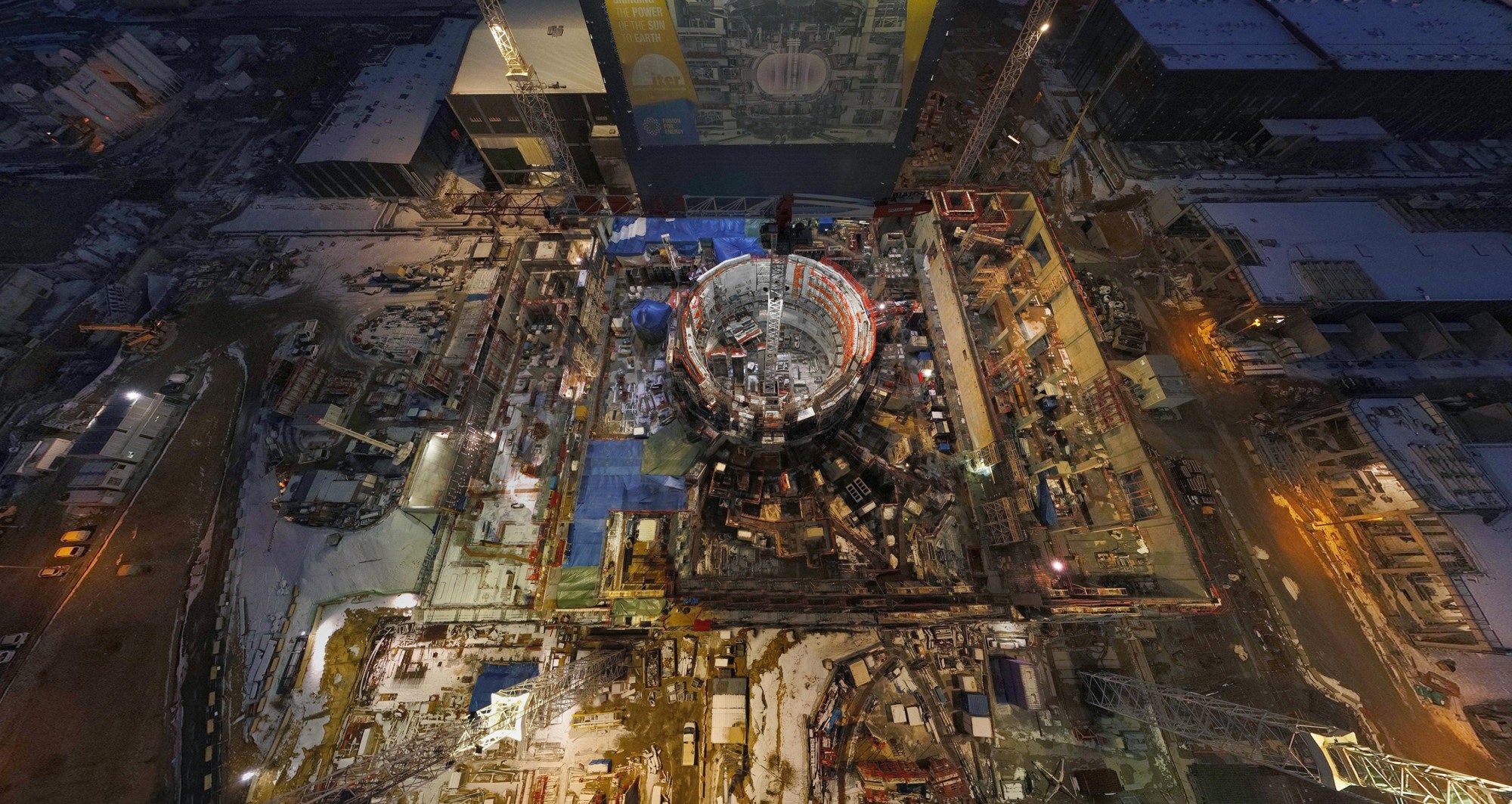
Perhaps this was just a poor example, but we absolutely have a path to fusion power generation. ITER [0][2] is under construction now, and is expected to be capable of 10x power returns. DEMO [1] should have 25x.

[0] https://en.wikipedia.org/wiki/ITER

[1] https://en.wikipedia.org/wiki/DEMOnstration_Power_Station

[2] https://media4.s-nbcnews.com/j/newscms/2017_52/2273651/17122... (worth a click)

From the ITER wiki link:

> ITER Project was initiated in 1988.

> The expected cost of ITER has risen from US$5 billion to US$20 billion, and the timeline for operation at full power was moved from the original estimate of 2016 to 2027.

> A technical concern is that the 14 MeV neutrons produced by the fusion reactions will damage the materials from which the reactor is built

... definitely not clear to me that this is a "clear path forward" to fusion power, but I was encouraged to learn that a project of this sort was underway.

> ITER Project was initiated in 1988.

> The expected cost of ITER has risen from US$5 billion to US$20 billion

So factor 4 in 30 years. That's approximately inflation, no?

I'm betting Commonwealth Fusion will beat ITER to commercial energy production. Throwing stronger magnets at the problem seems like a promising way to achieve stable fusion.

https://cfs.energy/technology/

Directly from ITER page:

https://www.iter.org/proj/inafewlines#2

"ITER will not capture the energy it produces as electricity, but—as first of all fusion experiments in history to produce net energy gain—it will prepare the way for the machine that can."

Let me repeat, the project will not produce any usable electricity. It's still an experiment.

And the start of the experiment is at the moment planned for 2025. The ITER project started in 2007. That's how much the preparations "just" for the experiment take, even if the previous experiments were done for decades.

Also from their FAQ:

https://www.iter.org/FAQ#collapsible_2

"one of the missions for the later stages of ITER operation is to demonstrate the feasibility of one or more concepts of tritium production through the Test Blanket Module (TBM) program."

Namely, it's an experiment that "in the later stages" should manage to give results that would allow the development of the technology for tritium breeding. Without tritium breeding fusion can't be used commercially.

The path for experiments is known, but it's still far from confirmed that the desired results are achievable, as we'll need a lot of new developments which we don't have at the moment for that.

Also DEMO can be fully developed only once ITER succeeds, it needs the results from ITER.

It's simply very hard, and achievable as an experiment. The still open question is if its really commercially viable, in the sense, if the "hard" stuff can become manageable enough to be useful.

Everything hinges on what you mean by the very vague term "known path". Every technology more than a few years out requires currently unknown problems to be solved. Even, say, the next generation of processors will require many engineer-years to solve currently unsolved problems, and the generation after that is pretty opaque right now. Still, we can have confidence that they will be developed.
Right but in the foreseeable future we might be able to factor numbers as large as like 24. Not 24 digits. 24 the number.