|
|
|
|
|
|
by extra88
2542 days ago
|
|
|
Yes, if you have to click up, then down, then up again, and down to nail down a "just right" value, those buttons would be more difficult but their operation would be apparent. You might be able to get to a "just right" value if mousedown can be held while the cursor is moved between the buttons but a slider is probably better. The knob behavior you're describing is essentially an invisible slider. An invisible line is better than an invisible arc but it's still not good. Why not make it visible? A visible slider could appear on mousedown so there's something that corresponds to the gesture. |
|
|
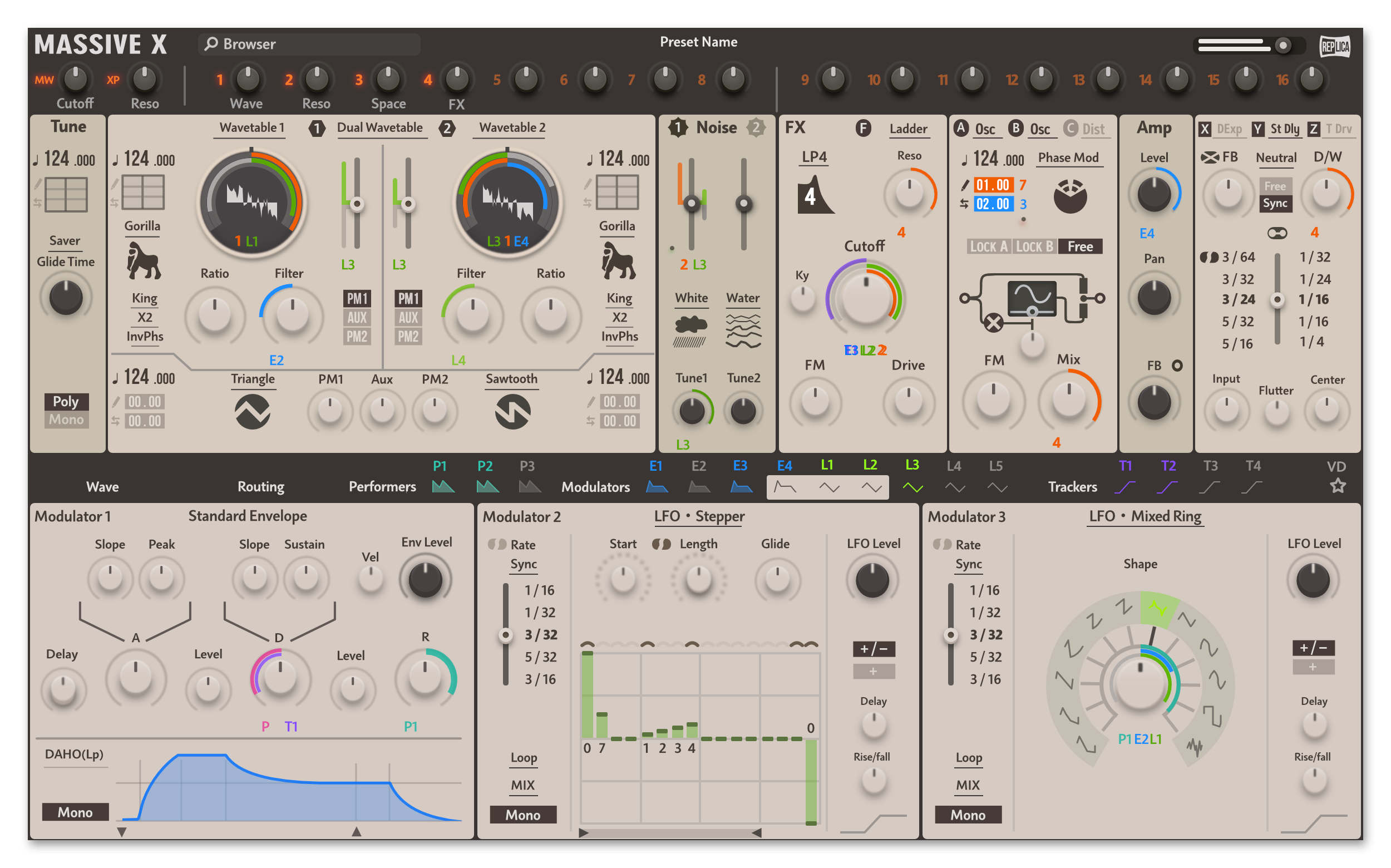
In your first example, you've just made a knob that doesn't look like a knob.
In your second example, you're confusing mouse position and gesture. Linear sliders map mouse position to state changes, rotaries map gesture. Another way of looking at it is that a rotary slider's state is decoupled from the input, and in doing so, is a much more responsive control. Not to mention, you have an infinite 2D area to traverse to change the knob value with respect to the widget itself, not a finite, defined path.
And the huge reason that linear sliders (at least off the shelf ones) are impossible to use for audio UIs is that 99% of your user's time is spent adjusting from the previous position, not resetting it to a new one. That means any behavior where a click resets the position (like clicking just past the current position) is broken. Not just because it's trash UX for the application, but because in audio systems jumping parameter values can cause artifacts, and mitigating them is not without cost in performance and fidelity.