It's a beautiful device, and for some reason I could watch Mr. Clickspring file brass for hours. Most of the device is clockwork – gears and bearings, so… physical manifestations of multiplication and division.
But…
The first couple of minutes of Episode 9 amaze me. There is a section where two gears with slightly offset axis are joined with a pin and slot to approximate the nonlinear angular movement of the moon caused by its elliptical orbit.
It makes one wonder about the sheer number of observations and quantity of analysis they must have done >2000 years ago to work out the motion of the moon and translate the math into bronze.
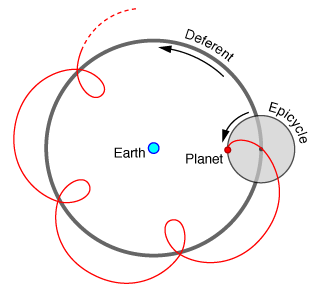
The modelling for the movement was simple: The Moon rotated on a cycle, whose center was itself rotating on a cycle centered at Earth (see [2] from [1],) but the part of the antikythera mechanism that was devised to simulate this was purely brilliant!
Every advanced ancient civilization had astronomical observatories and political leaders routinely relied upon personnel at these facilities for information about when to plant and harvest crops. If your livelihood depends on this sort of thing, there may be an incentive to invest in improving instruments and models.
The artifacts that we have found represent a small fraction of what these people produced and used. Are there going to be any iPhones (or Commodore 64’s)that will survive to thousands of years from now? If so, will future archaeologists be able to turn one on?
The problem is not that we don't have more of these devices but rather that little written remains of them. It's as if references to them were systematically destroyed. Mind you, we wouldn't even know about the Antikythera mechanism where it not for its accidental discovery.
Electron microscopes already exist today. It's impossible to predict what advances in microscopic imaging might be made in the next 3000 years, but if we assume they at least don't regress, I think there's a fair chance that a dug-up integrated circuit could be recreated in software based on an image of the die.
I love Clickspring. He's basically the single reason I use Patreon.
I have bouts of insomnia, and when I do, I found that listening to either Chris (or Bob Ross) while lying in bed help me tremendously to get calm enough to fall asleep.
“With LEGO”, rather than “by LEGO”. A remarkable achievement nonetheless, but nothing compared to the original Greek mechanism – the independently acquired celestial knowledge, mathematical ability, and the technical skill required to complete it is mind boggling given the era.
From observing comments here
on HN, it’s clear that it’s fairly common for non-native speakers of English to use “by foo” when “with foo” or “from foo” would be more appropriate.
From this and the fact that OP wrote “by Legos” and not “by LEGO”, it was simple to deduce that they meant that it was created using little interlocking plastic pieces and not by the company well-known for selling little interlocking plastic pieces.
I wonder why he cut gear teeth with a triangular file. As long as he was using a lathe and drill press, I mean. Is it just that gear cutting requires nonstandard machine tools?
He's trying to do at least one example of each type of required task with tools that would have been available at the time. Most of the gears were actually cut with a gear cutter (consisting of an electronic indexer on the headstock of a mini lathe and some Sherline lathe parts mounted on the mini lathe's cross slide, using a homemade 60° D-bit). That has included making (and using) a pump drill with various flywheels he's made from bronze he alloyed and cast himself, making drill bits and files from iron, which were then case-hardened (because steel, as such, wasn't a thing back then), along with various other plausible tools. The only place he hasn't gone is making a lathe, for which there is ample documentary evidence (by the standards of "ample" in documents from antiquity).
But…
The first couple of minutes of Episode 9 amaze me. There is a section where two gears with slightly offset axis are joined with a pin and slot to approximate the nonlinear angular movement of the moon caused by its elliptical orbit.
It makes one wonder about the sheer number of observations and quantity of analysis they must have done >2000 years ago to work out the motion of the moon and translate the math into bronze.