Consider that our bodies were not evolved to use toilet paper, and that hemorrhoids are virtually unheard of in third-world countries that lack TP.
(I haven't confirmed that latter claim. It's just something I read once, somewhere.)
Anyone who's been sick and had to go to the loo multiple times in a row will notice how painful it becomes. I'm not sure it would be painful if washing was used rather than rubbing.
My comment here is full of assumptions and wildly unsupported by evidence. But I thought it might be best to post it so that it can swiftly be disproven or shown to have a grain of truth.
The topic is gross, but it's a serious issue that you don't think much about until suddenly you have to.
I think the ideas that hemorrhoids are not prevalent in third-world countries, not using toilet paper for cleanup and that using a western-style commode (and not squatting) is the source of problems is probably incorrect.
I base this on observations on the large numbers of advertisements for hemorrhoid treatment (most magazines, billboards, etc) in India, the fact that most people in India use water for cleanup and on the fact that squatting-type toilets are in common use in India. Again, just observation...
It takes me less time to pass a number 2, than to go number 1. It is not loose, but it is soft and just ... blooop, done. When it's like modeling clay - not getting enough fiber! :-D
Since you're the one bringing this this time up I'll throw this out there: fiber is the source of as many problems as solutions. The idea that high fiber diets are appropriate for everyone is not supported by the science, and there are tons of places where reducing fiber is tremendously beneficial. Look into the FODMAP diet, for one obvious example.
I've read that the culprit is not toilet paper, but the face that we sit when we shit, while we ostensibly evolved to squat. So the bowels don't straighten out as they should, and the excessive pushing leads to pressure which gradually causes blood vessels to bulge over time.
You could always put them through a meat grinder or dissolve them in acid pre flushing! Just don't use the bath for the dissolving. The tub won't keep the acids contained.
Well, yeah, if I rub any other place on my skin with toilet paper sufficiently long enough, it starts to hurt. I don't see a reason why it should be different down there.
Instead of trying to create a fancy standing/sitting desk workflow, I've personally tried to just take more breaks throughout the day. Unless the weather's terrible, even a brief five minute walk does wonders.
It's also a great way to get some alone time and mull over what you're working on without distraction. Just as when I was a student studying mathematics and doing a bit of research, I've found that with programming sometimes a greater clarity of thought is achieved when you have nothing but your mind -- no pencil, no paper, no computer, nothing to write on, nothing to doodle on. It forces you to consider only ideas that you can fully manage in your head.
I think most jobs benefits from this, not just office work. A short time away from work, quick walk does wonders for your mental health. Some people smoke because that gives them the excuse to get outside for a few minutes now and then :-)
That's very true, but when you think about it, it's kind of strange that you need an excuse in the form of a cigarette in order to refresh your mind. People somehow seem to think that a cigarette break is OK since the person is "doing something" but if the same person just takes a walk it might be perceived as slacking.
I think a solution for this is alternating between standing and sitting desk with the recommended time interval being 20 min sitting, 8 min standing and 2 min just generally moving around.
Instead of buying a transitioning desk I just hooked 3 monitors to my desktop where 2 are sitting and 1 (lg 2560px) is standing and created a small delphi app that switches the monitor for me every 30 mins. So far it has done some good for my back but i feel that doing this sort of circus destroys my focus. Still health is over everything so I'm sticking with it.
I just have a standing desk with an extra high drafter-style chair, and everything carefully adjusted so that the keyboard and monitor work for both sitting and standing.
I wanted to do this recently but I couldn't find a chair tall enough. I need the seat to be at around 95cm (37.4") otherwise my elbows are too low. The tallest chair I could find was 90cm (35.4").
It's a very common formula recommended by a lot of physiotherapists. It's just a recommendation because the time I started it, I had a rather severe backache. I'm sure 60m is fine too if your back allows it. It depends on every individual i guess.
There are ways to take most pressure of your spine, while still allowing you to sanely use a mouse/keyboard (the later has to be split). It's mostly a fitted seat with a semi-fancy headrest, the latter has to be designed to keep your head from rolling to the side. Also you need slightly channeled armrests, which need to be adapted in extend/channel depth depending on how far your hands have to move. If you use a steno keyboard, likely not at all, if you use a graphics tablet, likely much further.
You still might need to move every once in a while though.
I know almost nothing about medicine, but my guess is that the issue is that staying in one place all day is the issue, not whether you’re sitting or standing.
Minor quibble, but halogen-lit offices? Who is sitting under halogen lamps all day? Most office lights are LED these days or maybe fluorescent if they're older.
Leds can flicker even worse than flourescent. Test it with your mobile camera, shove it up to the lights real close and see if it starts showing banding all over the screen. The calmest light you get is halogen or a normal lightbulb of the burning rust type.
The solution is to have DC powered lighting circuits so you don't have terrible $0.50 AC/DC power supplies in every bulb. It'd be nice to have DC circuits for electronics, too, but that's probably a lost cause.
I’m hoping that USB Type C connectors become ubiquitous and people start installing USB C outlets in addition to AC in many wall sockets. Many small appliances can switch to DC and get rid of their transformers. AC will still be needed for e.g. vacuum cleaners, washing machines, refrigerators, loudspeakers, blenders, toasters, hair dryers, etc.
You can see many (cheaper) leds flicker out of the corner of your eye. Especially led strips. This drives me nuts around xmas, when streets are decorated with cheap, flickering leds.
> If you’re the sweaty biker type, cycling to work[...] "By cramming that hard bike seat into your perineum [you may make hemorrhoids worse and impact urine flow.]"
Though I can't stand the writing style, sitting while cycling is a real problem, especially if you're male. I bike year round here in Toronto, about 200 kms a week for most of the year, and I didn't know. It took almost a year for the ED to go away once I committed to standing while cycling 100% of the time. I was only in my late twenties when it happened and I figured it was something only old men get. I'm super happy I happened to come across a paper that talked about it.
The side benefit is that it made my arms huge and I've got real abs now.
If you get numbness or ED from cycling, you need a better saddle! Don't just "suck it up", you need to find a saddle that puts your weight on your ischial tuberosities or "sit bones", not your soft squishy perineum.
Soft wide saddles are actually worse for this. You need a relatively narrow saddle, with a deep cutout in the middle.
And you need to have it adjusted right, so you end up sitting correctly. And if course you should slightly vary your position over the course of a ride.
A good bike shop will be able to find you the perfect saddle and fit.
I've found pooping with your feet on your tippy toes like a ballerina also does the trick (while still sitting down of course) to achieve the elevation of your legs to be in more of a squat position when pooping.
If you ever go to China and have to squat to poop, that's also a good catalyst to finding the right squat position to best suit you.
Although that's certainly better than nothing, it's really not the full deal at all. Even the squatty-potty which is way beyond just tip-toes is only about half-squatting. I've compared and the full squat is the real deal.
People who want to do it (even in prep for a China trip) better work on simply spending time squatting in general. Apparently, westerners with sit-toilets actually lose the flexibility to do a relaxed, flat-footed squat at all.
Blood flows in veins due to contractions of surrounding muscle. When you're sitting, your lower body is largely relaxed, which causes blood to pool in your lower body. It's a serious (acute) issue in people who are bedridden for long periods of time. I suppose the article is suggesting there's a downside to chronic, low grade exposure as well.
I'm 31 and my lower back has started hurting and giving me issues, especially while sleeping.
I always assumed this would only happen much later and technology would have advanced enough by then that I could have gotten a robotic lower back. But here we are.
This is even with doing a stairwell run every hour and standing up quite often, and sitting at what some article stated was the best angle, 135 degrees or something.
I also do Pilates... So even with all of this sitting for 14 hours a day has caused back issues for me. Sorry to deviate from the toilet topic. Luckily that is one department where I seem to be healthy :)
Are you really sitting for 14 hours / day? That's insane, you need to move around more. You say you take breaks and do pilates, so maybe 14 is an exaggeration? If not you should try to be more active once you're home.
I had a similar issue. After encouragement from my wife, I visited a chiropractor. A few adjustments later, and my back pain is dramatically reduced. My chiropractor isn’t pushing holistic medicine or other garbage, or I would be running from the experience. There are many charlatans out there looking to fleece the desperate, so be careful.
There are plenty of good chiropractors out there, especially (I find) ones who do more sports-related work. I still regular MDs about any long term issues, but especially for something sudden or a small injury like falling funny or wrenching a back muscle, a chiropractor can help take off the edge and train muscles for better posture.
But stay away from the ones who think they can treat medical issues with spinal adjustments or weird arts.
In 2002, I had lower back pain after a muti-day trip in a Nissan Sentra.
I found a book that advocated sleeping on your stomach. It took about a week to get used to it, but I haven't had back pain since. Unless I do something stupid like lifting a heavy weight with my back or doing a lot of stoop-labor.
> I'm 31 and my lower back has started hurting and giving me issues, especially while sleeping.
I'd recommend seeing a physical therapist. I had a similar issue, and my PT gave me a set of stretches that clears it right up as long as I do them daily.
Never had a serious issue with hemorrhoids until I got a Nintendo DS. Once I started camping out on the toilet, I developed internal and external 'roids.
I prefer to take frequent walks, which also helps to clear my head and forces me to do other exercises like climbing stairs. A “standing desk” just seems like a really complex solution that doesn’t even address any part of the problem except the sitting.
Also, standing desks are really weird in a cubicle situation where suddenly your neighbor is towering over the wall for an hour, peering into your space.
Standing desks in open offices make me feel uncomfortable. I get pretty bad anxiety when I feel like I'm bothering someone else so I tend to try and only stand when my neighbors are standing.
At home office desk is 100% standing, DIY table mounted on top of 2 wooden chairs. If I'm getting tired of standing and leaning around, time for a walk. My productivity is so much higher at home compared to my companies open office. Wish I could convince them to let us just make team "rooms" in the open office, ala Valve style.
They bought us all standing desks with wheels, but were not allowed to roll them around. VP of engineering jokes that after I brought it up all the desks would be wheel-less come Monday. Little does he know that if those wheels aren't gone next week my desk is moving were ever I find a space I feel more comfortable, anarchy in the engineering wing, eyes open, no fear, be safe everyone.
Reminds me of the Peopleware story about cubicles being sold as modular furniture, but God help you if you actually reconfigure the cubicles to suit your team's organization.
It's like giving a kid a prebuilt Lego model and expecting them to never take it apart and build something else. No sane parent would expect that, I wonder why I keep all my creative ideas to myself and struggle with motivation problems and execution inititive...huh... can't be that I have zero agency granted to me in arranging my workspace. Heh
I work mostly at home and I mostly just get up and down a lot. A lot of what I do is writing and I find that writing a few paragraphs and then getting up and thinking about where I might want to take things next is a pretty effective workflow for me.
Other times, I do focus for a longer period of time.
I have a multi-monitor setup in my office but these days, I mostly work on a laptop that I'll take to different rooms around the house.
Cubes come in more than one height, are you talking about the short ones?
Also, does having a standing desk stop you from talking frequent walks? Have you seen someone who advocates standing desks recommend not having any other mitigation?
It doesn't have to be noticeably more expensive than a normal desk arrangement. Just get a static standing-height desk (longer legs, no special motorized stuff), and a drafter's chair with a seat adjustable to barstool height.
Well, standing cause varicose veins - because a close relative just needed surgery because of standing too long - and she doesn't have the healthiest relationship with her butt, so what gives? Are standing desks really healthy or not?
I had a cervical discectomy at an unusually young age, was largely attributed to poor sitting/posture.
My neurosurgeon for the procedure was fantastic, but he basically said "humans aren't made to be in any position for prolonged periods of time". His recommendation was a sit/stand desk and to occasionally but consistently be changing things up -- re-positioning, standing/moving, using an exercise ball occasionally, etc..
My understanding is that the ideal “setup” is being able to alternate standing and sitting throughout the day. For example, I have an adjustable desk and I tend to stand first thing in the morning, sit around lunchtime, and then go back to standing later in the afternoon. I also find that shifting positions can help when I’m stuck on a problem or feeling anxious.
I recently bought a Mi band 3 and a convertible stand up desk at work. There is an idle feature where it alerts you when you do not have enough steps with the hour. It has done wonders for me in terms of changing my sitting habits.
I thought it wasn't in speed that humans excel but rather endurance. That is, we wouldn't be able to escape a lion chasing us but we can hunt down deer/etc. until they collapse from exhaustion.
Bingo. Over a short distance a tiger or cheetah would maul a human, but over a longer distance a prey species like a gazelle would tire out and eventually a human would be able to catch up with it.
So since we evolved to chase our prey rather than run from hunters, maybe we should program by putting our computer on a gazelle, and we have to catch it in order to write code for the [time period]?
It'd certainly lead to more thinking before writing, maybe the tradeoff would be worth it.
If you’re fine with waiting a couple days for the gazelle to tire out before you can catch up to it, sure. And that’s if you know the signs to follow where the gazelle is.
From the linked Wikipedia entry it seems that it usually takes 2 to 5 hours, and 25 to 35 km chase. Not sure why you say "couple days". And hunters usually know the signs to follow to track a gazelle, so that's also non-issue.
I'm not sure why you're being down voted. This is a legitimate question. Humans are endurance hunters, that much is clear. You can't rely on endurance to escape from a faster predator with bigger teeth and sharper claws.
The original statement seems false. Humans did not evolve to outrun their predators, but rather their prey.
That's fine. When problem solving, it's important to lay out the situation clearly before delving into solutions that may only mitigate part of the problem.
I have been doing weighted squats for about 6 months now and oh my god I am so happy with how big my butt is. I cannot wait for it to become even bigger by next year as I continue doing squats.
If you're really interested in those butt gains, look up Bret Contreras aka "The Glute Guy". He posts some workouts on Instagram (who doesn't these days?), but he knows his stuff.
Barbell hip thrust and bulgarian split squats, if you really want to work those glutes. Squats and deadlifts are great, but always try to include some bilateral work (eg bulgarian split squats and lunges) and exercises to focus on specific muscle groups (eg hip thrusts).
Generally the advice is to strengthen your lower abs and glutes, whilst stretching your psoas and hamstrings. But I still have very pronounced APT whilst having very strong glutes and decently strong abs, which tells me that I still have a lot of stretching to do.
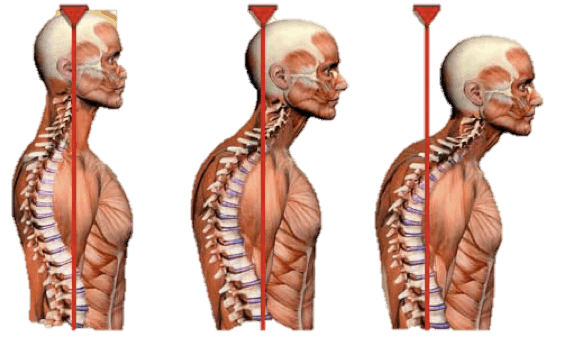
What do you mean by computer nerd neck? I do shrugs, which hits the traps, but I find my neck is a bit thicker too.
Front squats isolate the quads more - I prefer to do back squats, then isolate smaller groups with quad extensions and hamstring curls; the latter being good for the glutes too.
Consider that our bodies were not evolved to use toilet paper, and that hemorrhoids are virtually unheard of in third-world countries that lack TP.
(I haven't confirmed that latter claim. It's just something I read once, somewhere.)
Anyone who's been sick and had to go to the loo multiple times in a row will notice how painful it becomes. I'm not sure it would be painful if washing was used rather than rubbing.
My comment here is full of assumptions and wildly unsupported by evidence. But I thought it might be best to post it so that it can swiftly be disproven or shown to have a grain of truth.
The topic is gross, but it's a serious issue that you don't think much about until suddenly you have to.