Hacker News new | ask | show | jobs
by lafar6502 3004 days ago
Both Uber and Tesla try to discredit the victim before any official investigation ends, and in both cases it’s quite clear they will try to cover their asses first. And they have all the data. How can we be sure they don’t selectively hide something or don’t tamper with the records before giving them to investigators?
3 comments

Uber has said essentially nothing about their crash, it's the cops who rushed out and got nearly everything wrong. Uber clearly had a serious technical failure, but there's been no PR spin from them.
I think it is possible that the Tempe police chief and mayor anticipated the incident could be a problem for them, especially given the secret agreement that later came out, and chose to try to spin the story on their own account. It is not hard to imagine that, in that frame of mind, they might be receptive to someone from Uber saying "clearly this was unavoidable", but I have no way of knowing whether any such conversation took place.

Then there is the question of whether the Uber-supplied video accurately represents the lighting conditions at the time... This may seem unduly conspiratorial, but I gave both Uber and the Tempe administration the benefit of the doubt until it became clear that the initial reports were innaccurate and less complete than they could have been.

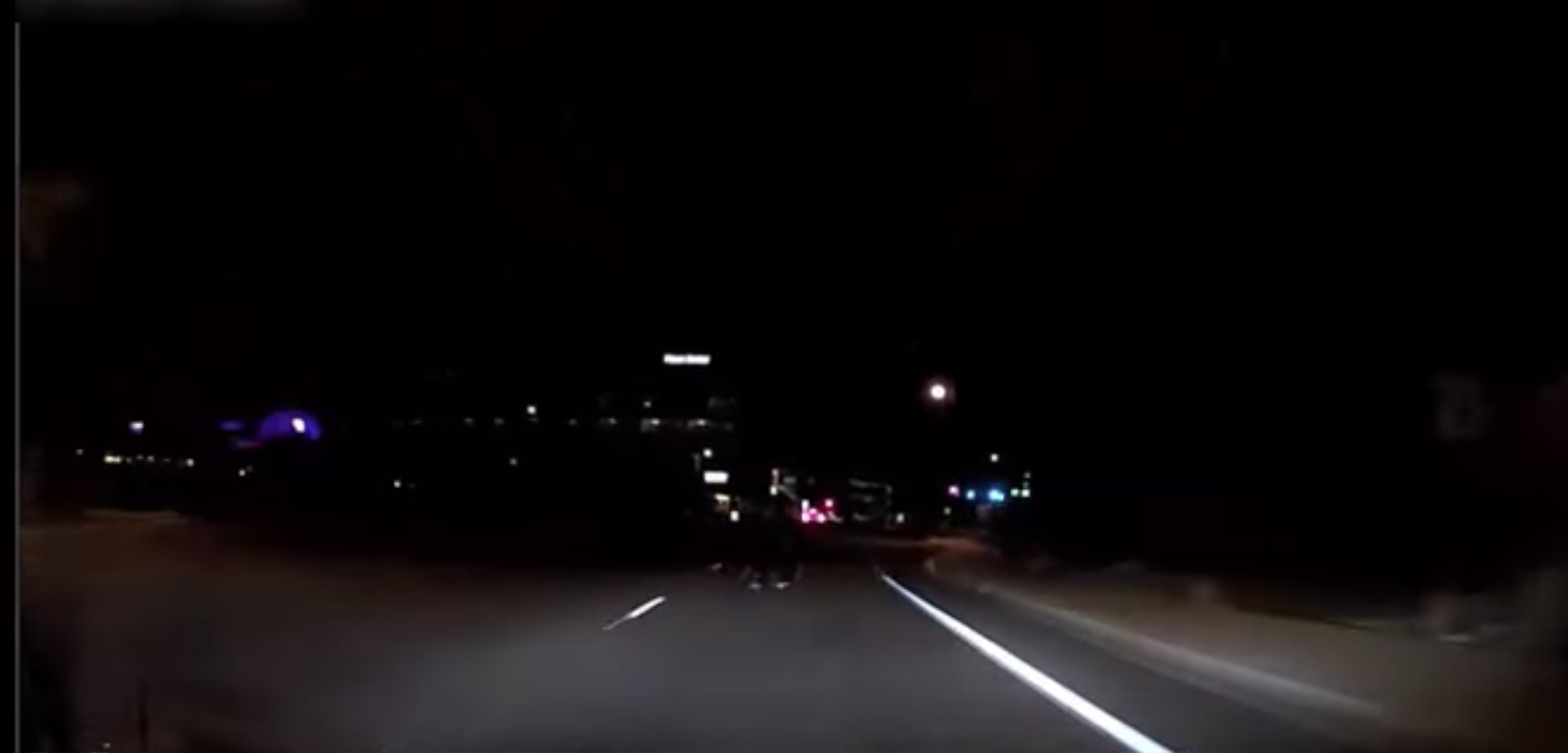
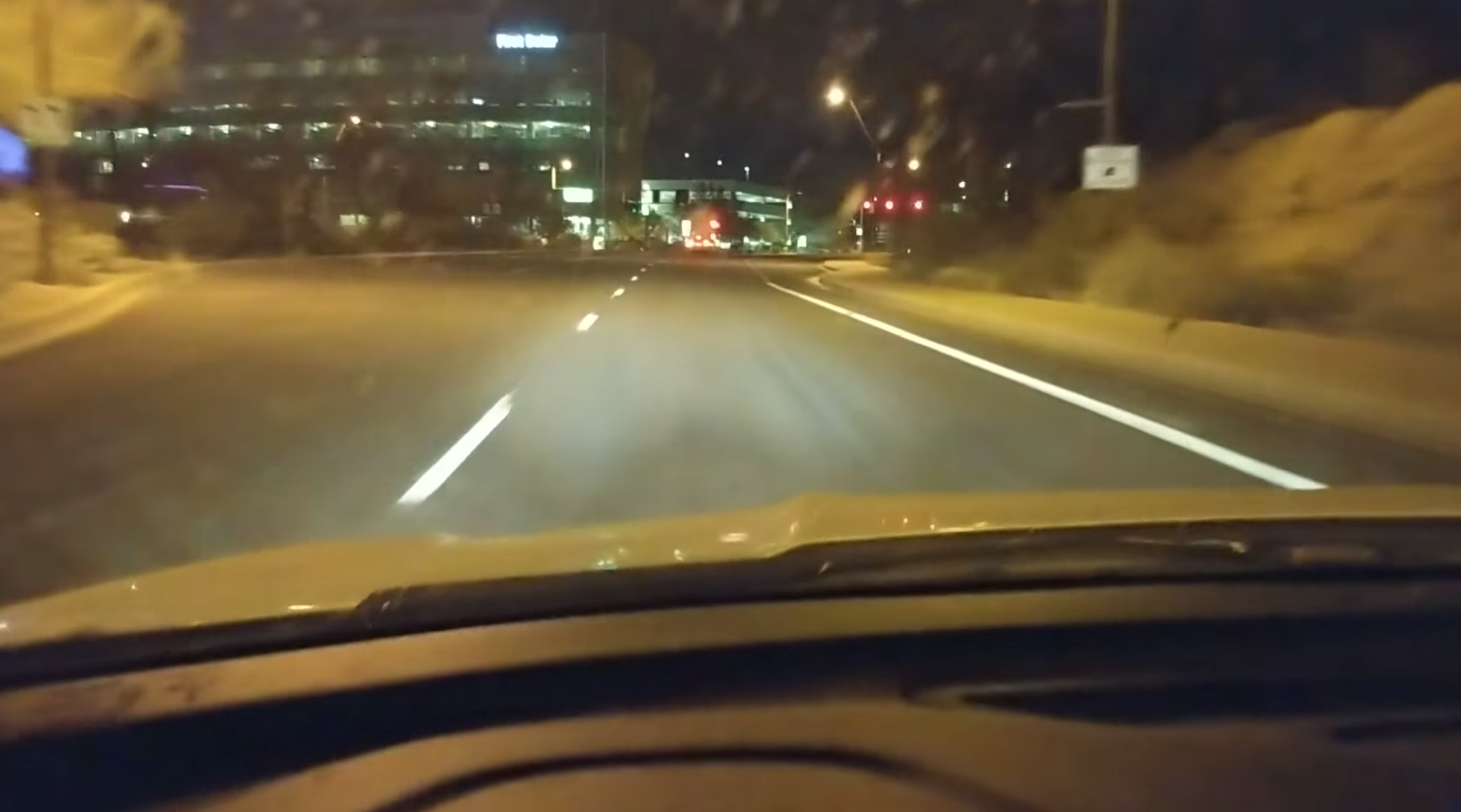
It seems like the dash cam video released is very misleading there's been a couple people who've driven through the same area at night and it is well lit. [0] From the Uber cam it seems like the light is still on because there's a bright glow about where streetlights are in the other videos. It's kind of shocking just how bad the dash cam of the incident actually is unless the lights were recently (because there's still the glow) off for some reason before dawn (poorly implemented scheduling maybe?).

The difference between the Uber dash cam [1] and the one posted to youtube is stark [2]. It's certainly darker where she comes from but no where near impossible. Source the ArsTechnica article [3]

[0] https://youtu.be/CRW0q8i3u6E?t=32

[1] https://cdn.arstechnica.net/wp-content/uploads/2018/03/Scree...

[2] https://cdn.arstechnica.net/wp-content/uploads/2018/03/kaufm...

[3] https://arstechnica.com/cars/2018/03/police-chief-said-uber-...

> Then there is the question of whether the Uber-supplied video accurately represents the lighting conditions at the time...

Why would that matter? The issue here is that the LIDAR system failed to detect the pedestrian.

It's of tremendous importance from the perspective of public perception of who's at fault.

If the average observer watching the published video arrives at a conclusion of "well I would have hit that person too, she appeared out of nowhere in front of the car", it obviously matters.

It's not important at all. There's a bug in Uber's software. That's what we should be talking about.
It does seem that there is a problem with the vehicle's lidar or the associated software, so does it not strike you as strange that the story being pushed claimed that the victim "came out of the shadows", which is a misleading irrelevance if lidar is the primary sensing technology? Especially as the unrealistically dark video does not even seem to fit that story.
No you're right, the police happily pointed out that the woman was homeless and seemed to blame the victim. Why would they do that?

It's reasonable to assume it's to keep Uber happy.

> No you're right, the police happily pointed out that the woman was homeless and seemed to blame the victim. Why would they do that?

Because A.R.S says that pedestrians have a duty to yield outside of crosswalks and they normally make the police's accident report available shortly after any accident.

I know because I was over there not very long ago trying to get one for someone else. It's just off of Mill Ave., not very far south of where this accident happened.

> Because A.R.S says that pedestrians have a duty to yield outside of crosswalks and they normally make the police's accident report available shortly after any accident.

Regardless, it is normal to wait until an investigation is complete before you start making statements. Making premature statements actually makes the results of any investigation look suspect. Pretty dumb move.

Oh, and even if the woman is at fault that does not mean it is open season on pedestrians that happen to end up on the road.

Unless they're doing something special I haven't read about, that was the investigation by police. They don't spend a long time on every accident in my experience. What happened in our case was the driver turning left was cited for failure to yield. Case closed, next.

And I think a lot of people here don't have much experience driving these roads at night. More lights don't really help, there are too many lights on some level, you can see stoplights and such a good mile away, and pedestrians are moving shadows at night.

I had to train myself to notice them more after some weird experiences like the strange, uncoordinated bicyclist driving circles in the middle of a road for no reason in the middle of the night.

I'm sure there are things Uber and the safety driver could've done better, but I fully believe they really didn't notice them. That's right near an overpass and moving between lit and shadowed places also screws with your vision.

And FWIW, I've driven extensively here at night and I know that stretch of Mill Ave. rather well. I used to drive from Mill Ave to Van Buran, going through Papago park.

The police made those statements while the body was still warm, I highly doubt they could have properly investigated this particular accident in that time. It mostly looked like they were actively looking to pin the blame on the pedestrian somehow.

Note that as a part of the responsibility for a 2 ton piece of steel you get the expectation that you will do your best to keep the other traffic participants alive even when they break the rules, especially when they are more vulnerable than you are.

I'm not terribly sure its Uber. It actually looks like something to do with keeping the Governor happy. https://www.theguardian.com/technology/2018/mar/28/uber-ariz...
It is important to distinguish that in the Uber case it was a fully self driving car that had a safety supervisor killing a pedestrian. The responsibility for the fatality was overwhelmingly Ubers. A small responsibility falls on the pedestrian who should not have been jaywalking and should have been looking. In the Tesla case it was not a fully self driving car and the driver who had responsibility to be attentive died. One would expect autopilot to do better and the road markings to do better, but the responsibility is still overwhelmingly with the driver.
Maybe we have a valid use case for a blockchain?

edit: can someone explain what’s so wrong with this comment please?

Blockchains do nothing to make the source of information trustworthy, they can only prove the information was created before a particular point in time. You could doctor a photo/video and put it on the blockchain just as easily as a real photo. You would only be able to tell it's fake if the original version was added first (if there's an original to begin with). There's a fundamental analog hole[1] when connecting a digital system to the real world.

1: https://en.wikipedia.org/wiki/Analog_hole

If telemetry data hashes are regularly added to a blockchain, then we can be confident that the full-data set matches the hash at a later date, and are not purely dependant on the honesty of a proprietary manufacturer.

If there is a concern that the original data collected might be doctored... then this is valid, but also should be the focus of tests and legislation.

Ie,

  - Currently, speedometers are legally required to be within a certain tolerance and calibrated.
  - VW Diesel scandal, was discovered and hurt the manufacturer badly.
The argument that not using a blockchain for storing referential data because it might be dishonest data doesn't strengthen the argument that we should purely trust the vendor, it makes it weaker!

(That said, I think this is pre-optimising and using blockchain for this today is overkill... but long term, I could very much see this being a valid use-case)

I see, people imagine that Tesla would use a defeat device to put doctored logs prior the crash. However this would not work since the car can’t put logs that say that everything is fine and did everything right because people would notice that’s incorrect as soon as they compare it with the evidence collected on the crash site.

If the car was able to know what’s the right thing to do, it would not only put it into the logs but it would have prevented the crash by doing it(unless of course, Musk is a contract killer and the cars ar crashing intentionnaly with correctly pre-doctored logs).

That’s why I suggested to use a blockchain - to ensure that the logs are not modified post-mortem.

Follow your thought through: what prevents them rewriting an alternative blockchain history?

Why can't they apply that to digital signatures with timestamps? This is a solved problem for years. You could use the NSTB as a timestamping authority.

Walk me through your implementation and I will walk you through the blockchain implementation and see the strengths and weaknesses.

You're just an internet person triggered by a question, really unpleasant attitude btw. Very closed even to considering an exotic solution and angry as if I'm implementing the blockchain at this very moment, are you in your 50s by any chance? Or maybe personal problems or no sex for a prolonged period or something like that? Why Are you acting like such an unpleasant and rude person?

Blockchain provides zero benefit in this case. People on HN are tired of people ignorantly (sorry) saying blockchain. You should state, for starters, why simple digital signatures are not enough.
No, you just lack imagination.