Hacker News new | ask | show | jobs
by thanatropism 3078 days ago
> never met a neoliberal

"Neoliberal" is typically a term of abuse, but I've seen a movement (from econ professors to /r/neoliberal) to appropriate as a term for centrist radical pragmatism. These self-proclaimed neoliberals are very progressive socially and (claim to, at least) support any policies that have actual firm evidence for it. Of course, this makes them pro-trade and pro-"globalism".

2 comments

> support any policies that have actual firm evidence for it

A Neoliberal candidate lost the last US election because people from states whose middle class has been hollowed out by free markets and deregulation voted against them. I haven't seen them take that as "firm evidence" that economic policies that ignore important indicators of social well-being into account, like the level of inequality.

Today's Neoliberal believes that if you take everything from a poor person except their (now cheaper) imported TV and iPhone, they will be happy...because the GDP and stock market are growing. "The pie is bigger, so even though your slice is a smaller percentage, you're still better off," they say. It's too bad that they seem to think there is firm evidence that people are robots who would believe that nonsense.

Perfect example of how to use 'neoliberal' as a term of abuse with a nice strawman layer on top.
This reads to me like: "globalization hasn't solved the problem of economic jealousy". That it sucks to see someone become 200X richer whereas you have only become 40% richer. (But richer nonetheless).

I mean, sure. It hasn't fixed sexual jealousy either. Witness the impressive phenomenon of "incel rage" on the internet: not rage at pressing personal need unmet, but at the relative sexual deprivation that results from the fact that attractive women will usually prefer attractive men.

This is what you find at the bottom of Pikettyism: economic incel rage.

there's plenty of evidence that globalism has not worked out for substantial parts of the population in most developed countries.
Such an easy statement to make. The false assumption indeed is that if the US had not engaged in these polices people would now be better off.

Saying 'its not perfect' is easy, showing that your alternative path would have been better is hard, and there is little evidence for it. Thus most economist don't believe it.

There is overwhelming evidence that Globalisation has turned many undeveloped countries into developed ones. Do people in newly developed countries somehow not count as people in developed countries? Just look at China. That's over a billion people in a country transformed from a hopeless basket case in the 70s into a global superpower and economic powerhouse.

https://www.theguardian.com/society/2013/mar/17/aid-trade-re...

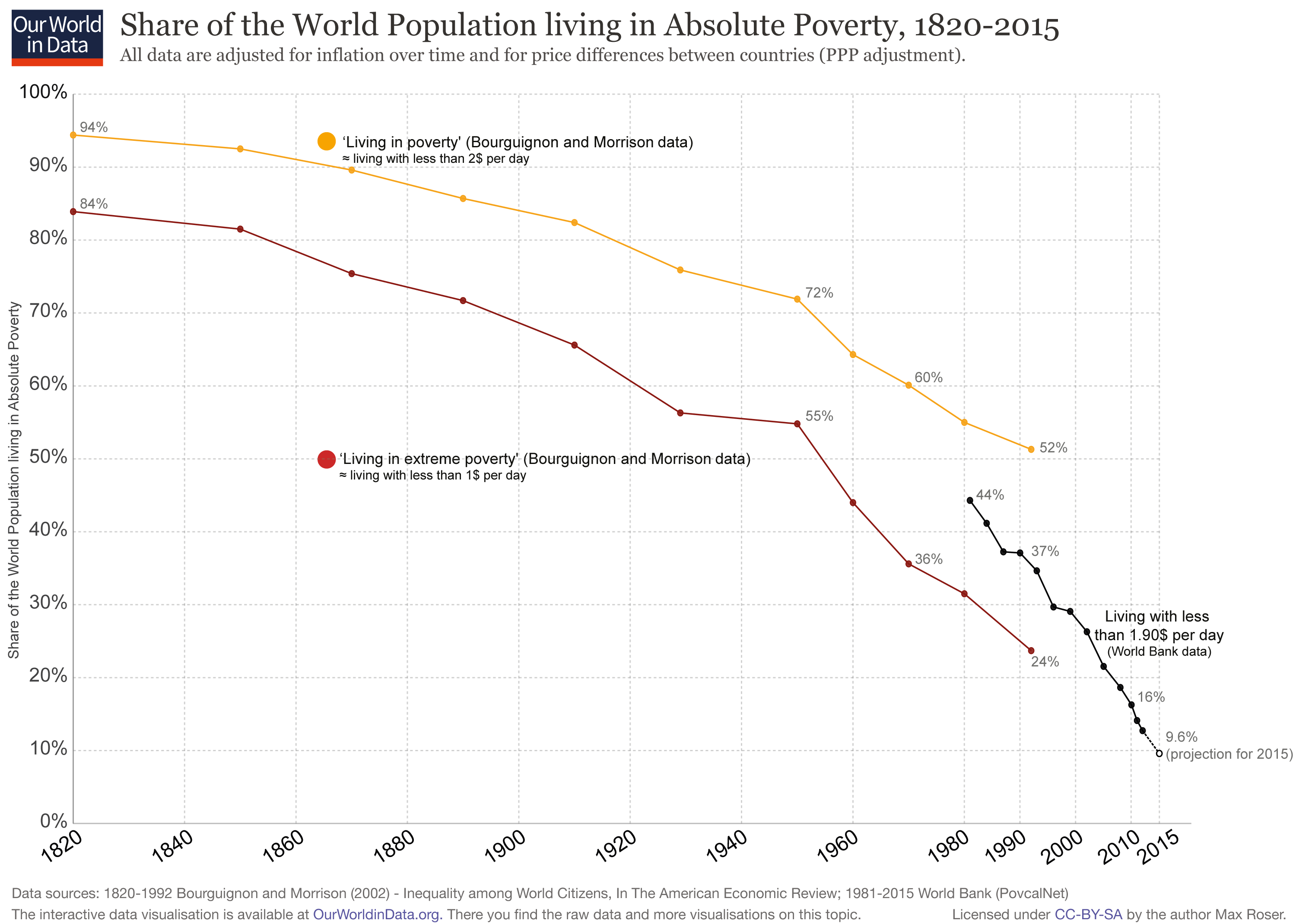
https://ourworldindata.org/wp-content/uploads/2013/05/World-...

> globalism has not worked out for substantial parts of the population in most developed countries

Pardon my language, but that's crap. Every developed country has seen yuuuuge profits from globalism.

What, not all of it trickled down you say? That's a distribution problem. It's not a problem with globalization.

Shrinking the pie in order to pursue a more fair distribution is some ass-backwards, rube-goldberg-machine nonsense. Take the profits, fix the distribution. Invest in infrastructure while you're at it.

What gives you the impression the 'distribution problem' isn't inherently linked with the deregulation that enabled these massively increased profits that only find their way to a select few?
'Inherently linked' is a misnomer. We're in the driver's seat here, we're not at the mercy of the weather. If we can set our trade policy, then we can set our tax policy and budget.

Raise taxes on the rich (short of making globalization a net loss to them), fund infra projects that put lots of blue-collar people to work, and in a generation we've got a bunch of cool shit on top of increased mobility and a better consumer economy. Everyone wins.

There is also substantial evidence that it has. The poor in America are richer and have higher living standards than the poor of less-globalized places. Absolute poverty in developed countries is far lower than at any possible by in history. In fact the same could be said for absolute poverty globally. And that, is a direct result of globalization.
>"Absolute poverty in developed countries is far lower than at any possible by in history. In fact the same could be said for absolute poverty globally. And that, is a direct result of globalization."

Actually that it's not true. Absolute poverty better global numbers are due mainly to China. A little also to India. For the rest, it could be argue that they are equal or, in some cases worst.

You could argue that China have benefited from globalization, and, in a way is true. Except that their strategy is almost the opposite of the strategy recommended by the champions of globalization (IMF, etc..)

What do you mean by "absolute poverty"?

While the proportion of people living in poverty may have been getting lower, the absolute number of people living in poverty has never been higher.

3 billion people live in poverty. This is the same as the total global population in 1960.

https://www.dosomething.org/us/facts/11-facts-about-global-p...

The UN defines "absolute poverty" as:

A condition characterised by severe deprivation of basic human needs, including food, safe drinking water, sanitation facilities, health, shelter, education and information. It depends not only on income but also on access to services.

The percentage of people at this level has been falling for a long time and is now less than 10% of the global population, nowhere near 3 billion.

Was it globalism that made them richer? They weren't already richer pre-globalism (say, 15 to 20 years ago)?