Such an easy statement to make. The false assumption indeed is that if the US had not engaged in these polices people would now be better off.
Saying 'its not perfect' is easy, showing that your alternative path would have been better is hard, and there is little evidence for it. Thus most economist don't believe it.
There is overwhelming evidence that Globalisation has turned many undeveloped countries into developed ones. Do people in newly developed countries somehow not count as people in developed countries? Just look at China. That's over a billion people in a country transformed from a hopeless basket case in the 70s into a global superpower and economic powerhouse.
> globalism has not worked out for substantial parts of the population in most developed countries
Pardon my language, but that's crap. Every developed country has seen yuuuuge profits from globalism.
What, not all of it trickled down you say? That's a distribution problem. It's not a problem with globalization.
Shrinking the pie in order to pursue a more fair distribution is some ass-backwards, rube-goldberg-machine nonsense. Take the profits, fix the distribution. Invest in infrastructure while you're at it.
What gives you the impression the 'distribution problem' isn't inherently linked with the deregulation that enabled these massively increased profits that only find their way to a select few?
'Inherently linked' is a misnomer. We're in the driver's seat here, we're not at the mercy of the weather. If we can set our trade policy, then we can set our tax policy and budget.
Raise taxes on the rich (short of making globalization a net loss to them), fund infra projects that put lots of blue-collar people to work, and in a generation we've got a bunch of cool shit on top of increased mobility and a better consumer economy. Everyone wins.
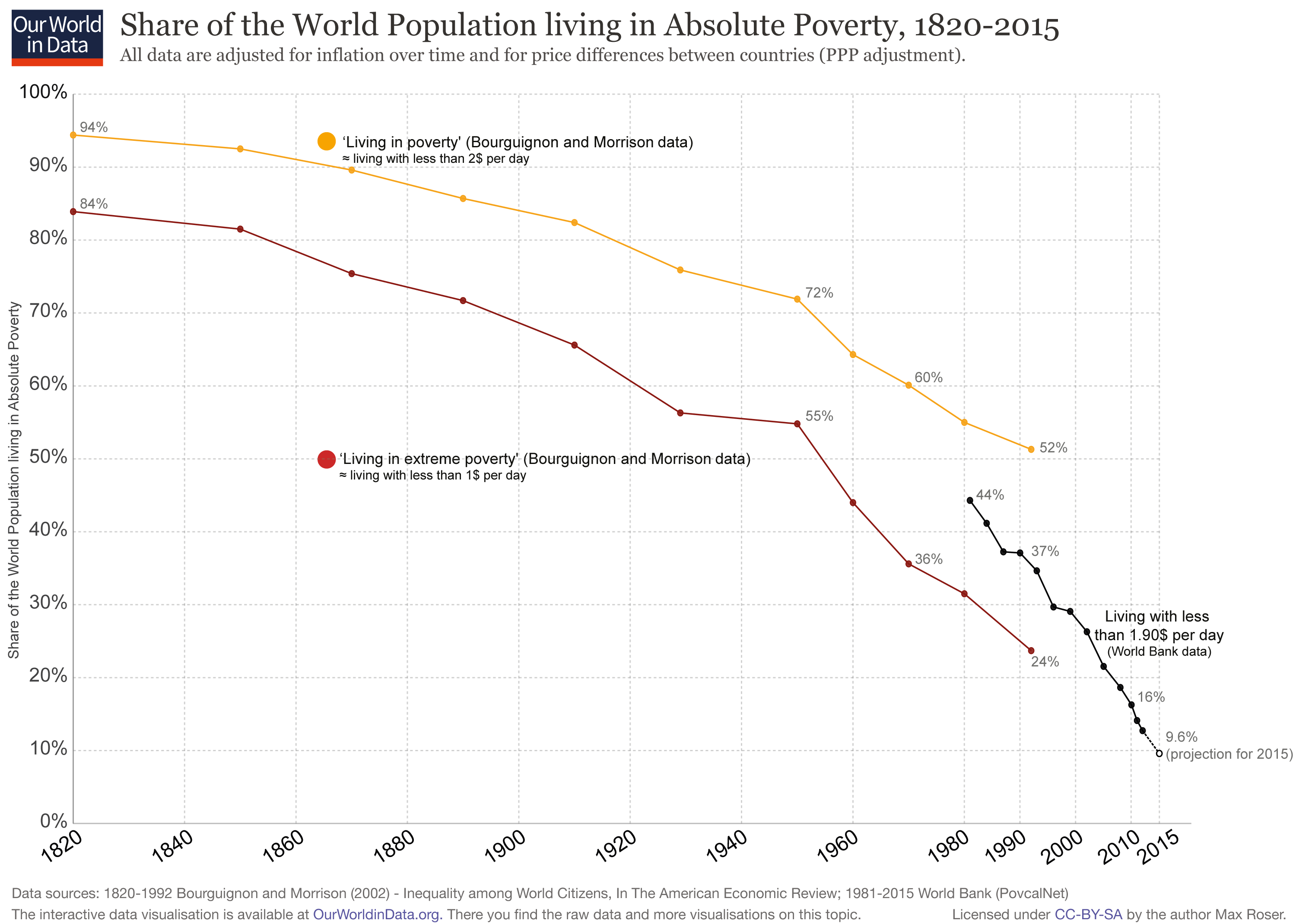
There is also substantial evidence that it has. The poor in America are richer and have higher living standards than the poor of less-globalized places. Absolute poverty in developed countries is far lower than at any possible by in history. In fact the same could be said for absolute poverty globally. And that, is a direct result of globalization.
>"Absolute poverty in developed countries is far lower than at any possible by in history. In fact the same could be said for absolute poverty globally. And that, is a direct result of globalization."
Actually that it's not true. Absolute poverty better global numbers are due mainly to China. A little also to India. For the rest, it could be argue that they are equal or, in some cases worst.
You could argue that China have benefited from globalization, and, in a way is true. Except that their strategy is almost the opposite of the strategy recommended by the champions of globalization (IMF, etc..)
A condition characterised by severe deprivation of basic human needs, including food, safe drinking water, sanitation facilities, health, shelter, education and information. It depends not only on income but also on access to services.
The percentage of people at this level has been falling for a long time and is now less than 10% of the global population, nowhere near 3 billion.
Saying 'its not perfect' is easy, showing that your alternative path would have been better is hard, and there is little evidence for it. Thus most economist don't believe it.