Hacker News new | ask | show | jobs
by phdp 3265 days ago
> OK, so I don't have much of an expectation for older plane models, but my interpretation of the above is that in newer models, autopilot need not disengage before landing and require manual intervention in order to align the plane with the correct track (barring bad weather or other unusual situations like bird collisions, etc.).

What is your definition of manual intervention? Pilots get updated instructions from the tower - the GPS path of the flight within 10 m is not programmed from the beginning due to weather issues, turbulence, traffic at the terminal ends, etc. The pilots hands may not be on the yoke, but they certainly are sending changes to the flight computer throughout the flight.

> So it seems clear in normal situations autopilot has plenty of positioning available to it, enough to find the runway and locate the plane on a display of some sort. That goes pretty clearly against what you said. Am I missing something?

Autopilot landings require a Cat III approach. There are currently no GPS (also known as GBAS for Ground Based Augmentation System) Cat III approaches approved in the US. The autopilot when landing is not using GPS for final approach. The pilot has pre-programmed in the waypoints labeled in the approach plate for the specific runway approach they've been told to take, and then they will switch over to the ILS approach.

The tone of many comments here (yours too) call out people who actually know how the system works and question them. The person you're trading comments with has said twice that GPS is not responsible for the autolanding portion of the flight. They even gave a summary of how instrument landing works - microwaves transmitted on specific frequencies in a specific pattern. You twice try to refute it. And then in your last paragraph you do exactly what he says the software engineers here do and you take offense to!

> sensible software engineers seem to regard aviation as a problem trivially susceptible of perfect solution

> And, as a computer scientist, what seems ridiculous to me is the idea that "Oh, but this system you just described won't work if there is a hurricane and there are turkeys getting rammed through our engines while the pilots are asleep and ATC happens to be on strike in the middle of a nuclear holocaust, so let's "be conservative" and never approve it because it's clearly going to make things worse on average".

Landing a big aircraft is not the easiest thing in the world, if only because the fate of hundreds of people rest in your hands. If you have a system that is designed to cut out the human component, it has to be all or nothing. As we learned from Asiana 214, when pilots have no actual practice doing something even in the absolute best of conditions and still cause loss of aircraft and life, how are they expected to perform when everything is going against them at the exact moment autolanding fails? Everything about flight training is preparing for the worst case, and practicing your skills over and over and over. Complacency can kill people when the margin of error between life and death is razor thin.

2 comments

> What is your definition of manual intervention?

I was thinking of autopilot disengaging, but that's not really important here. I'll go along with what you just said.

> Pilots get updated instructions from the tower - the GPS path of the flight within 10 m is not programmed from the beginning

not in the beginning... so it is later?

> due to weather issues, turbulence, traffic at the terminal ends, etc.

Uhm, "traffic at terminal ends" suggests the real problem is that the correct path is not known in the beginning, or that autopilot might not be able to avoid collision on its own... which is quite a bit different from the plane being unable to locate itself accurately and follow the correct path even if it were known a priori. Are we even discussing the original issue at this point?

> Autopilot landings require a Cat III approach.

I have no idea what that means. I'm not sure what gave you the impression that I know what that means either.

> The autopilot when landing is not using GPS for final approach.

> The person you're trading comments with has said twice that GPS is not responsible for the autolanding portion of the flight.

> You twice try to refute it. And then in your last paragraph you do exactly what he says the software engineers here do and you take offense to!

I think you didn't read my last comment carefully because, as I already said, I understood this. My problem is whether GPS is accurate/reliable enough to lead the plane to the place where the next system can take over, which to me implies GPS is already certified to be accurate and reliable enough to get the plane near the correct runway. Read it again. There shouldn't be a single sentence there where I "refute" the microwave transmissions or claim GPS is actually used on the final approach.

> If you have a system that is designed to cut out the human component, it has to be all or nothing.

Wha..? Autopilot isn't perfect either, and can disengage in various situations that it can't handle, but they approve it and pilots manage to use it just fine. When it's GPS's turn, suddenly it has to be 100% perfect?

And when did I ever suggest you have to cut out the human component? For goodness's sake all I'm asking for is a little display with a map that shows where the plane thinks it's going. That's "cutting out the human component" to you?

> For goodness's sake all I'm asking for is a little display with a map that shows where the plane thinks it's going.

Any commercial aircraft with a glass cockpit, which at this point is ~all of them, already has one of these.

I mean including information/labels like "taxiway XYZ" that could make a stupid mistake like this obvious. Or are you saying they already do this?
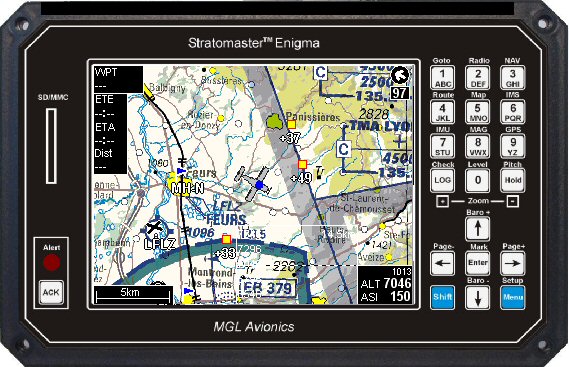
No, they don't already do this. As 'phdp already explained, there are no instrument landing systems installed in the US which include GPS augmentation. So, while the moving map will show the same position information as at any other time when the aircraft's GPS receiver has sufficient signal, it's going to look something like this: http://www.stratomaster.eu/lignes/mgl/photos/enscr4.jpg

Meanwhile, the ICAO approach plate for SFO's runway 28R looks like this: http://redwoodva.net/lib/skins/en/images/events/charts/ksfo_... - trivially simple to comprehend at a glance, I am sure you will agree!

As far as "stupid mistake" goes, you sure do seem quick to judge professionals in a highly technical field totally unrelated to your own, and of which you've made clear you are happy to preserve your ignorance. Were I you, I'd hope my own errors meet with a greater extent of charity than that precious little you see fit to mete out. But that's your problem, not mine. Good luck with it.

> As far as "stupid mistake" goes, you sure do seem quick to judge professionals in a highly technical field totally unrelated to your own

The heck? Everyone makes stupid mistakes. Hell, I make more of them than a lot of people I know. That's why there are procedures and checklists and redundancies and automated systems -- to prevent stupid mistakes, evne by the best people. Where was I ever judging the pilot for heaven's sake?! Maybe you could be a little more charitable with how you judge people?

I mean you've already said you don't know what you're talking about ("I have no idea what [Cat III] means.") but you're totally cool with taking a confidently authoritative tone on it anyway, I'm not sure what other conclusion anyone should be expected to draw.
> Uhm, "traffic at terminal ends" suggests the real problem is that the correct path is not known in the beginning, or that autopilot might not be able to avoid collision on its own... which is quite a bit different from the plane being unable to locate itself accurately and follow the correct path even if it were known a priori. Are we even discussing the original issue at this point?

Your thesis of your statements is that it is ridiculous that there is no moving map for pilots to see on the airplane. You've been told directly by some commenters that there is (tuxer), and others, including me, have said that GPS is not the way to land a plane.

>I have no idea what that means. I'm not sure what gave you the impression that I know what that means either.

I mean this in a positive way, but you should look it up on wikipedia. There are many great articles about the systems in place for instrument approaches and landings, and you may learn something interesting for a quick 15 minute investment.

> My problem is whether GPS is accurate/reliable enough to lead the plane to the place where the next system can take over, which to me implies GPS is already certified to be accurate and reliable enough to get the plane near the correct runway. Read it again.

You call us out for dismissing your idea (And, as a computer scientist, what seems ridiculous to me is the idea that "Oh, but this system you just described won't work..."), which to mean seems to be some sort of GPS en-route to to landing automated system. This idea has been informed by your inaccurate reading of a CNBC article (So it seems clear in normal situations autopilot has plenty of positioning available to it, enough to find the runway and locate the plane on a display of some sort. That goes pretty clearly against what you said. Am I missing something?). The en-route exists but can often change from the time the plane leaves the ground to when it gets within 50-100 miles of the airport, at which time it might be disengaged and switched to VOR based navigation. The landing by GPS does not exist because it is a lot less accurate than the existing systems.

This branch of the thread is about auto landing, and you were talking about how it's absurd GPS is approved for automated flying. Given that GPS is used for en-route navigation and not landing, the assumption was that you were proposing GPS landing systems. That is what my comment is about. And yes, having autopilot disengage at 50 feet above the ground when the pilot is not expecting it can be fatal. I would say that for the landing stage it has to be all or nothing. And you've been suggesting cutting out the human component by proposing an system that goes from take off to landing without manual intervention! Even if there is still a pilot in the cockpit, it still takes a few seconds for the brain to spin up to take over a task from the computer.

It's awesome that as someone outside the aviation industry, you're curious about how it works. Your incredulous tone and sense of superiority (As a computer scientist, as if we should automatically and uncritically defer to your opinion, and I say that as a programmer) is a bit off-putting. If you had just done the basic amount of research you could have come back with a list of questions such as:

- Is GPS used to navigate planes from take off to landing? What else is used?

- Why was the pilot in this incident not using automation to land the plane? How often does this happen?

- What is the procedure for switching between different navigation technologies at different points of the flight? I know that take offs and landings can be manual, but when does autopilot kick in?

- Why is GPS not used to land planes?

- What equipment to pilots use in the cockpit? If they are not the latest and greatest, why?

We could then have had a proper discussion surrounding the need for backwards compatibility, the rolling out of ADS technology, how its absurd we still use voice over radio as a primary way of relaying commands, etc. Pilots and others in the aviation industry generally do believe that a lot of the technology guiding our largest planes is antiquated, but you trivialize it without understanding the full context.

>The tone of many comments here (yours too) call out people who actually know how the system works and question them.

Lack of enough common frame of reference that the ability to communicate is almost totally inhibited from the word go. It reminds me of the Feynman magnets youtube video. The interviewer asks Feynman to explain the attraction repulsion sensation and Feynman admits any correct answer the interviewer will not understand because he doesn't understand any of the basic prerequisites of having a conversation; and any answer he gives the interviewer would understand is cheating him out of the correct answer.