Hacker News new | ask | show | jobs
by dukeluke 3376 days ago
In a global economy, workers have no leverage. If a group tries to form a union, the work goes elsewhere. Globalism exploits the fact that there are people willing to work for $1/hr, and leads to many of the problems of capitalism predicted by Marx and friends in the early 1900s. As long as globalization is allowed to continue, inequality within the US will just grow worse.
4 comments

Globalization is not the enemy. Centralised globalization with a handful of megacorps dominating the global economy is fucking awful however.

Protectionism is at best a short term solution that comes with a host of other problems.

The major threats to our existence are global problems like climate change and nuclear arsenals. Fighting against all globalization will only divide us.

I believe that the best leverage workers of the world can have is the ability to live a decent life without the threat of starvation or extreme poverty. This dream is attainable, and worth planning for and building towards as a species.

We have near instant communication, the ability to translate between languages is developing rapidly, and automation can potentially, realistically, make it so that work is truly optional. Fighting against all globalization and protecting US interests above all others is, I would think, very much not what 'Marx and friends' would have had in mind.

> Globalization is not the enemy.

The problem is there are two kinds. The classic one, and the one you can easily defend, was just eliminating tariffs. Don't discriminate against foreign businesses; treat them the same as local businesses.

But there is another one that generally gets called "harmonization", and that's the one that kills everything. Because what it means in practice is the undemocratic international enforcement of regulations created via regulatory capture. You enforce the same rules everywhere, those rules are created by megacorps to give them an advantage and the predictable result obtains.

The classical one does quite a bit harm too.

Western/1st/etc world (used to?) treat workers well. The rest of the world didn't. Once tariffs are eliminated, all countries join the rat race to the bottom. How can western countries with good social safety net, reasonable work hours and good wages compete with cut-throat conditions in Asia? Naturally the conditions equalise. The good ones get worse, while bad ones adopt a thing or two.

> How can western countries with good social safety net, reasonable work hours and good wages compete with cut-throat conditions in Asia?

In theory the idea is that they're not supposed to -- if you have unskilled work with no geographical restrictions, you do it where there is the lowest labor cost, and then everyone benefits by paying lower prices. Meanwhile western countries do the higher paying jobs that require a skilled workforce and the unskilled workers in western countries either do service jobs that do have geographical requirements or go to school and become skilled workers.

One of the things that's been killing us on that front is the broken welfare system that puts high marginal rates on lower income people through benefits phase outs, which makes it so that middle class people can't afford to hire lower income people to do service jobs, because 80% of the money goes to the government in benefits phase outs. Which means those people become unemployed, and the higher unemployment rate pushes down unskilled wages, erodes the tax base and increases the total cost government is paying out in benefits to the unemployed.

And it turns out that those cheap countries can produce skilled work too, without becoming expensive and as caring about the workers. Yet bigger than expected portion of western countries' population does not perform well in skilled work market..
>> I believe that the best leverage workers of the world can have is the ability to live a decent life without the threat of starvation or extreme poverty. This dream is attainable, and worth planning for and building towards as a species.

What do you mean by "ability"? Opportunity? I don't see how any particular economic status of anyone can be guaranteed with regards to what you're saying.

How I see it: The rich get richer and the poor, poorer. Once the rich have all the wealth, they go elsewhere with it. Corporations move to Singapore to save money. Automation will only benefit those who own it. Once things are automated, most people will lose their jobs and won't be able to afford even the things that are produced by automation. The rich aren't going to share, and if they do, they do it with strings attached so they can manipulate the spending and promote their own agendas (which is what they do now anyways).

The biggest problem is simply human selfishness. Because of it, there will never be peace. There will always be people seeking more than they need, always seeking their own survival over that of others, always seeking to crush others to give themselves a boost physically/economically/egotistically/etc. There will never be world peace as long as people are selfish, which basically makes world peace a pipe dream. Sorry to step on toes, but that's life.

> The rich get richer and the poor, poorer.

How do you explain the massive transformation of China from a backward rural basket case, to a dynamic modern manufacturing led economy in which industrial employment and industrial labour wages have both rocketed in the last 20 years?

That has come at a cost. Manufacturing really has transferred from the West to the East. Yet the West doesn't have mass unemployment and job vacancies for skilled workers are at an all-time high in the West.

The problem is that low skilled jobs have gone East and the West is moving up into high value services jobs, but our training and education systems have adapted too slowly to bring our worker pools along for the ride. The answer is not to turn back the clock, it's to ride the economic wave and up-skill our labor pool because too many people in the west are being left behind in unskilled jobs, when actually there are plenty of skilled job vacancies available compared the the actual number of unemployed.

> How do you explain the massive transformation of China from a backward rural basket case.

It's not as if wealth doesn't get redistributed for a variety of reasons (war, theft, taxes, communism, etc.). But the reality is, any economic system left to its own ends will inevitably result in a few gaining manipulating the system to gain the majority of the wealth while the rest fall farther behind. The discrepancy in the West hasn't been noticed because the economic "pie" so-to-speak has simply grown larger. When the pie stops growing, you'll start to see the effects of the inevitable trend start to appear.

> The answer is not to turn back the clock, it's to ride the economic wave and up-skill our labor pool because too many people in the west are being left behind in unskilled jobs, when actually there are plenty of skilled job vacancies available compared the the actual number of unemployed.

I agree, turning back the clock isn't the solution. However, I'm also aware that the situation isn't going to improve for the majority of people in the west. It's easy to say "up our game" but how much? Most people in the US now have bachelors. That was SUPPOSED to get you in the door to business. What happened? The bar went up. Now people are stuck with debt they can't get out of to loan sharks who won't forgive. Even if we erased all that, would that fix the problem? No, because the skill level required for entry is too high. Why? It's not merely because companies couldn't just hire from a number of talented candidates to do the job, it's because companies want to make money, and they're trying to do it by only investing in candidates they believe will bring them money (which means the experts), no investment in training. Every dime they spend towards training candidates is a dime their competitor gains when their newly-trained employees leave. Companies each sit on their own money source, and at the top of the economic chain are the billionaires with investments in all these companies and siphoning out penny after penny until - should time be on their side - they have it all. That won't happen in the long run for the aforementioned reasons (war, taxes, etc.), but you can't deny it would be fantastic to be in a personal financial situation where "money is no object".

Notably, a number of people can't actually meet the bar, esp. the handicapped and those who just don't have a knack for technical things. What are they supposed to do? Their jobs will eventually be replaced by robots, and should we get to that point, even those "middle class Chinese" will eventually start to see their wages reduced from 2 yen to nothing.

So yeah, there are plenty of jobs, but they won't be filled. People (esp. the rich) want people to make them money, not people who don't. Of course, perhaps I've overly simplified all this for the sake of brevity and haven't ironed out the argument to your satisfaction, but I trust you can find some unemployed people - skilled or not - and ask how their job search is going.

Meanwhile, global inequality has gone down, because desperately poor Indians and Chinese have grown significantly wealthier.

https://s3.amazonaws.com/content.washingtonexaminer.biz/web-...

I feel so bad for those rich westerners with a house, running water, 24/7 electricity, free schools, etc.

> I feel so bad for those rich westerners with a house, running water, 24/7 electricity, free schools, etc.

Yeah, until western countries have fallen to the level of the worst parts of Somalia, we really shouldn't complain.

If you think things are so bad, surely you can name a single good or service that westerners have less of today than they had in 1970. What is that good or service?
Housing.

In the UK home ownership is lower for people under 45 than it was (for people of the same ages) in 1981.

For example 62.1% of 25-34 year olds owned a home in 1981. In 2012 42.8% of 25-34 year olds owned a home.

Education: http://www.huffingtonpost.com/2013/06/14/college-costs-media...

Healthcare: http://www.huffingtonpost.com/2013/10/03/health-care-costs-_...

Housing: http://www.jparsons.net/housingbubble/ - compared to the rise in wages, this cost increase has been much more moderate, but it's still an increase.

All while productivity has grown: http://blogs.reuters.com/macroscope/2012/05/04/the-u-s-produ...

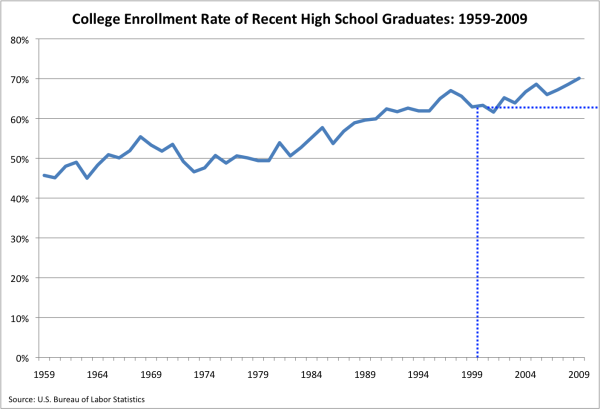
Nope. College enrollment has never been higher. Your source claims it is less "affordable", but clearly far more people can afford it. Weird.

http://www.mybudget360.com/wp-content/uploads/2012/04/colleg... http://www.mybudget360.com/wp-content/uploads/2014/11/Enroll...

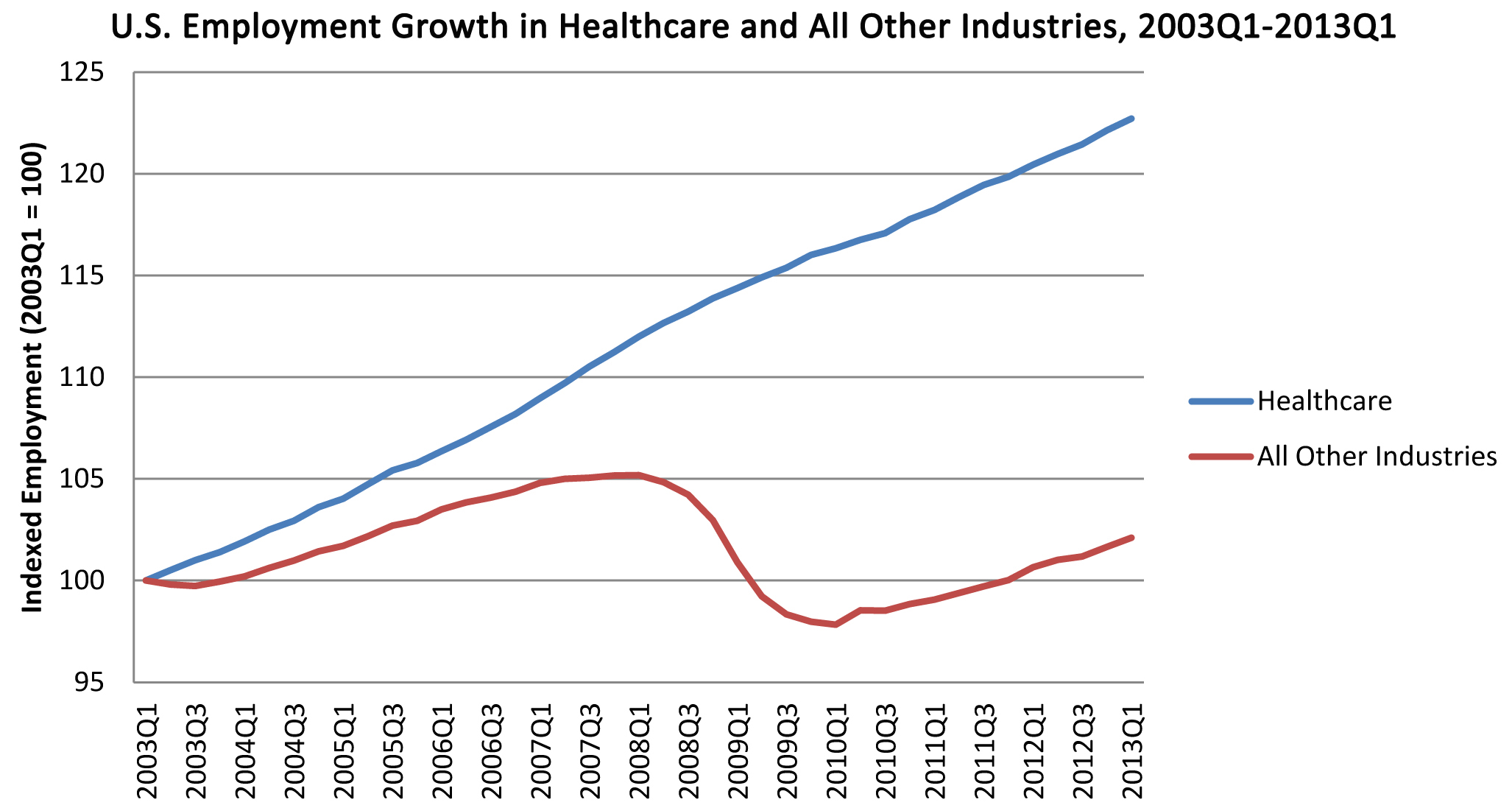
Your second article says health care is more expensive than other countries, not that fewer people consume it than some past period. Looking at real resources (e.g. # of health care employees) suggests more people consume it, not less.

https://cdn.theatlantic.com/assets/media/img/3rdparty/2013/7...

Your third source does not claim fewer people consume housing than at some past point. In fact, people consume more housing than ever before - houses have nearly doubled in size since 1973, even as # of people in the household decreased.

https://www.nar.realtor/RMODaily.nsf/pages/News2007032701?Op...

Or if you prefer primary sources: https://www2.census.gov/prod2/ahsscan/h150-80e.pdf https://www2.census.gov/programs-surveys/ahs/2013/factsheets...

Care to try again?

It takes a special kind of logic to look at rising prices, stagnant wages, and conclude that things are better.

Oh, no, wait, you didn't say better/worse, you said 'goods that we have less of'. So even if people bankrupt themselves over a broken leg, or go into decades of debt for a home or education, everything is just peachy! Even better, actually, since we can add credit availability to the list of things we have more of! http://www.businessinsider.com/chart-of-the-day-credit-card-...

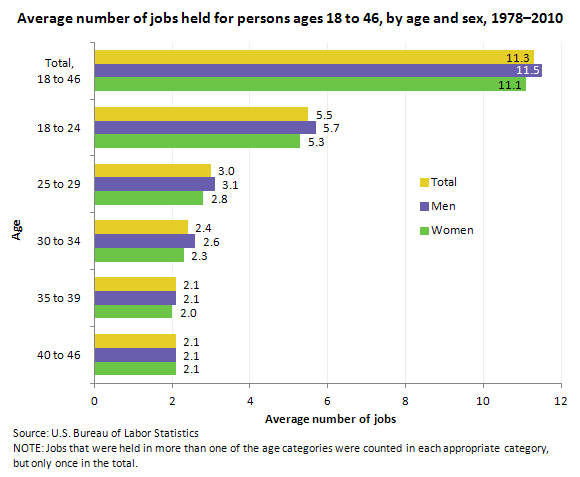
There's also more jobs: https://www.bls.gov/opub/ted/images/2012/ted_20120731a.png ! Gone are the dreary days when you were set for life by your 2nd job - these days you could find yourself looking for a new job any moment - how exciting!

Edit:

Oh, and there's more prisons, too! https://www.prisonpolicy.org/prisonindex/overviewincarcerati...

I guess I stand corrected, we have more of everything, and shouldn't complain, even if corporation's obscene wealth allows them to buy politicians and regulatory agencies. Who cares how concentrated power and wealth are, as long as there's enough bread and circuses.

The fact that living conditions improving for people in the 3rd world makes you feel better maybe doesn't do as much for "rich westerners" whose jobs have moved overseas.
Helping the less rich Americans does nothing for the 1% either. What's your point?
I think he means you're taking from one to give to another, which eventually results in the former being as worse off as the latter was, so the sum total of your "humanitarian effort" ultimately amounts to zero. But that's a guess.
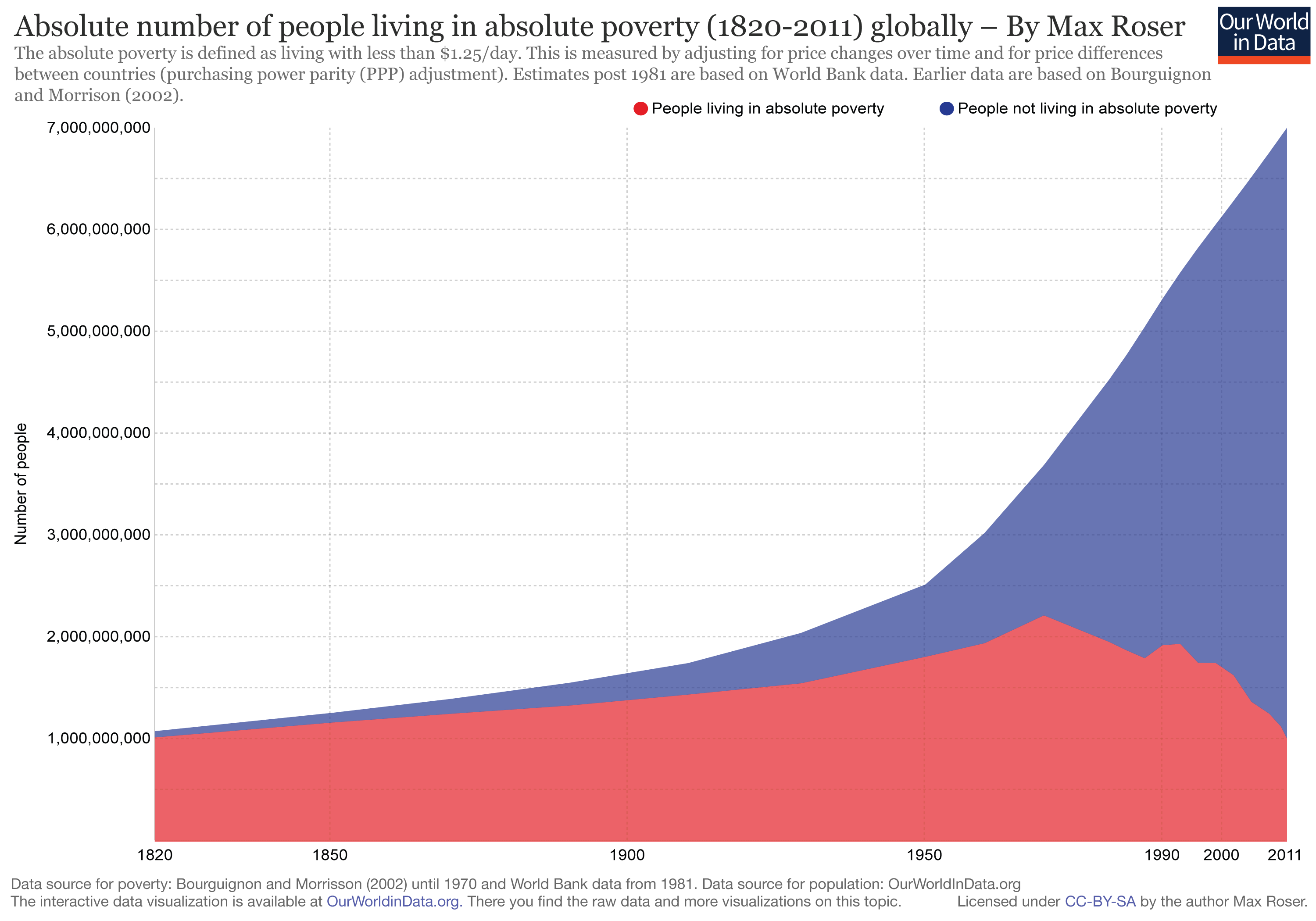
That's actually not true. The number of people living in absolute poverty (for various definitions of it) has gone down drastically.

http://ourworldindata.org/wp-content/uploads/2015/07/ourworl...

http://siteresources.worldbank.org/DEC/Images/84796-11797610...

https://cdn.static-economist.com/sites/default/files/images/...

Really, the only issue seems to be a loss of status (not goods and services) by some rich white westerners. (Non-white westerners seem to have improved their situation by quite a bit also.)

We haven't just lost status. We've lost leverage and loyalty too. Globalization has made the demand for lower class labor in the US drop to the point where the uneducated cannot do well anymore. In a balanced economy, there's a demand for everyone, yet in our outsourced service economy, only the highly educated do well. The opioid epidemic isn't here because of a loss of status.
> Really, the only issue seems to be a loss of status (not goods and services) by some rich white westerners.

You're saying there have been literally no negative effects from globalization? That unemployment in the rust belt has had no effect on standard of living?

In terms of driving down third world poverty and lifting hundreds of thousands of people out of hand-to-mouth existences globalization is unbelievably effective. A large fraction of the rural poor in China are now skilled workers. Factory laborer wages in China have rocketed in the last 15 years just as the number of such laborers has also shot up. The massive expansion of IT companies in India is sucking huge amounts of money into the Indian economy while driving down the costs of services in the West.

So it depends on what you think is most important. Yes many manufacturing jobs have moved out of the West, yet overall unemployment in the Western world is not particularly high. In the US it's fallen by half in the last 5 years to historically fairly low levels and job vacancies are at an all time high because businesses are having difficulty finding skilled or experienced workers. the real problem in the actual jobs market is training and education, not de-industrialization.

The anti-globalization narrative is utter claptrap peddled by a 70's soviet-era industrialist view of the world where all we had to do was put everybody in factories and we'd everything would be fine. Actually, it wasn't true back then either, hence the collapse of the Soviet Union.

The globalization equation has nothing to do with transfers of wealth from Western world labour to Western world fat cats. It's mainly about transfers of wealth from Western world labour to eastern world labour. The solution isn't to reverse that trend and impoverish foreigners. It's to climb our economies up the value chain and capture more global wealth. We have been doing that, but we're just not doing it fast enough.

Small nit: Marx worked and predicted these issues in the mid-1800s. He died in 1883.