Hacker News new | ask | show | jobs
by nopinsight 3498 days ago
Humans usually can't do your 2. either. In some cases, people may be able to recognize things based on descriptions alone, but those are typically simple combinations of known entities.

For recognizing relatively simple entities, are there advantages humans still have over neural nets (assuming the same scope of knowledge)?

4 comments

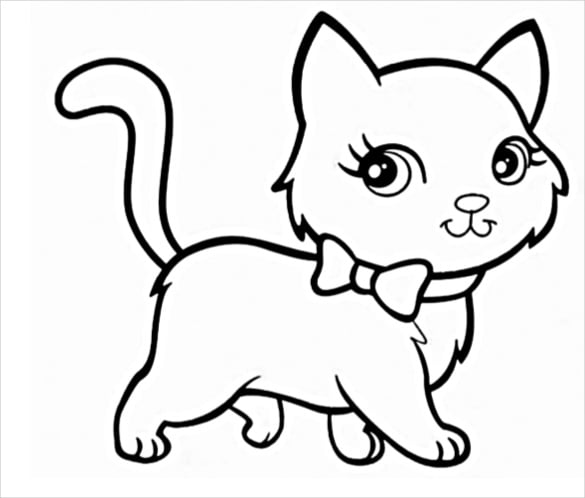
Definitely my 3 y/o can recognize a cat in an abstract drawing of a cat that is unlike any cat he has seen before.
Humans are great at learning abstraction from concrete examples. That's also what deep learning does and the big reason for its success as well. I'd guess that some neural nets architecture can do the same with your cat example (perhaps with adaptation). Can any expert weigh in?

An idea: We can also run several cat photos through image processing algorithms to filter out details. The output would be outlines similar to the drawings in the Google Quickdraw app. We put those through the app to generalize (perhaps the app needs some training with a few categories of objects, not necessarily animals). Voila! Software can now recognize drawings based on photo examples.

> Humans are great at learning abstraction

Of course, there's severe bias here, in the sense that what we consider abstraction is by definition "human shaped" abstraction

If multiple humans try to "abstract" a cat, the overlap in underlying processes will be pretty big, making it more likely that we can recognise each other's abstractions.

Of course, there's severe bias here, in the sense that what we consider abstraction is by definition "human shaped" abstraction

I can read the words here, but I don't understand the meaning.

We abstract to find a common set of features in things that are supposed to be the same but that are not present in things that are not supposed to be the same. Grouping these features then produces higher level abstractions, and so on.

Where would the bias be?

Even if the features differ, the process is the same.

And even the features are often the same. If you reverse a DCNN to see what it uses to classify things as "cats", expect to see whiskers and fur.

Think of Bugs Bunny. He looks nothing like a real rabbit, yet humans recognise him as a rabbit (presumably) because we look at the characteristics that separate him from a normal human, then compare those characteristics with our list of things with those characteristics (long ears, big feat, eats carrots) and get a rabbit. If he'd been made to look like a rabbit-octopus hybrid instead of rabbit-human, we may have struggled more.

Computers don't look at things from a human perspective; they're still good at abstraction, just different to human abstraction. i.e. there's a human bias in there.

That's OK though; the objective is to make a computer that sees things the way people do; so it's a bias we want.

However the issue isn't that the computer's not a sentient being and therefore can't abstract things it's never seen before; only that the algorithm hasn't been written to sufficiently take account of human bias.

I think the word you're looking for is "familiarity", insofar as it describes a particularly efficient means of recognition. E.g. humans have become pretty good at identifying cats.

I don't see a fundamental difference between biological and electronic neural nets; so please take the following with a physicalist grain of salt. Imho, precisely because NNs will be fed with nothing else than the reality (physical or virtual) we live in, it should gradually develop the same familiarity as humans have; i.e. nothing more and nothing less than elements of our lives/civs. Visually lots of cats, lots of cars, mountains and coasts; functionally all the tasks we accomplish daily, like driving or cooking or cleaning.

I don't really think you can hard-code "human bias" as it's an emergent property of our biology: too complex (we don't really understand much of it, imho you're bound to miss the mark and induce subjective biases), and somewhat contradictory to how NNs are supposed to evolve (thinking long term here). Basically, I don't think it would be practical nor cost efficient to induce too much perturbations in deep learning, better work on refining the process itself. Think of plants: you can tweak the growing all you want, but the root deciding factors lie in genetics (their potential, and in understanding how to maximize it).

I realize another wording is that we should apply sound evolutionary (Darwin etc.) principles in "growing" AI at large. Because AI and humans share the same environment, we should see converging "intelligence" (skills, familiarity, etc). It's a quite fascinating time from an ontological perspective.

Hmm, I always assumed bugs bunny was a hare.
You implicitly (and I think without realising) presume objectivity + complete knowledge in the observer.

Human perception is heavily biased towards features that had evolutionary advantages, and limited by whatever technical flaws our eyes/brains/etc have. That's a selection bias in our perception of information, in our processing of said information, and therefore in the abstractions that result from it.

I agree with what you say, but it doesn't support your earlier statements.

I presume it's possible that the limitations of our visual system means we may miss powerful features and hence the ability to build some more powerful abstractions. (I didn't even argue this, just pointed out the process is the same even if features differ)

But I don't see how this supports your original claim of bias, which was: "If multiple humans try to "abstract" a cat, the overlap in underlying processes will be pretty big, making it more likely that we can recognize each other's abstractions."

If humans are good at recognizing each others' abstraction, that's a validation that low-pass (for lack of a better term) filtering the features due to human's physical design still creates very good abstractions and classifiers. That is to say, if anything you're confirming that humans are designed in a way that makes the abstractions they can make maximally useful.

Cats are probably a particularly unfortunate example to use in comparing abstraction forming cabilities, as given our history it's highly likely that we come supplied with some dedicated cat recognition circuitry.
Humans have a bit of an advantage on two levels here. First, we know what a cat looks like. Not a video or a picture or a drawing, but an actual cat. That gives us a solid frame of reference. "That is definitely a cat. That drawing looks kind of like what I know a cat to look like, so it's a drawing of a cat." The closest a computer can get is "This drawing has quite a bit in common with these other drawings, and apparently these other drawings are cats. So this is probably a cat too."

Second, when we look at a picture of a cat, we're looking at a human's interpretation of what a cat looks like. If we asked a computer to draw a cat, it might look nothing like a cat to us, but another computer could look at it and go "Oh sure, that's a cat." I seem to recall Google did a thing with this a while ago, where they effectively created a feedback loop in a neural net - feeding its own drawing back into itself. As I recall, the result looked like the computer had done way too much LSD.

Basically: you are right.
Can you sketch an example of such a drawing? I'm having a hard time imagining something that looks enough like a cat to be recognized as such but unlike any cat a three-year-old has ever seen before.
I'd say that misses both my criteria: it looks just like lots of cat drawings any three-year-old has been exposed to, and it also seems like an image Google would have no trouble recognizing as a cat.
Again, I think first-world children over the age of 3 have been exposed to plenty of drawings like that, and also, Google can recognize it as a cat anyway -- in fact, it even knows which cat; do an Image Search and you'll see, "Best guess for this image: garfield meme"
Your criteria were "looks enough like a cat to be recognized as one, but unlike any cat that a 3-year-old would have seen before".

Google doesn't recognize it as a feline, it recognizes it as Garfield.

I doubt that webpage is as smart as a 3-year-old.
Do you really think any reasonable person is going to mistake this couch for a cat?

https://rocknrollnerd.github.io/assets/article_images/2015-0...

The software does:

https://rocknrollnerd.github.io/ml/2015/05/27/leopard-sofa.h...

Sure, you can fool a human. But there are things AI is missing that would be embarrassing if a human made the same mistake. It's hard to say, based on anecdotes like this, how big that gap is, but it's there.

>Humans usually can't do your 2.

I think we do. We see a building we've never seen before and we know it's a building because it has certain features that we use to classify it as a building. The examples aren't scarce.

I also think a good indicator of us doing it is the use of "y" and "ish" and "sort".

As for sthlm's point 2:

>2. The software can't recognize a feather if it's never seen a feather like that. It's not a sentient being.

This is Asimo in 2009:

https://youtu.be/6rqO5eiP7_k?t=5m24s

When it comes to abstraction from a simple rendering – no shading, no sense of depth, no discernible dimensions – it's hard to extrapolate features.

I feel there is an immense difference between recognizing simple sketches and deriving what an object is based on extended characteristics.

The video you linked furthers that by showing that ASIMO was using three-dimensional observation to calculate certain features and ascertain what that object was.

The abstract drawings benefit a lot from the limited selection and the huge implicit context.

If you'd give these doodles to people that are not Western males it'll do a lot worse. Someone already pointed out it doesn't recognize woman's shoes.

Humans frequently misrecognise sketches too.
If you've ever played pictionary you'll see the level of abstraction we can manage is remarkable too.
Familiarity with teammates may factor into that as well, partially from having unspoken frames of reference to infer from.

It is unmistakable how much the difficulty level ramps up when you're paired with those of an unlike-nature to you. Sometimes that level of abstraction is taken way outside of generic context clues.

It is but we've also had decades of practice. What scares the most about AI isn't how advanced computers can become but how slow we are to learn in comparison.
Actually in mind when I was mentioning that was playing a game I coined "foot pictionary" (we've also played "blind pictionary") with kids ages ~6 to 10yo.

We use very generic "words" (eg egg, tree, bike, cloud, plate).

When you're using your foot to draw you really have to distill down to the essence of the item. Yes there is a deal of guessing but in some way the image (however unlike the object) has to have some element of the Platonic nature, if you will, of the object being drawn.

Fun!

You're just wrong on this one. Humans can recognise a lot of things that aren't in the form that they're used to. It's seen a lot of research in psychology.

As for advantages over neural nets, one of the primary ones is that humans can recognise things from unusual angles much more easily. When I tried QuickDraw and doodled things from non-stereotyped angles (like a three-quarter view of a car rather than the usual 2D side view), it had no idea.

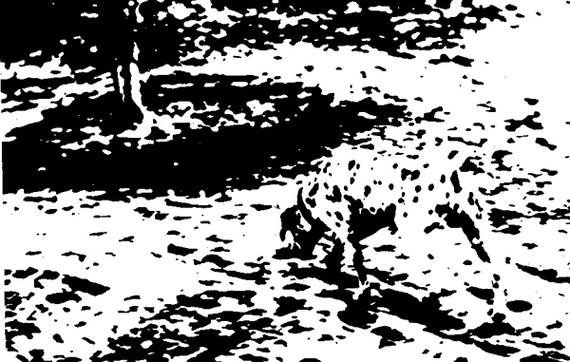
The dalmation optical illusion[1] is another example of human ability to pick out patterns and assign them to belong to certain objects. Neural nets have different abilities, and are sometimes better at picking out different sorts of patterns than humans.

[1] http://cdn.theatlantic.com/assets/media/img/posts/2014/05/Pe...