|
Well, I disagree with David Graeber on the very nature of money and exchange, so take that as you will. I'm well aware of the argument though. I don't think most economists have ever argued that markets exist outside frameworks of property rights and rules of trade. And while these things have often been laid out by governments, it does not necessarily mean that they always are, or always must be (where we take "government" to signify a usually-geographically-bounded entity with the monopoly of force.) Just the same, money has often been issued by governments, but does not necessarily mean that only governments can issue or create money. Markets exist wherever trade exists, and are shaped by governments - sometimes well, sometimes badly, and always within certain constraints of reality. As pertains to the supposed advantage of government support of industry - take a closer look at China. The most dynamic sectors of the economy there - in assembly and manufacturing - have been the least directly subsidized and encouraged. The big State Owned Enterprises, in steel, concrete, and other heavy industry insulated from competition, are the most saddled with debt and are not innovative and dynamic. The main effect of their subsidy to these industries is philanthropize everybody's consumption of their products. Sucks for the Chinese taxpayer, but everyone else gets cut-price goods. And you'll note that, even after getting "pseudo-monopolies" on various economic sectors, prices in those sectors have kept falling. The "drive-out-competitors-then-raise-prices" drama never seems to appear - and it's no surprise, because these companies are competing with each other. |
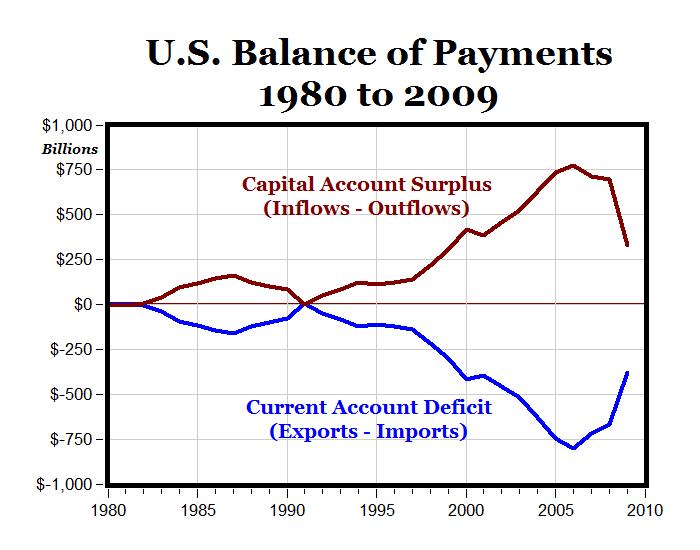

But the idea that free trade is "awesomely good for everyone" which is pushed or that markets can exist without governments or that a "perfect market" would have no government intervention seems to have no basis in reality, as far as I've read. Markets and governments exist in a symbiosis that can have good or bad effects, and there's increasing knowledge on how to manage the relationship so that most people in most places benefit. The arguments towards Total Free Trade with No Protectionism and Free Movement of Capital (capitalized because those are the ideas that I have qualms about) seems to ignore, in my opinion, the following things:
On No Protectionism: Masses of workers might lose their jobs and be unable to retrain, creating a huge structural unemployment problem.
On Free Capital: Quoting Jonathan Goldsmith talks about in his segment on Charlie Rose, if you allow for capital to move freely, you brake the contract between labor and capital that's been made through tremendous conflict and compromise in the West. Capital can manufacture goods outside of the country and reimport it, breaking the fundamental agreement of sharing of profits that allowed the West to become so good to live in during the 20th century.
And that is the recipe for tremendous income inequality and the destruction of local manufacturing.
On the Loss of Manufacturing: Vaclav Smil has said that "without manufacturing you have no middle-class"
Basically Free Trade with No Protectionism seems to mean the destruction the local population's wellbeing in exchange for "economic growth" that benefits very few people at the top. The pieces are there if you want to connect them.