|
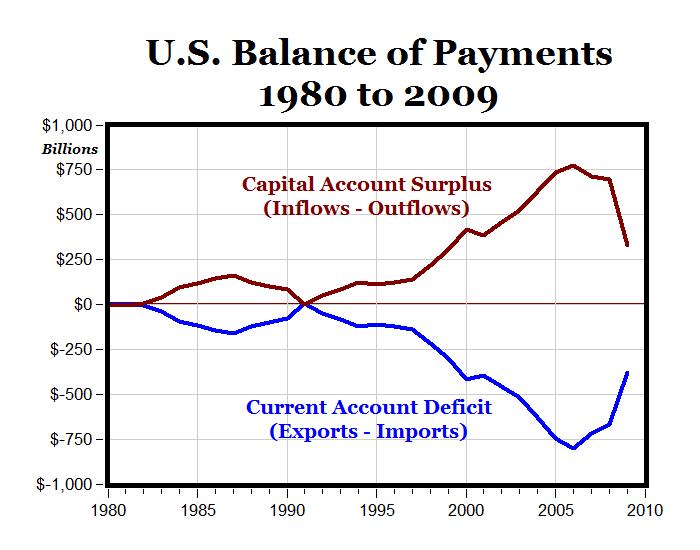
Of course, I would agree that free trade and no protectionism is not good for every single person all the time - just in the same way that people whose jobs are automated, or simply do not exist any more due to changing demand, often find it difficult and hazardous to adjust. Sometimes people do get a bit carried away in presenting free trade as a winning proposition for all individuals all the time. But the primary counterargument is that attempts to restrain free trade generally a) reduce overall output and productivity b) give domestic producers a captive market and no incentive to improve c) incentivize smuggling and corruption in getting around barriers and d) cause local industry to fall behind and inevitably be overtaken in global markets even with domestic supports. On the free movement of capital, one notes that the US, for example, has a large "trade deficit". But what does this mean? Essentially, that US consumers are net exporters of dollars in trade for foreign goods. But where do these dollars go? Well, they come to the US as part of "capital account surplus" - that is, the movement of capital investment into the US. While the immediate impression is of "industry moving overseas", the US is in fact an enormous net destination of capital investment. ( http://3.bp.blogspot.com/_otfwl2zc6Qc/TMybFmTdp1I/AAAAAAAAOm...) If they restricted the movement of capital, it would mean shutting out incoming capital investment, not keeping it from leaving. So what happened to manufacturing? In a word: automation. The US manufacturing sector is at an all-time high in terms of value produced, but it's quite true that it employs fewer people than it did during its heyday. Manufacturing didn't decline, it's just that people don't work there like they used to. ( https://www.aei.org/wp-content/uploads/2015/10/mfg1.jpg ) This is what's felt as being "without manufacturing", but really it's just the automation of manufacturing, just like the automation of farming. This is overall a positive process, increasing productivity, but in the short-to-medium term it can be painful. |


I also think the automation argument has another flaw and a very simple one. By tracking jobs that have been outsourced you are tracking old jobs in some factory that put people out of work. But what about the factories that don't get built, or the labour Forces that don't get trained to make new goods ?
By removing trade barriers and allowing capital to reimport manufactured goods you have removed the incentives to invest and maintain a workforce.
If trade barriers were still up, my guess is there would be huge training programs for people to go into certain professions that would be needed to manufacture goods locally. I.e. The IPhone is produced in China, and Steve Jobs once told Obama the reason was he couldn't find the 5 millions engineers or so he needed in America to build it.
If the trade barriers were still up that would make manufacturing in China uneconomical, then Apple would start a massive training program to train those engineers in America. Apple didn't do that program because it didn't need to, it could find them in China at a cost of 20-to-1. Compare that to Intel, a company that keeps their production in the US, which has invested in programs to train engineers in America.
If capital can move freely it will choose the cheapest available workforce, and it can't find that workforce it will train it in the cheapest possible location. It will then reimport goods manufactured with the lowest-investment workforce into the highest-profitable markets to sell it. Because free trade.
So even though automation is part of the story the destruction of trade barriers also has another effect, which is the removal of incentives for capital to invest in labour training. And that's the origin of the barista economy that people keep complaining about - businesses have no reason to invest in America anymore to manufacture their goods. They absorb the highly educated workforce paid for with a lot of public money, and they benefits from it, while reinvesting as little as possible in the economy and dodging as many taxes as they can.