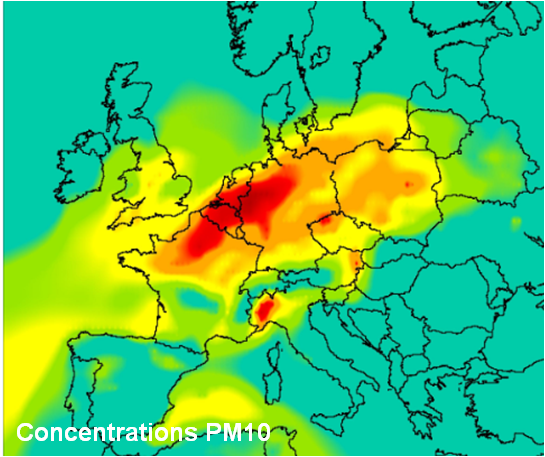
| > Paris has a pollution problem. Instead of the smoke from Gauloise cigarettes and the aroma of freshly baked bread, the air is packed with smog, an issue that got so bad one day last month, the city forcibly halved traffic by allowing only cars with odd-number plates to drive. Of course this could have nothing do to with Germany phasing out its nuclear power plants and having to reopen coal power plants instead. They massively increased the share of solar and wind in their energy production, but still need more traditional methods of power generation to cover when those 2 are not providing energy, hence more coal [1]. And coal is incredibly polluting. See [2] for example for CO2 emissions : > In July 2014, a group of NGOs published a study on the EU’s 30 worst CO2-emitting thermal power plants. German power stations featured six times among the 10 dirtiest. CO2 is not the problem for city pollution of course, it's the rest of the small particulate matter that is. [1] https://www.greentechmedia.com/articles/read/germanys-energy... [2] http://www.desmogblog.com/2015/01/24/coal-casts-cloud-over-g... |

Usage of coal stayed roughly the same in the last 10 years [1]. If you directly compare it with the amount 10 years ago it's a slight decrease.
The real issue for pollution lies in different sectors. For instance around half of the PM pollution in Germany is caused by people using wood for heating. Cars are one of the biggest polluters in cities.
[1] https://www.energy-charts.de/energy.htm click on year: all, annual, all sources