Hacker News new | ask | show | jobs
by timeal 4110 days ago
Why so many negative comments? Japan certainly seems to outshine the US according to multiple metrics, so they are doing something right:

Japan's unemployment rate is 3.6% vs 5.5% for the US: http://www.stat.go.jp/english/data/roudou/results/month/inde... vs http://data.bls.gov/timeseries/LNS14000000

Japan's homelessness rate is 20 per 100,000 population (25,000 homeless people in 2001) vs 220 per 100,000 in the US: http://books.google.com/books?id=q-PgHH8TJi8C&printsec=front... vs https://www.onecpd.info/resources/documents/2012AHAR_PITesti...

Japan's incarceration rate is 50 per 100,000 population vs 710 per 100,000 for the US.

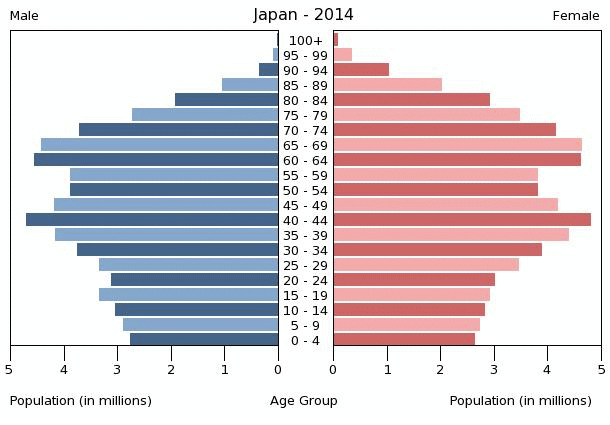
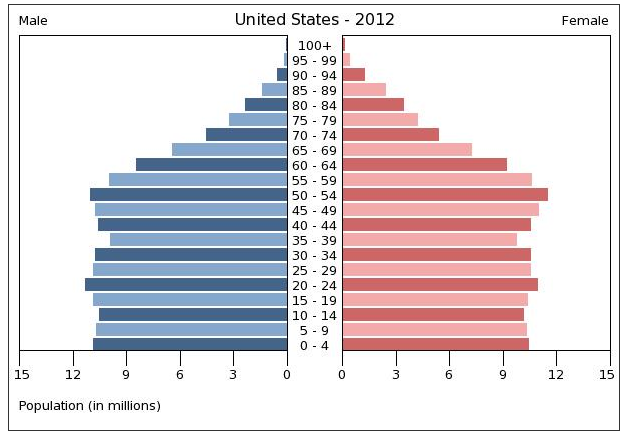
Japan is even on track to stop increasing their public deficit by this year (thanks to the new sales tax) whereas the US is far from being on budget. And Japan even manages to achieve this despite a significantly aging demographics (lots of social benefits paid to non-working people), compare http://www.indexmundi.com/graphs/population-pyramids/japan-p... vs http://static.seekingalpha.com/uploads/2012/3/28/saupload_3-...

Japan's society seems to be functioning better than the US. I appreciate this article for trying to find out why.

3 comments

> Why so many negative comments?

Because the English-speaking world has roughly agreed on the neoliberal economic consensus that extreme individualism, devil-take-the-hindmost capitalism is the Only Way. It is an absolute dogma, reinforced constantly through the press and the best-funded political parties.

Rich nations like Japan or Norway who are trundling happily along with more equitable societies, rather than a return to Victorian social models, need to be stigmatized lest one start asking questions like "what's the point having a country of billionaires and ditch-diggers?"

Might as well pitch atheism in Saudi Arabia.

Please don't bring Norway into this. I'd rather not see it inspire yet another subthread with a bunch of cocksure foreigners who think they know what this country is like. Their analysis tends to be shallow.
If that's true, why not help educate? What is Norway actually like?
I live in Norway, and I think it's pretty close to an utopia.

Not that there aren't flaws, but people tend to complain for the sake of complaining.

This often makes outsiders think that it's all just a facade and that behind the scenes it's actually terrible, that Norway can't just be a good place to live, there has to be some sort of dirty secret that undoes all the good things about the place.

Are you a native or have you moved there from somewhere else? I think the dual to "the grass is always greener" is that you might not realize that some things are problematic, or that there are better alternatives, unless you've have the chance to look at it from another perspective.
I moved to Norway when I was 5 (from Sweden). While I technically qualify as a foreigner, I would say that I'm a vanilla Norwegian guy.

I can't really comment on being biased or not, that's obviously not the sort of thing I would know myself, but I do have a lot of friends all across the world that I talk with regularly, and find that they have to deal with a lot of small crises and huddles in life I don't have to deal with (saving up for college, paying hospital bills, high insurance costs, etc).

I know that if I suddenly lose both my arms in a car accident, or otherwise get long-term sick, the social safety net is there to get me back on my feet.

When I've interacted with the police, they have been polite gentlemen who genuinely care about their job and their community, I've never come across the power and trigger happy psychopaths that the US unfortunately seems to attract for their police jobs.

And I know by experience that even somebody who has a "low" job like working at McDonalds is pretty well off, able to buy more than just the bare necessities. Stuff like people having two jobs just to survive is unheard of.

As I said, nothing is perfect, but when I do hear people complain about Norway, it's usually from an outsider perspective, getting things like our taxes completely wrong, or from an insider perspective, complaining about dumb politicians or bad weather.

Case in point of shallow analysis: https://news.ycombinator.com/item?id=9236149
You know that you don't have to read all the comments, right?
"How dare Japan not fall under our rules, hurr durr"

Whole Asia is rising thanks to one and single fact - they stick to their rules. While whole western world is bending every possible rule to wage wars, shut protesters and buy votes.

As history teaches us east will collapse under its own degeneration of freedom so Asia can flourish. Then Asia will collapse in its self control obsession so the east world will flourish.

Its how the world rolls over and over.

I can understand why some people would like more a more quantitative exploration of the issue than the opinion piece that the article is. I hate to say it, but I think the the article is spot on. I lived most of my life in Canada, moved to Japan for 5 years, moved again to the UK for 2 years and have now moved back to Japan (hopefully for good).

Japanese culture is drilled into people at school. This is something heavily criticised by foreigners who pity the lack of freedom that Japanese school children have. It is a double edged sword, but this strong cultural upbringing (enforced by teachers, not parents) does have a lot of advantages.

I think one of the biggest thing I like about Japan is the lack of societal angst that I perceive here. Many, many people here are "poor" (I live in the countryside where jobs are not plentiful, or high paying), but I never hear anyone complaining about their salary. You just make do with what you have. Especially the "American Dream" is practically absent. Hardly anybody tries to strike it rich. They just try to make a nice life within their means.

When I lived in the UK, the sky rocketing housing market split people into 2 camps -- those speculating in order to make it rich, and those who were wondering if how they were going to be able to live on the pittance of a salary they received (and complaining about the injustice of it all).

I'm sure many people prefer the western approach, but I will happily live in "poverty" in Japan instead.

Even during the deepest point of the post-1980s recession, unemployment never exceeded 6%. In fact, the highest level of unemployment Japan has experienced since 1953 was 5.6%: http://www.tradingeconomics.com/japan/unemployment-rate

It is interesting that they managed to preserve low unemployment and increase the standard of living during about 20 years of flat economic growth, but they've done it. Part of it can be explained by the fact that layoffs are rare (companies almost always assign employees to do unnecessary work rather than lay them off), but that is not sufficient to explain how Japan maintained the world's second-highest GDP during the "lost decade."

Japanese GDP (PPP) per capita is only about 70% of US GDP per capita. If they have the world's second-highest GDP, that is mostly because they have the developed world's second-highest population.
Actually, they've slipped behind China into the #3 slot.
Some argue that Japan fudged its numbers to hide the drop in GDP following the crisis, and was waiting for reality to catch up whilst reporting stagnation for a few years.
Is there any credible evidence for that?
Depends on your definition of credible evidence, and your personal theoretical bias, as with most things in economics (see: China bull vs bear case).

My position on the matter is "I don't know, and I'm unwilling to invest the effort to know"; the extent of my interest in Japan is how the ever lowering JPYSGD makes for good value holidays. But it was an interesting theory worth chucking in.

The Japanese have "interesting" statistics elsewhere; for example, their famed longevity might just be the result of people not declaring deaths: http://www.theguardian.com/world/2010/sep/10/japenese-centen...

I've also seen some interesting playing around the components of CPI in Japan and elsewhere, taking them in and out of the index as required to obtain the right result. Can't find a link, unfortunately; it was probably a paid bank research report and I've been out of the field for half a decade.