Hacker News new | ask | show | jobs
by ThomPete 4175 days ago
I think what is missing from this conversation which both this article and people like Marc Andreesen forget is that technology isnt just progress its also change.

The thing is we are not all actual beneficiaries from technology. In fact a lot are victims who loose their jobs, get smaller paychecks and basically lost the ability to offer their skills to the workforce.

Technology gives and technology takes. What it takes is increasingly important to have a critical view on because something more fundamental is going on I think that is going to be increasingly clear.

1 comments

Technological change has destroyed industries and livelihoods in the past, but it also created more opportunities as it went. The anti-luddite argument is that there were more jobs made available to the people despite the heavy labour intensive work being disrupted.

These days though it might be different. An interesting extension to your point, and using your terminology, is that the rate of what technology 'takes' is possibly beginning to exceed the rate at which it 'gives'. Things might be changing too quickly for the market to adapt and ensure gainful employment to people.

Thats my point.

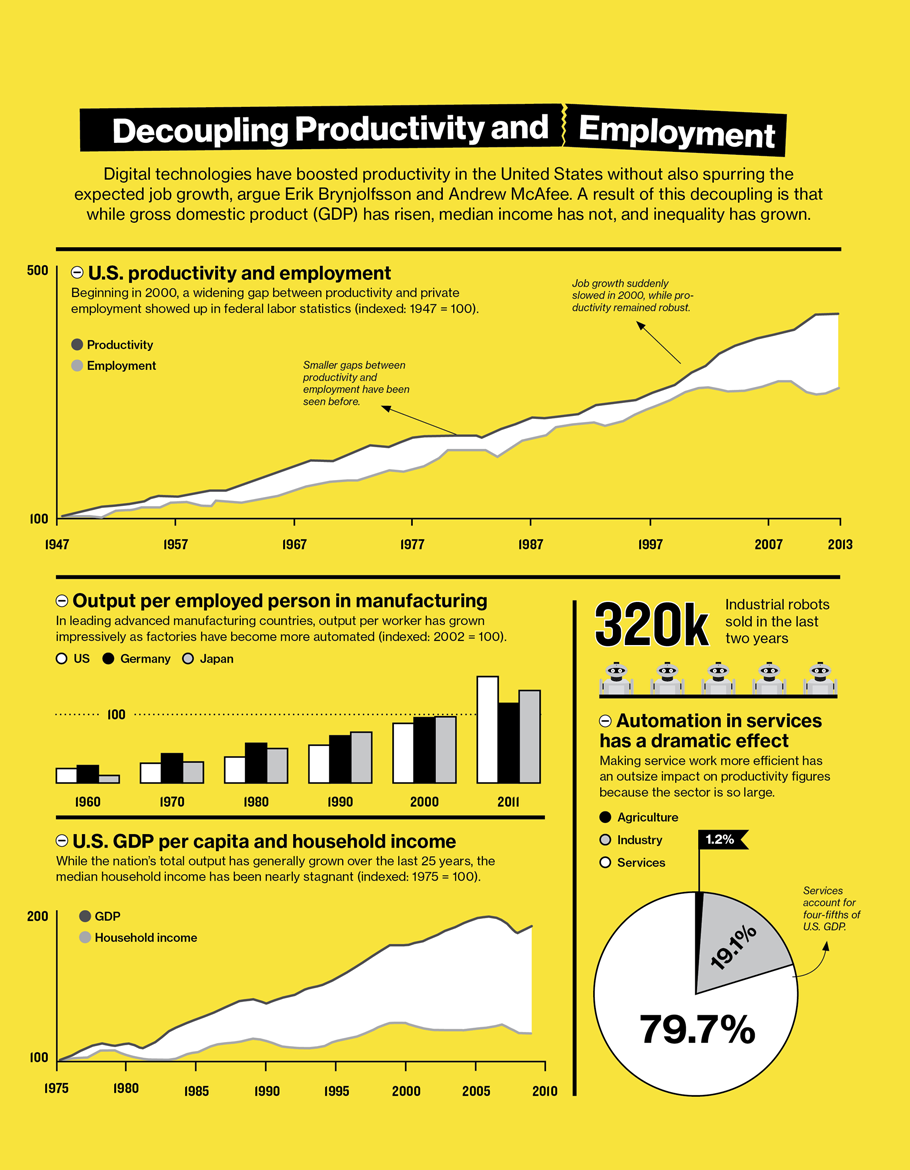
Look at these two graphs

https://plot.ly/~BethS/8/job-growth-by-decade-in-the-united-...

http://www.technologyreview.com/sites/default/files/images/d...

The more jobs created have been because of globalization not because technology creates more jobs. (My claim)

Furthermore the less money is being made even though production goes up (because of technology)

This is the problem we are facing and so I am simply not buying the luddite fallacy argument it is in itself a fallacy.

Another way to look at this is that technology replaces higher and higher levels of abstract thinking.

The horses that where replaced by cars didn't find new jobs.

One thing to consider also is a society's ability to change. Rapid industrialization and urbanization were hugely disruptive but were probably manageable, though it took some time to solve all the problems. With people living longer and job often requiring many years of education and training in order to become proficient in a given career choice, the changes over the next 50 years or so might be harder to absorb.

Software development is probably a decent model of what's coming for the rest of the population. Rapid technological change is already reducing the career expectancy of programmers to about 10 years before moves into management or consulting are considered necessary. The cost is that a lot of expertise is lost and the results are often inefficient with many wheels getting re-invented.