Hacker News new | ask | show | jobs
by danbmil99 4554 days ago
The question to ask is this: if this law were already in place, would Apple (or any manufacturer) ever innovate something like Lightning or the magnetic mac chargers, given that they then also have to support the common standard, putting them at a significant cost disadvantage?

This kind of regulation, while arguably well-meaning, always seems to end up distorting market forces and discouraging innovation.

4 comments

I tend to agree, given my small-l libertarian tendencies and my preference for letting people do whatever they want unless it hurts others. On the other hand, there are already scads of standards (including ones that essentially say you-must-do-it-exactly-like-this) for consumer products. And it's hard to see why it's a very big imposition to standardize the DC power supplies, if the AC power supplies are standardized. The EU has shown that they are not inflexible with these standards, as they let the micro-USB standard expire and let people comply by shipping adapters. The interoperability might be worth it; we don't miss having 10 AC outlet types in our house for different brands of appliances.
At the end of the day it's all about interfaces and we should, as much as possible, decouple the interfaces from the house and from the appliances.

What I would love to see insofar as wall outlets is an adjustment of the current standard wall box and outlet+plate so that you could quickly replace the entire wall place in one go very quickly. With that innovation I would love to see the same on the appliance end where it is trivial to replace the entire code on an appliance. This already exists with IEC320, but if would be nice if everything used IEC320.

Then every 5-10 years the industry innovates to dramatically improve one end and then 5-10 years later works to dramatically improve the other end. This would give a very reasonabe 10-20 years between completely replacing all the appliances (or using adapters or switching neither), and 10-20 years between replacing all the wall plates. You wouldn't even necessarily have to upgrade every 10-20. If an appliance is working fine on an old appliance to cord standard or a cord to wall standard, you can leave things alone.

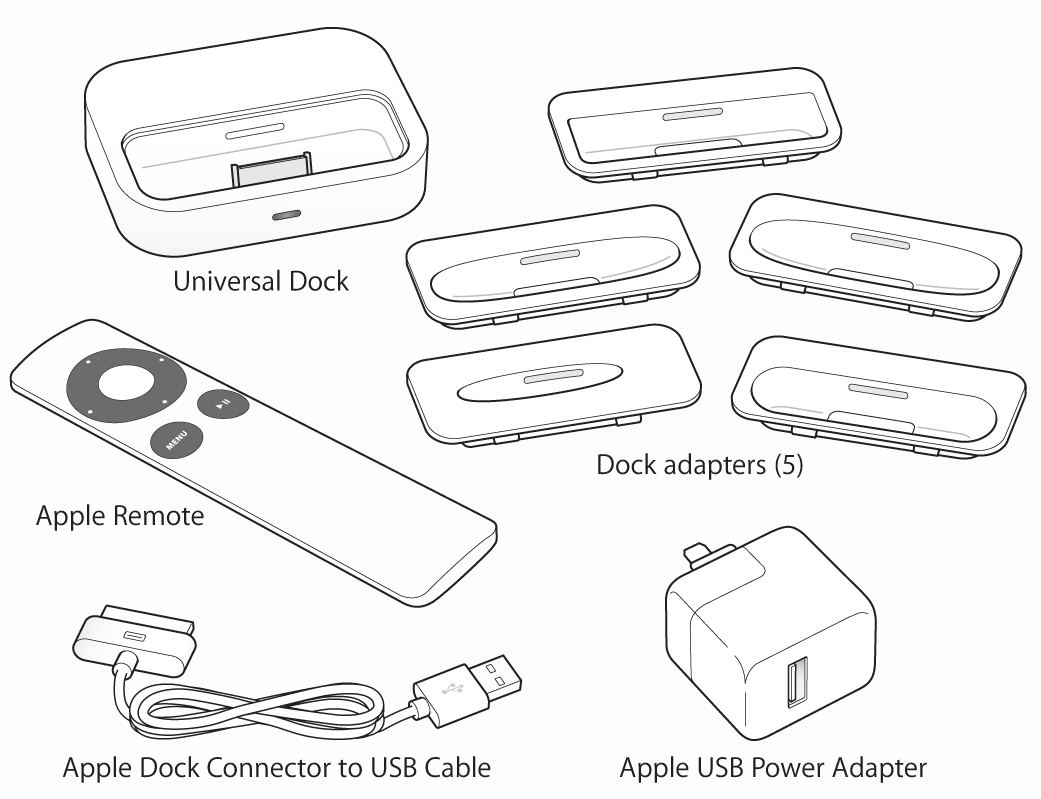
It was this interface approach that allowed Apple to have one dock connector for the longest time but many different shaped devices, since all that had to be done is replace the plastic dock insert [0].

This approach wouldn't work for cellphones and laptops, but should work swimmingly for 120v mains since space isn't at a premium except in the appliance.

[0] http://km.support.apple.com/library/APPLE/APPLECARE_ALLGEOS/...

But the argument for creating this law is that letting people do whatever they want does hurt others, and that limiting it can prevent or soften the tragedy of the commons.
i'd argue that there are things that make a lot of sense being standardised. think about power outlets [0] on the wall. if you have ever been to a country using different power outlets, you know what i mean. wouldn't it be awesome if every country were to use IEC 60906, as it was envisioned in 1986 [1]?? I'd argue that power supply and perhaps also wired communication (ethernet cables, anyone) are prime examples where standardisation is very benificial.

[0] https://en.wikipedia.org/wiki/AC_power_plugs_and_sockets [1] https://en.wikipedia.org/wiki/IEC_60906-1

In Europe Apple provides you an option to buy this [1] device, which would make their devices compliant (as this has not been mandatory). Under new regulartion they could just bundle them.

[1]: http://store.apple.com/uk/product/MD820ZM/A/lightning-to-mic...

afaik the law is already in place (apple pays some fees i suppose) and this is a more general law to generalize more chargers, connectors etc.

That's why everyone else uses usb ports.

Apple supply a usb micro B adaptor with their products.
Only to people in europe.
only in europe and only with their phones (where they have to). ipads in europe also come without adaptors.
Well, I haven't received any micro usb adapter in the iPhone 5s package (just the standard lightning to usb cable). I think it's just a recommendation, not a law.