|
|
|
|
|
|
by dvanduzer
4645 days ago
|
|
|
He utterly fails to make that point. His simple model explains the idea of maximum throughput / congestion. It utterly fails to explain the extreme variance in real traffic throughput during congestion. The original article does. |
|
|
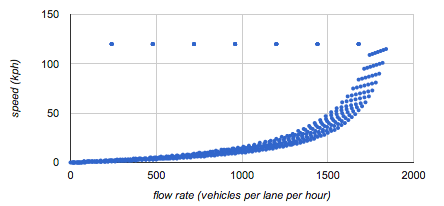

My article doesn't account for variance in flow rates in congested traffic, but variance in car length (% of trucks on the road) might explain it. I'm not convinced that merging behavior is the culprit; the original article only speculates that that's the case. I'm putting forward a reasonable explanation for why that isn't the explanation, and a basis for evaluating whether it might be — in particular, whether a zipper merge results in higher flow rates after the bottleneck.