|
I think the most concrete example of what you're describing is the "pattern" we saw with tobacco. Science suggested for a long time that cigarette smoking might be bad for you. As the evidence grew stronger, tobacco companies ran ads with Joe DiMaggio about how healthy their brand was[1]. Eventually the evidence was so irrefutable, and there were enough "casualties," that most reasonable people were forced to accept it. This seems like a pattern that repeats itself. It begins with anecdotal evidence, followed by a long period of scientific research, then propaganda campaigns and eventual acceptance. We're currently seeing it, about halfway through the curve, in the food industry with sugar. It's also happened previously with lead, seatbelts, asbestos, gambling, mercury, alcohol & driving, cholesterol, tanning booths, etc. And now, perhaps, it's starting on the effect of information consumption. I use the term "information consumption" because it seems to be about much more than just teenagers and their phones. [1] http://farm7.staticflickr.com/6149/6012309554_2c177196a8_z.j... |
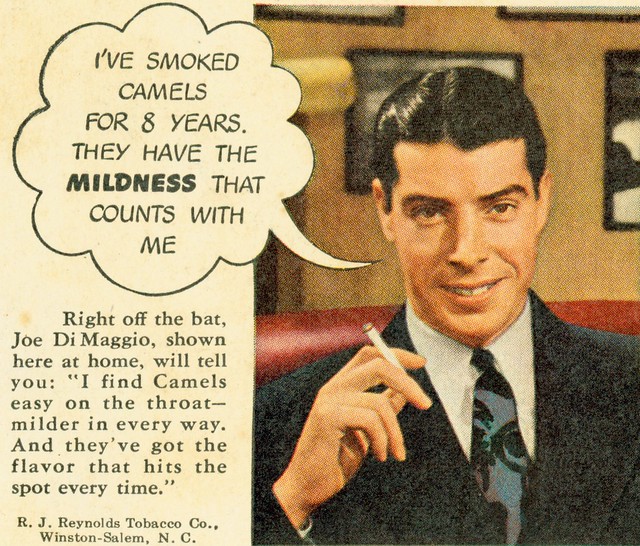
Tobacco companies actively engaged in a campaign of misinformation. They deliberately spread confusion about science.