Hacker News new | ask | show | jobs
by rayiner 4801 days ago
I view with a deep distrust the new class of global capitalist that thinks we must inexorably become "global citizens." The western world didn't come from nowhere. People built it, and their successors should be able to reap the fruits of it, not have to flee to the developing world.

I read an article the other day (it was in Forbes or maybe Business Week). Some American was talking about the investment opportunities in China, and the cultural differences between the countries. He came to free speech, and he basically said: "in the U.S. we can say whatever we want, but in China they think that's silly!" I.e. apologizing for the repressive Chinese communist government just because there is a buck to be made there now. My opinion of such people couldn't be lower.

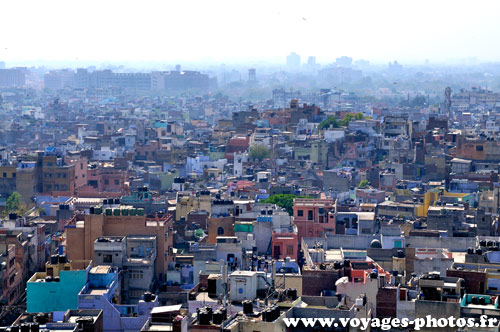
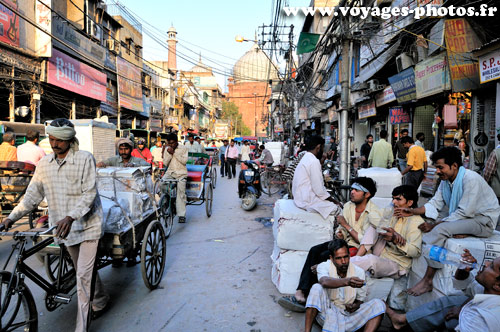
The fact is that India and Asia are not pleasant places outside the little bubbles westerners and the local rich people build for themselves. You want to go live in New Delhi? Be my guest: http://www.voyages-photos.fr/images/new-delhi/new-delhi05.jp..., http://www.voyages-photos.fr/images/new-delhi/new-delhi08.jp....

I'll be chilling here in America, where the bottom 10% live as well as the top 10% do in developing countries.

EDIT: I'm not advocating being ignorant of the world. People should travel, and people should learn what there is to learn from other countries. But I consider it a problem if young Americans have to go abroad because there are no opportunities at home. That's a failure of our social system, and a threat to our communities and our institutions. My father didn't leave Bangladesh just so my daughter would have to go back.

6 comments

> The western world didn't come from nowhere. People built it, and their successors should be able to reap the fruits of it, not have to flee to the developing world.

If the successors should reap the benefits, then should they also pay for the sins? E.g., continued restitution for slavery (which, while abolished has left deep racial scars in society) and for the genocide and forced displacement of the indigenous population (nobody exactly gave the land back).

Seems unfair to only reap the benefits, and then say the past crimes were committed by other people...

The world would be better off exactly how, if we all shared New Delhi's standard of living?
I think he meant that in a purely normative sense, in terms of Westerners having the birthright to a good life while being absolved of the atrocities committed by their ancestors so that the high living standards enjoyed nowadays in the West could be achieved.
yup. this is exactly what i meant.
> I'll be chilling here in America, where the bottom 10% live as well as the top 10% do in developing countries.

Very true. But it's a perspective many people born and raised in the US lack. (Witness the HN thread a few days ago about the guy who retired at the age of 30, with people slamming him for living at a "poverty-level" income. Which of course means he lives better than 70% of the world's population.)

Long term travel (but not necessarily career-oriented work in foreign lands as this article suggests) is important to gaining that very important perspective.

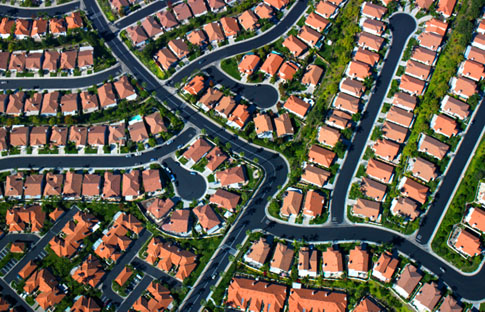
To me those images of New Delhi look 10x more exciting to live than http://abcdunlimited.com/ideas/images/suburbia.jpg for example.
Wild guess: that's because you take clean running water for granted.
I see what you're saying, but I think you/rayiner are still missing the point.

There are fresh graduates in America right now that can't find jobs. More clearly, these fresh graduates would be homeless/living in poverty were it not for a little help from their parents, either that or they're holding on to the last shreds of help that our welfare institutions provide. These folks could leave America and find jobs elsewhere that might give them a very, very nice looking income.

I have a friend who was a history major who couldn't find a job right out of college, he went to China with really no clear idea of what he would do there (besides being an 'English tutor', which his sister already living in Shenzen was)... and what do you know, some company decides to hire him to be their spokesman. It turns out businesses in China will pay white/Western-looking people some serious money for gigs like this. He's now in China, with a Chinese wife and it seems to me he's pretty happy with the decision he made. Opportunities like this do exist, and they're actually not that uncommon. Leaving America for a better life is now very much a viable option. Not for everyone, sure, but for some it could be the best decision they ever make.

Rayiner addressed that point directly: first, it's a first-world myth that recent college graduates in the US would be living in anything resembling poverty by world standards (again with the running water, flushing toilets, electricity, inspected produce, guaranteed emergency room health care); second, if your whole argument is that there might be more money abroad for a new grad, well sure, but don't romanticize that opportunity, because it comes at a cost.
> the running water, flushing toilets, electricity, inspected produce, guaranteed emergency room health care

You're still missing the point.

You emphasize guaranteed emergency care, but what about general non-emergency healthcare costs in America? If it's +1 for guaranteed healthcare in America, it's +1 for India when you can actually practically afford some life-saving x-ray or some surgery operation that costs literally 20X as much in America. Electricity is available in counties we're considering -- sure, it goes off intermittently but the results are not extraordinarily catastrophic. Practically speaking, the produce that the masses get is arguably better in a lot of 3rd world countries than it is in America -- less GMO, less carcinogens. I was born and raised in India -- my memory of fruits and vegetables/meat I ate there is SOOO much better than how it is here in America. We had flushing toilets, and we had drinkable water. And I am not even from a wealthy family, just normal middle class. My great-grandma lived to be 101, and my grandma right now in India is 103.

The life expectancy in India is 65.5 years. Less than 3% of Indian townships are served by water treatment plants.
Yes, I take that for granted along with many other things. It doesn't mean that I have a less enjoyable/more for-filling lifestyle without them.
Where "enjoyable lifestyle" falls somewhere along the diarrhea spectrum from "chronic" to "intractable".

It's unfortunate that people here will think I'm being glib with this comment, since diarrhea kills more people in the developing world every year than cancer does in the US.

> glib with this comment

In general I agree with your sentiment. But you do make it sound like people in India are dropping like flies because of diarrhea (which I am not sure is the case)

You should look up the stats.
Why does it feel Hacker News is completely blind to the rampant corruption, poverty and rape of New Delhi. I often read about how great it is here, unlike any other website. I suppose not being female helps.

http://www.aljazeera.com/news/asia/2013/04/20134271442181816...

Ignorance is bliss. Let me spell it out for you. THERE IS NOTHING FUN OR EXCITING ABOUT IT.

People who have never lived amidst such extreme wealth disparity cannot appreciate what a mindfuck it is. There was an article the other day on HN about how upper class Indians barely regard lower class Indians as human beings. It's not because upper class Indians are bad people. It's because that's the only way to cope living in a country like India where the rich live amongst indescribable poverty.
Its not just New Delhi. Hyperbole, but every woman in India is a potential rape target - All the women I spoke to complained of being touched, physically felt-up, had comments passed on their dress or female anatomy and yet they did nothing about it. What keeps them safe is still a mystery to me. The government sure aint doing much to change the sexist attitudes.

In the USA we take the freedom to wear bikinis and shorts for granted. Hard to see women in India dressing like Americans do.

When that type of terrible thing happens in India (at least these days) it's headline news. Are you seriously suggesting that these things never happen in any developed country?

Ignorance is bliss. Let me spell it out for you. THERE IS NOTHING FUN OR EXCITING ABOUT IT.

As a rule of thumb, when you make hyperbolic statements like this, it becomes very easy to not take you seriously.

>where the bottom 10% live as well as the top 10% do in developing countries.

You clearly have never lived abroad. Money goes further.

I once lived in Cuba, for an internship. I had housing and food provided by my employer, they paid the family $800. I had $500 spending money on top of that.

I lived like a KING. I've never been that rich in my life. People made my food, cleaning my room, cooked for me, did my laundry.

Many thing that I wanted to buy could be had for a fraction of the price. I'm led to understand that this applies across the developing world.

In particular, you can hire PEOPLE for a fraction of the cost you can get interpersonal services here. This has an incredible impact on your real standard of living.

According to Wikpiedia, bottom 10% maxes out at 10,500 in America.

That is POOR, assuming you don't have health care or housing provided.

I couldn't find reliable figures for China, India, Brazil or other countries, but I'm very certain I'd rather be in the top 10% of those countries than the bottom 10% of America.

Anyone have figures for those countries, or experiences being 'well-off' in a poor country?

Much of my family is "top 10% in a developing country." Yes, they can afford people to make their food and clean their houses. That's just because of how poor everyone is, and there is a very negative aspect to that situation as well.*

But if you look at their apartments, personal possessions, etc, their standard of living is comparable to people living in public housing in say the Bronx.

*) My dad once asked one of our servants, a young man maybe 18-19, to go buy a pack of cigarettes. He came back without the cigarettes, telling my dad "I'm sorry, I couldn't buy them--they were [as much as he made in a week or two]." He never asked him to buy cigarettes again... In general, its extremely awkward to have domestic servants in poor countries because those people are actually really poor. Their kids have no opportunities. They'll work until they're dead with no hope of retirement.

Ok, interesting. I assumed top 10% was somewhat better off.

I also read 'developing' for 'poor', which made me take a broader reading of your point than I think was warranted.

Just a note that you wrote your (predictable) "you clearly have never lived abroad" statement ~30 minutes after someone else made the same incorrect observation and was decisively corrected. I often wonder how and why that kind of comment happens here.
Good question, you've made me think. I wouldn't have said it in person (it would have been a question 'have you lived abroad?')

My brain took a statement which I thought was an error, and could have been based on lack of personal experience, then jumped to the conclusion that it was lack of personal experience.

Second, I made a logical error that I wouldn't have made face to face. Developing countries is a very broad term. So I think now there are countries where the quoted sentence is true, and some where is isn't.

In real life, I probably would have clarified which countries the OP had in mind (from subsequent discussions he clearly meant the poorer ones in the group 'developing countries')

:)
It depends on what you consider wealth. In the developed world, having servants is a sign of wealth because labor is expensive. In the developing world, labor is cheap- but plasma TV's certainly are not.
True, I'm probably projecting my view of what's worthwhile, and also highly valued here.

I value personal services far more than most tech items beyond a laptop and phone. And they also cost more here which makes me overvalue them mentally compared to their global value.

I couldn't find reliable figures for China, India, Brazil or other countries, but I'm very certain I'd rather be in the top 10% of those countries than the bottom 10% of America.

You'd be right about Brazil.

http://economix.blogs.nytimes.com/2011/01/31/the-haves-and-t...

What if the system a nation has built cannot adapt to changes and does not leave opportunities for the youth? And what if other nations do? That is one of the main motivating factors of immigration.
You're incredibly ignorant. You should leave the US; not because the rest of the world is necessarily better (yet some parts undoubtedly - in general - are), but because it gives you a broader perspective on your own life and situation.

Just a statement like "where the bottom 10% live as well as the top 10% do in developing countries" really shows you haven't been outside your home town.

I was born in Bangkok, Thailand, lived in Bangladesh for several years, and have traveled fairly extensively in Asia and Europe as a child/young teenager.
Then you don't really have the problem most Americans do, and this article isn't for you.

I find America boring when I visit: very nice and clean, very generic and sterile. I have no idea how I will adjust when/if I come back.

What's the top 10% in Bangkok and Bangladesh?

Having lived in one poor country (Cuba), I found your statement as incredible as the grandparent comment's author did.

Bottom 10% in America is $10,500 according to Wikipedia. That doesn't get you much standard of living.

Everything is cheaper in the developing world, so seemingly small amounts can go much further.

Cuba is a middle-income country. It has a GDP per capita 3x as high as India, and 5x as high as Bangladesh.
Cuba is a weird case, due to the socialist economy.

Monthly salaries are about $15-$30. No, I'm not forgetting a zero.

They get free education and health care (though quality of the latter varies) and they get a few cheap food as rations.

There are a few other benefits, but in large part they're quite poor.

Top 10% of Bengalis have 35% of the income, in a country with a purchasing-power parity (PPP) income per capita of $1909. So my guess would be top decile makes about $6-7k/year. This is in a country with zero public services (while someone living on $10k/year in the U.S. has access to public education,* public housing, food stamps, Medicaid, etc). India is substantially better, but at around double the PPP income of Bangladesh, that puts top 10% of Indians probably right around the bottom 10% of Americans.

*) American school spend on average $10k/year per student.

Congratulations, then you know the value of getting an outside perspective on western culture.
That's one way to say "Oh, I was wrong, I'm sorry", I guess.
No I don't think he was. You missed the entire point of the article, I guess.
You're incredibly ignorant. And then later, Just a statement like [his statement] really shows you haven't been outside your home town.

Wrong is wrong. I shouldn't need to spell that out, but I obviously do. Whatever point you're hoping to make, you do it an incredible disservice by yoking it to comments like the one I responded to above.

I've lived, studied, and worked abroad, and you definitely get the wanderlust out of your system. The U.S. is amazing and there's a reason everybody wants to come here. The U.S. is actually getting more interesting as regional spots like Austin and Asheville bloom and nationwide America continues to restore its urban city centers.
> Just a statement like "where the bottom 10% live as well as the top 10% do in developing countries" really shows you haven't been outside your home town.

Actually, parent is probably right here quantitatively speaking. At least this is true where I live (China).

>>Just a statement like "where the bottom 10% live as well as the top 10% do in developing countries" really shows you haven't been outside your home town.

The real problem with that statement is that it misrepresents the problem.

The fact that our poor live as well as middle class (or even upper class) in developing countries does not mean anything, because our poor do not compete for the same resources and opportunities as those people. Our poor compete with our rich, and the wider that gap, the worse the situation.

In other words, what really matters is the standard of living of our poor relative to that of our rich.

That is a nonsensical assertion. In exactly what way am I worse off simply because some rich tool has a private jet or a Bugatti Veyron? I still enjoy a standard of living beyond the wildest imaginings of my great grandparents, or, for that matter, for the vast rural poor of Asia.

The problem of wealth disparity in the US is exclusively one of burden sharing: disparity is a problem when those of lesser means are required to make actual sacrifices, like risking bankruptcy for an appendectomy, or sending their kids to classrooms with a 45-1 student/teacher ratio. It's a problem implicating disparity because the Bugatti drivers could, it's often asserted, pick up a greater share of the burden while feeling less of the impact, because the marginal utility of their dollars is less than those of a poor person.

But the problem is not simply that there are rich people, or that they have things you & I don't have. Many of the things rich people have are stupid. But even when they're not, they almost never cost you anything; in fact, because the rich choose to soak themselves with Veblen goods, their extravagant purchases actually help you by driving the economy.

Because the rich people drive up the prices in your local markets. I live in NYC, where the price of a shoebox apartment in Manhattan is sky-high (ignoring rent-controlled places). Why? Because tons of rich people keep apartments here. Had I lived in the middle of nowhere, I could have acres upon acres of land, a spacious, decked-out office, and gigabit internet, for much less than a two-bedroom apartment in NYC. Since everyone has to pay rent, this really affects you, but even if you somehow bunked with others, the everyday expenses such as a cup of coffee are more expensive in NYC. In Moscow and other cities it's even worse.

So yes, living among people who make much more than you obviously depresses your standard of living / cost of living.

>> In exactly what way am I worse off simply because some rich tool has a private jet or a Bugatti Veyron?

Measures of "happiness" and "contentedness" are tightly bound to our environment. Being at the respective top or bottom of a given social order has a meaningful impact on quality of life perceptions. Obviously, some Maslow'esque hierarchy of needs applies here, and no-one in the world is happily starving.

> But even when they're not, they almost never cost you anything; in fact, because the rich choose to soak themselves with Veblen goods, their extravagant purchases actually help you by driving the economy.

That seems to make the implicit assumption that conspicuous consumption is the most effective means of investment for those assets. It may well be the case, but I've never seen it suitably demonstrated.

Veblen goods aren't the most effective means of investment for the greater good, but their exorbitant cost funds the salaries of the craftspeople and engineers and technicians who make them, and the designers and writers who market them.

I'm not saying that buying a Bugatti is a social good; it clearly isn't. I'm just saying that those purchases aren't a drag on the middle class, except to the extent that they represent a missed opportunity for a more-just burden sharing to offset a needless sacrifice by the working class that could realistically be addressed by the rich.

Again the point is: simply sitting around being rich isn't intrinsically harmful to the lower and middle classes.

> Again the point is: simply sitting around being rich isn't intrinsically harmful to the lower and middle classes.

Fair. I've long held the opinion that, within reason, "less" income inequality is better than "more". However, your statement is accurate.

The wealthy bid up prices. Depending on the industry, you can buy equivalent good and services for much, much less than you can in America.

Obviously this doesn't apply to an iphone, a private jet, or a Bugatti Veyron.

But if you want a haircut or groceries, it applies. Likewise to a host of other goods and services that the poor spend money on.

Give me bottom 10% in America ($10,500) and I'm very, very poor.

There are countries where you can live like a king on that same amount of money.

(It depends how much you value personal services such as maids, cooks, etc. which tend to be most affected by this phenomenon)

The bottom 10% in America is not very poor, or even "poor", by world standards. The homeless in America have better health care today than Dwight Eisenhower had when he was President, and, obviously, better health care than the rural poor of China.
Why? Our "poor" have televisions, air conditioning, cars, and homes. There's so much food in America that obesity is a major health issue. This is a profound success and departure from the normal human condition of misery. Please put down the Marxist textbook.
> There's so much food in America that obesity is a major health issue.

Sort of stupid. It actually costs money to eat healthy, which many people can't afford in the states (fresh fruits and vegetables, grocery store far away, no car, just by crap at the convenience store then).

The US doesn't compare well to Europe on quality of life for those not in the middle class. Ya, they can afford some crap, but not what they really need to improve their lot (decent food, decent education, healthcare...). The libertarians don't really get that, and think everything is peachy perfect in the states (except for too much socialism).

If you fry frozen vegetables in a wok with butter or oil and some spices it is delicious, healthy and very, very cheap. Adding beans or mincemeat for protein still leaves it at very cheap. I can't speak to the education system or public transport system in the States but frozen vegetables are surely available in most convenience stores, yeah?
Not really. Also, frozen vegetables aren't very healthy for you; nutrients are lost in the freezing process. They work well enough for starchy veggies, but these are also the ones that make you fat.
I'm just gonna throw this out there... "In sum, we estimate that, as of the beginning of 2011, about 1.46 million U.S. households with about 2.8 million children were surviving on $2 or less in income per person per day in a given month."

http://npc.umich.edu/publications/policy_briefs/brief28/poli...

That's an interesting stat, but it confusing. Is this a case where people are not taking advantage of the social services offered? $2/day works out to $300 for a family of five.

This reminds me of Medicaid in the US. Something like 20% of the uninsured in America are actually qualified for free healthcare, but don't enroll.