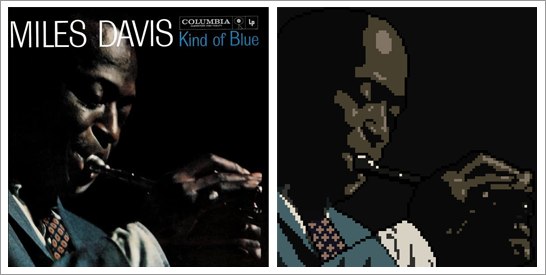
So far "the internet" seems to be on this artist's side, apparently because her work was stolen by a corporation. Recent history suggests, however, that if Andy Baio[0] or Shepard Fairey[1] had ripped her off, she would be excoriated for asserting her rights and lectured about the wonders of remix culture.
I don't pretend to know anything about the relevant IP laws, but from a lay perspective I think there's a big difference between taking one piece of art and making a new derivative piece of art from it, and taking the same piece of art and making salable merchandise.
I know that Baio commissioned the art, and didn't personally create it. The decision to just take it rather than negotiate for rights was his. It should be pretty clear from the context of this discussion that I don't mean literally "copy-and-paste". The Disney ripoffs are also not identical to the source - does that mean that there is no issue?
I've got little to add to the larger discussion, but you know, this is kind of funny: I can ignore all kinds of crap that people on the internet get riled up over, and even the occasional personal insult, no sweat, but your assessment of Kind of Bloop and the chiptune scene in general actually made me angry.
There's an interesting (albeit tired -- we've been having the same conversation since at least the dawn of the sampler) question in there about where the line between "remixing" and "ripping someone off" gets drawn, but you didn't have to shit all over a subculture and genre of music to pose it.
EDIT: I'll add that there is a pretty direct parallel to be drawn here to the long-running controversy around hip-hop's heavy usage of sampling. Your article, then, read a bit like someone attempting to begin a thoughtful debate about this old "remix culture vs. copyright law" issue with a characterization like "hiphop is a primitive and culturally bankrupt musical 'genre' consisting of a sad excuse for poetry shouted on top of other people's music, and its creators are crooks who appropriate the hard work of others for a less sophisticated audience."
There are people out there that actually believe things like that (maybe even you?), but most of them have the good sense not to say so in public under their true identity. I'd like to think that has something to do with the common decency of not demeaning cultures that one is completely unfamiliar with, and not just fear of appearing to be a racist.
What was it specifically that made you angry? I enjoy chiptune music and listened to some of the linked samples thinking they were pretty good, but I still found the level of boldness in his "assessment of Kind of Bloop and the chiptune scene in general" quite refreshing and rather entertaining, even though I don't exactly agree with his opinion.
I enjoy a good articulate rant from someone who is making it in good faith, as I believe the author was. That "most of them have the good sense not to say so in public under their true identity" only makes it all the better - the argument is usually of such passion and ferocity that it must be confronted rather than sidestepped. If your reaction is one of anger then perhaps something he said was a little close to true and you're defaulting to an emotional response in defense.
I had the same reaction to Philips' blog post. I agree with his main argument, but not how he supports it.
Basically, Philips dismisses a broad range of 8-bit media without knowing how it is made. He says all you do is run some existing art through "a little bit of filtering", and like Instagram, there you have it. Basically, it's just a nasty-looking (or sounding) ripoff of existing artwork.
Problem is, that's not how chip music is produced. At all. Most songs are original compositions, and even cover versions are not simple "degradations". Think of covering a Miles Davis song on classical guitar, and you'll be closer. You have to recompose the material from the ground up, and stretch both yourself and your hardware platform to make things begin to work. It's both an artistic and technological feat. Now think of composing an original song this way. Some people have spent decades perfecting chip music, just as others perfect jazz or photography. Philips says the entire body of work is worth less than one good picture.
Worst, the criticism of chip music is tangential to his main argument -- that Baio screwed up by trying to sell a work without thoroughly licensing it. Philips went out of his way to be an ass about it, for no good reason. That's what bothers me.
Thanks, that's a great demonstration of confronting the argument head on, and well-explained to boot.
One comment I would make on what you have said is that I think Phillips does understand how chip music is made and you have misunderstood when you write "He says all you do is run some existing art through "a little bit of filtering", and like Instagram, there you have it". The phrase "a little bit of filtering" is right at the end of the article and I believe is a reference to what Baio did with the photograph rather than to the process of creating the music.
Vitriolic as it is, I think what Phillips writes in the first two paragraphs - I would draw your attention especially to the use of the word "re-performance" - shows that he does at least understand that chip music isn't simply an existing work put through a filter and is something created more or less from scratch. He just really really hates it, and says so, in a way I find hilarious. However, now having read the piece several times, and recontextualised by your and ANTSANTS comments here, I do think it's a bit undermining to the main point for him to piggyback that rant onto the front-end of the article.
'He says all you do is run some existing art through "a little bit of filtering"'
I didn't say that, at least not about the chiptune music. I said "He [Baio] was fully aware that he needed to pay license fees in order to distribute his versions, even though they were radically transformed and reinterpreted."
I am aware that the music was a re-performance in a different medium, not just filtering of source material. I happened not to like it. I don't see why my personal aesthetic judgments should upset anyone. If I'm not getting chiptune then it's my loss; I'll keep listening, and maybe one day it will click for me. When I first picked up Joyce's Ulysses I thought it was gibberish; now I think it's a great work of art. When I hear people claiming that Ulysses is gibberish, I don't get mad, I just smile.
Not seeing how "it would be nice to live in a world without the current incarnation of intellectual property law" is incompatible with "but we don't, so we're going to hold you to the standards you've created". They seem imminently consistent to me.
I wouldn't call it optimism. Both of the 'infringers' you linked to paid plenty of money for it.
I can't say that article of yours makes your point nearly as well as you might like, either. I hope it doesn't represent your general attitude towards derivative works (or just derivative works you don't appreciate aesthetically, whichever).
Well, while Alice from "Alice in Wonderland" is now a "public domain" character, the depiction of her with a blue dress, white belt, and blonde hair with a black bow in it was very much created by Disney.
In this case, the artist herself is remixing a visual design elaborated by Disney.
So, yeah. It's murky, and the remix argument goes both ways.
> the depiction of her with a blue dress, white belt, and blonde hair with a black bow in it was very much created by Disney.
How do you figure? Have you seen the original illustrations? Because they depict Alice in essentially the same getup that Disney stylized with their own art style. However the character design (which is what we'd call it now) is essentially John Tenniel's original design:
Tenniel illustrations are in the public domain. The original work is about 150 years old. As you say, very a clear-cut copyright issue with Disney lifting the design. I'll be interested to hear the outcome of this.
"Fairey settled his civil case with the AP out of court."
Looks like Fairey paid up, and I imagine AP gets a royalty (and past royalties) for every sale of the image, not just a lump sum for damages.
"...Fairey maintain his work fell under fair-use laws."
It would have been interesting had the civil case actually gone to verdict - I tend to think a Judge or Jury would have ruled in Fairey's favor, like you allude to in your post.
In ETW v. Jireh, the U.S. Court of Appeals for the Sixth Circuit rejected a right of publicity claim brought by Tiger Woods against an artist who depicted Woods and other golf legends, holding that the transformative nature of the work exempted it from right of publicity liability under the First Amendment. Thus, this is not even a fair-use defense, but a first amendment defense, and the first amendment should be even more protective in the case of political speech where Fairey's work was of the leading candidate for POTUS at the time.
I could be wrong, but I strongly suspect the artist here would be thrilled to be getting a reasonable licensing fee from Disney for use of her work. Meanwhile, in Andy Baio's case, Jay Maisel was reportedly unwilling to license the photo for pixel art, period.
Presuming I'm correct, that's an important difference.
I didn't know the conclusion of the Fairey case and I had never even heard about the Baio case, so thanks for these links.
I don't think you can generalize "the internet" in this way because the forums I read are fairly liberal and will tend to favor the underdog, 'David' or whatever allusion you want to depict the lowly, individual up against 'the man.' So, by that thinking, we should be expected to favor Fairey (vs AP), Baio (vs Maisel ) and the current article's artist (vs Disney). You may say that Maisel is not so black and white, but consider that he still represents the establishment.
Just to specifically address Lee Phillips' article. He clearly has a personal bias that doesn't help his argument with lines like this referring to 'chiptune':
"I don’t get it either, but if people want to create music where part of the aesthetic is that it’s supposed to sound bad, I believe they have every right to."
I have plenty of fond memories to music from Battletoads, Mega Man and Final Fantasy so I think he's fighting a losing battle if he's going to try and convince people that there is no merit to 8-bit music production.
'I don't think you can generalize "the internet" in this way'
At least in the Baio case, there was really a perceptible "internet mob" that formed and attacked Maisel. It was disturbingly vicious, deliberately whipped up by John Gruber[0] and a few others, and actually spilled out into meatspace, with vandalism of Maisel's house.
I understand the "rooting for the underdog" tendency, and that might explain two of the examples. But how does Maisel represent the establishment? He's just an individual artist.
I agree that it's a stretch and I would not personally characterize him that way, it seems to be the perception that is being sold to the masses.
I think how artists deal with these forms of 'infringement' speaks to their character. For example, I love Bill Watterson (Calvin & Hobbes), but I also think it is somewhat petty that he so angrily hides his creations from the world in any form. I mean he wasn't able to stop millions of stickers being made depicting Calvin pissing on car logos, but yet he wouldn't allow children to purchase a plush toy of Hobbes? It may be his prerogative, but when something artistic has impacted the lives of millions in such an important way, I believe that artists need to live with the fact that there will be derivative works. I mean I could argue that Warhol should not have been able to use the Campbell's soup logo based on the same reasoning in this article... I think the pixelation of the original image constitutes a greater abstraction than simply enlarging the image and changing the colors.
BTW, I am adopting the term "meatspace." I love it.
"it seems to be the perception that is being sold to the masses."
That was part of my point - Maisel was characterized in a way that made it easier to whip up the mob against him. And that fact that Baio was a wealthy (probably) internet businessman was not mentioned.
Watterson: I love his work, too. His is unique in that he has so much respect for his own work and love for his characters that he has refused any form of licensing whatsoever - imagine how much money he has left on the table. Any time you see any of his characters on a shirt or anywhere outside of the original comics, it's a bootleg. Contrast this with Peanuts, Dilbert[0], or any other successful strip. Eventually his work will pass into the public domain, as it should, and then anyone can legally make a Hobbes toy. But I think that, until then, it's OK that he has some rights over his creations. Just because he can't stop some infringers doesn't mean that he's given up those rights. I don't see this as Watterson hiding anything: anybody can buy his books or check them out of the library.
Warhol: Interesting point. Maybe if Warhol had put his soup can image on a piece of merchandise for sale, like a record, he would have been in trouble. I'm guessing the artistic point of his paintings had something to do with the very fact that they were so close to the originals, compelling people to take a fresh look at familiar iconography. Or he was just a huckster, which was pretty much how he described himself. I think if the exact image on the cover of the "Bloop" album had been hung in a museum rather than used on merchandise, Maisel would have had a tougher case.
I stole "meatspace" from somewhere, long forgotten.
[0] Not meant as a criticism. Scott Adams has said that Watterson is an artist, while he, himself, is a businessman, and so they have different concerns.
Your second link doesn't indicate any internet-derived excoriation, but instead shows an artist being taken through the legal system by AP, along with the artist obstructing the judicial process. I don't think it supports the point you're making.
That we "should"? No, I'm basically on her side, although I think GuiA, in a comment above, has a good point that this particular case is murky. What I was attempting to get at is that the sympathies of the internet mob seem to depend not on the merits of any particular copyright case, but on who is doing the copying. Sorry if this wasn't obvious.