Hacker News new | ask | show | jobs
by jgord 3 days ago
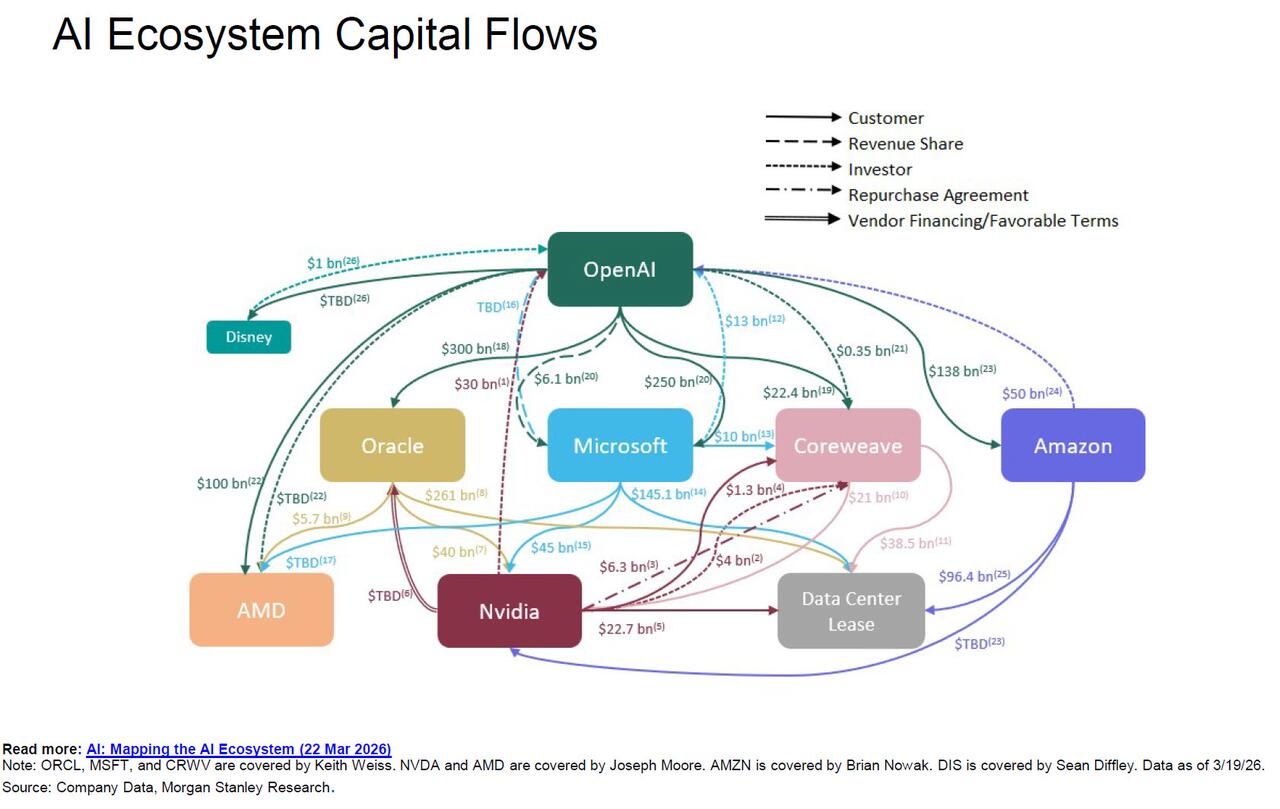
Has a competent economist modeled the circularity of these deals ? [ numerically or analytically ]

It seems a healthy economy has a lot of wide circularity .. money circulating is a good thing, a result of a functioning market, tracking the flow of real goods / services. But large corps circulating paper 'self-deals' or debt-swaps seems like a bad thing - a creative accounting practice designed to pump up their stock price/valuation.

How can we _quantify_ the difference ? I guess it would need to match the cash / debt flows against the movement of actual goods and services ??

Not an economist, feel free to weigh in, suggest links.

4 comments

The leverage is the trick in the whole equation. During dotcom days the leverage was fine until the cash flow ran out. Then bankruptcies started and the bottom fell out. It appears this is happening again but perhaps the business model will just evolve. Although right now it feels more of the same.
you'd need to look at prior work associated with the Dot com boom and Enron. Economists rarely look into today's actual activity because America makes it nigh impossible to actually understand who owns what around the fringes; contracts arn't required to be publically disclosed and a bunch of other dark interests make it impossible to really know.

MLMs exist in the same murky waters and tread the same ephermal economics by pushing useless product but hiring people to hire people to hire people, etc.

> prior work associated with the Dot com boom and Enron

The Enron deals weren't circular. Fastow signed both sides of the contracts. The deals were straight up fraud.

many of the Nvidia deals involve equity in the company instead of cash for the gpu orders.

thats basically one step removed from signing the deal themselves.

I think there's not much to model. Either AI actually becomes a hot commodity, or the people invested in these deals are going to take a bath.
Also these deals are not circular - NVIDIA has to pay a lot of money for chips and foundry capacity just as an example, so money leaves the circle and participants have to raise capital to replace it, which means if this were just a financialy trick, it would be very expensive to maintain.
Many people are calling them circular, eg bloomberg, BIS :

https://www.youtube.com/watch?v=lwcM0By4aJQ

https://www.zerohedge.com/markets/bursting-ai-bubble-collaps...

diagram : https://cms.zerohedge.com/s3/files/inline-images/AI%20ecosys...

My point is, Id like to know how circular or not they are - clearly a lot of money is actually being spent on GPUs/datacenter build/electricity, Id like to know what fraction that is.

Two contradictory thoughts based on the article:

1. One thing you could do is look at free cashflow. The actual cash a company generates and keeps on its balance sheet would be a clear indicator of retaining profit or resources after circular deals.

2. The above doesn't preclude a company from committing to backstops and offtake agreements, so you still need to track those.

... so you'd want to look at how much cash a company is retaining and whether it is committing to act as a sort of lender of last resort.

Up until this week, I'd argue that Nvidia is was a pretty solid player in this space. If it's generating $10s of billions in cash, then who cares if it put $10 billion into a risky startup? It can afford it.

Now, however, it is also exploring committing $250 billion as a backstop for OpenAI's data center projects, which moves it to the riskier side of things.

I know I'm not providing you with data; I don't have that... But I think the above is a signpost to watch out for.

It’s a catchy headline but I also am not convinced they ultimately are. Certainly some of risky bets in the lot but most of what has been reported on is deals with ultimately cash. Compared to say the dot com bubble where lots of financing was happening.