|
|
|
|
|
|
by dosman33
6 days ago
|
|
|
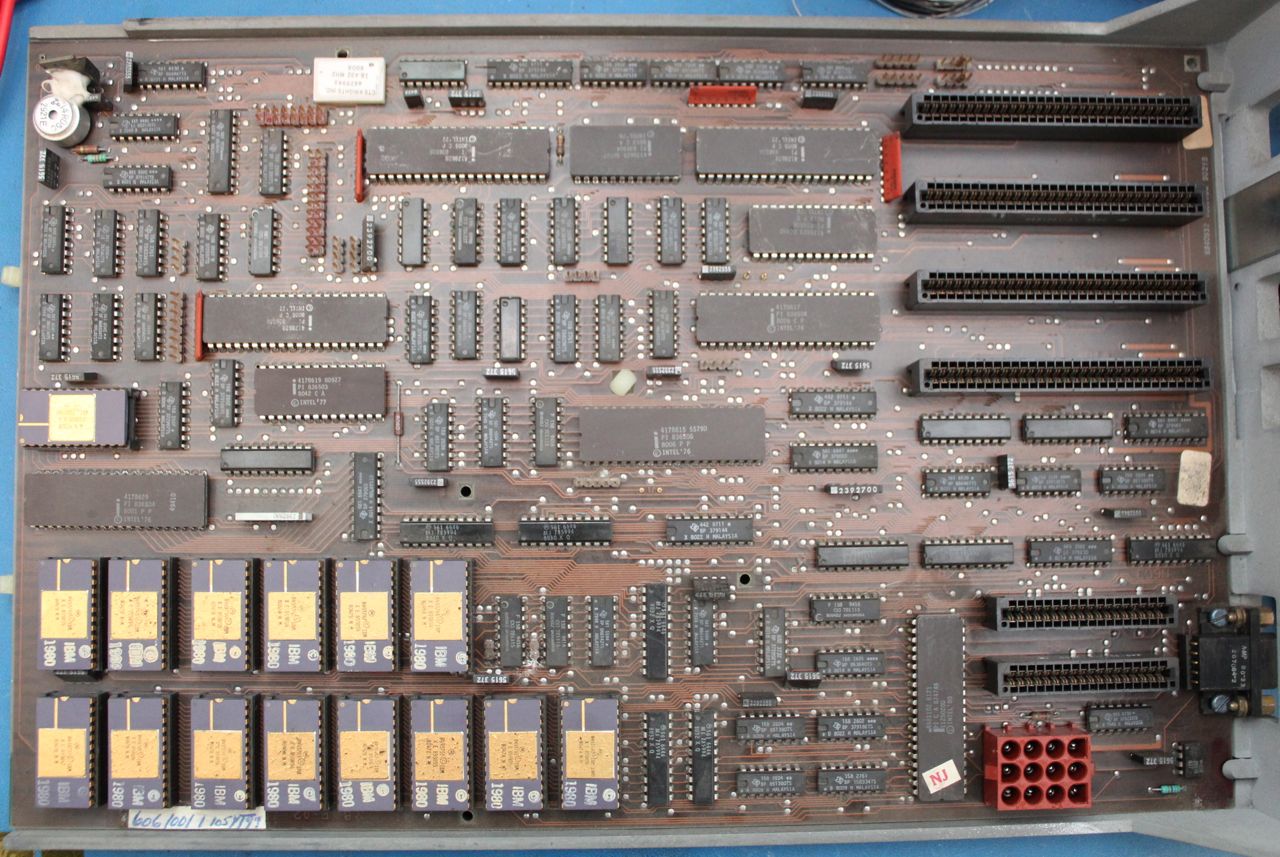
TL;DR: I believe the Datamaster should be considered part of the lineage of the ATX standard today. The interesting thing I recently noticed about the Datamaster is that I believe this system's motherboard inadvertently (or deliberately) became the very first informal motherboard layout standard, a predecessor to the original IBM PC format. The Datamaster and PC are different architectures so it's not an architectural link, but it's clear that the same engineering group that designed the Datamaster's motherboard also had some amount of influence in the PC's motherboard layout. There's nothing magic about the Datamaster's layout, it's just very sensible: power in one corner, I/O slots near the rear edge, BIOS and RAM at the other end, CPU roughly in the middle of everything it has to talk to. But before the Datamaster, systems like the 5100 and System 36 used discrete boards that just plugged into a backplane with minimal logic on it. For the era of those systems that made sense, but those dense card connectors add cost and they add electrical noise to the system. A unified motherboard design was a true improvement in design that matched manufacturing improvements arriving in the late 1970's. Datamaster motherboard (those are not ISA or "PC bus" slots):
https://www.nf6x.net/wp/wp-content/uploads/2014/09/IMG_3121.... Similarly, there were loose standards like LPX in the 1990's which were never a formal design standard, but clearly every PC maker of that era was using the same logical riser-card design. Perhaps it was the same Taiwanese engineering firm doing the actual design work on the back end for everyone that generated LPX, or perhaps it was just working knowledge moving as individual engineers had success with various designs. |
|
|