Hacker News new | ask | show | jobs
by ktosobcy 22 days ago
You are mixing it with Council ;)

Yeah, EU setup is absurdly convoluted but it's simply a result of the consensus that tires to balance difference sources of power (the people and the countries).

Ideally the whole EU population should just vote for MEPs in EU parliment, which the would form the government. But that would completely sidestep member states government which they won't ever agree to. And any even mention of reforminng the EU towards that is immediatelly shoot down because nationalists are screetching about soverignty (which at the same time complain that the EU is undemocratic)

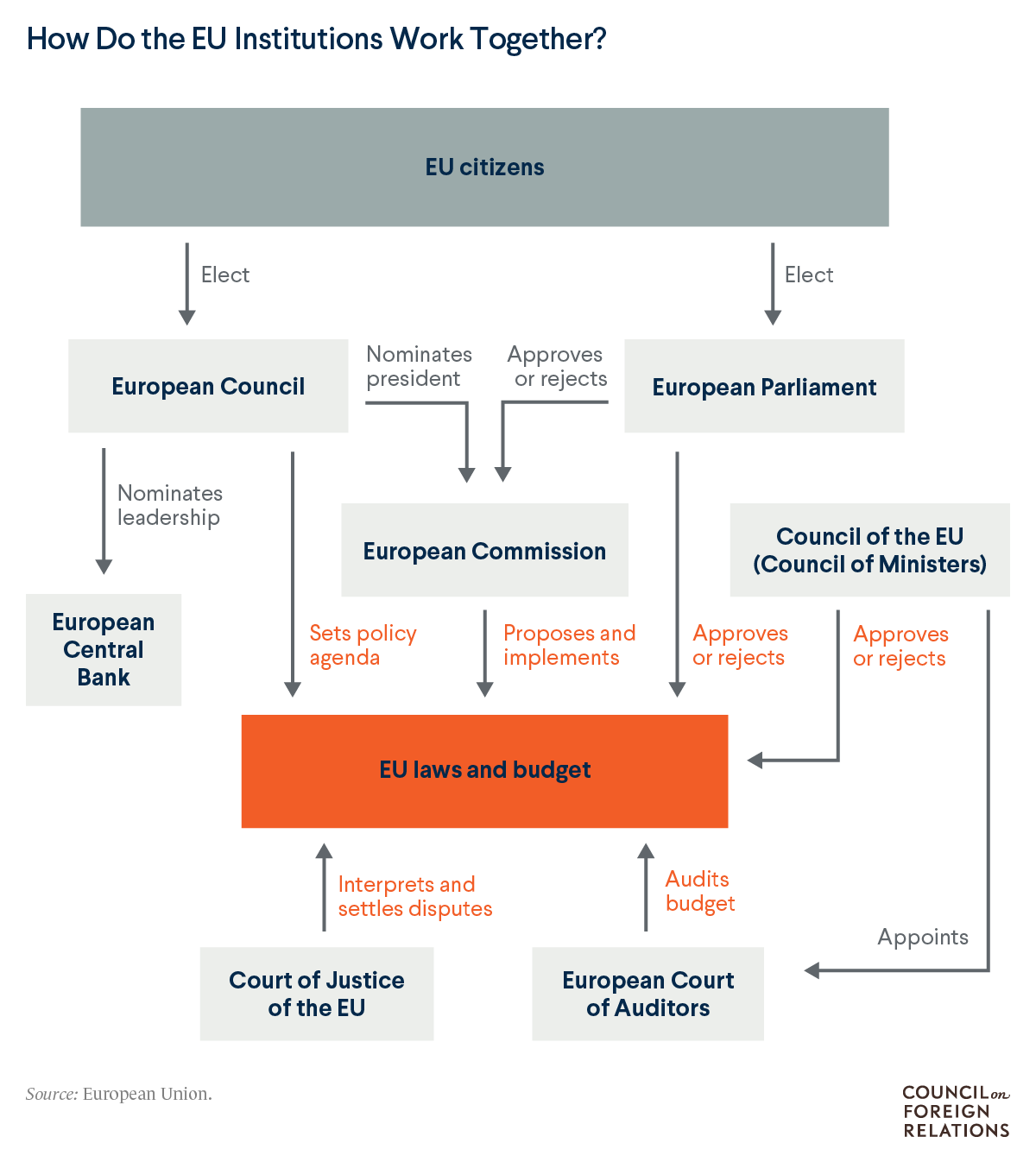
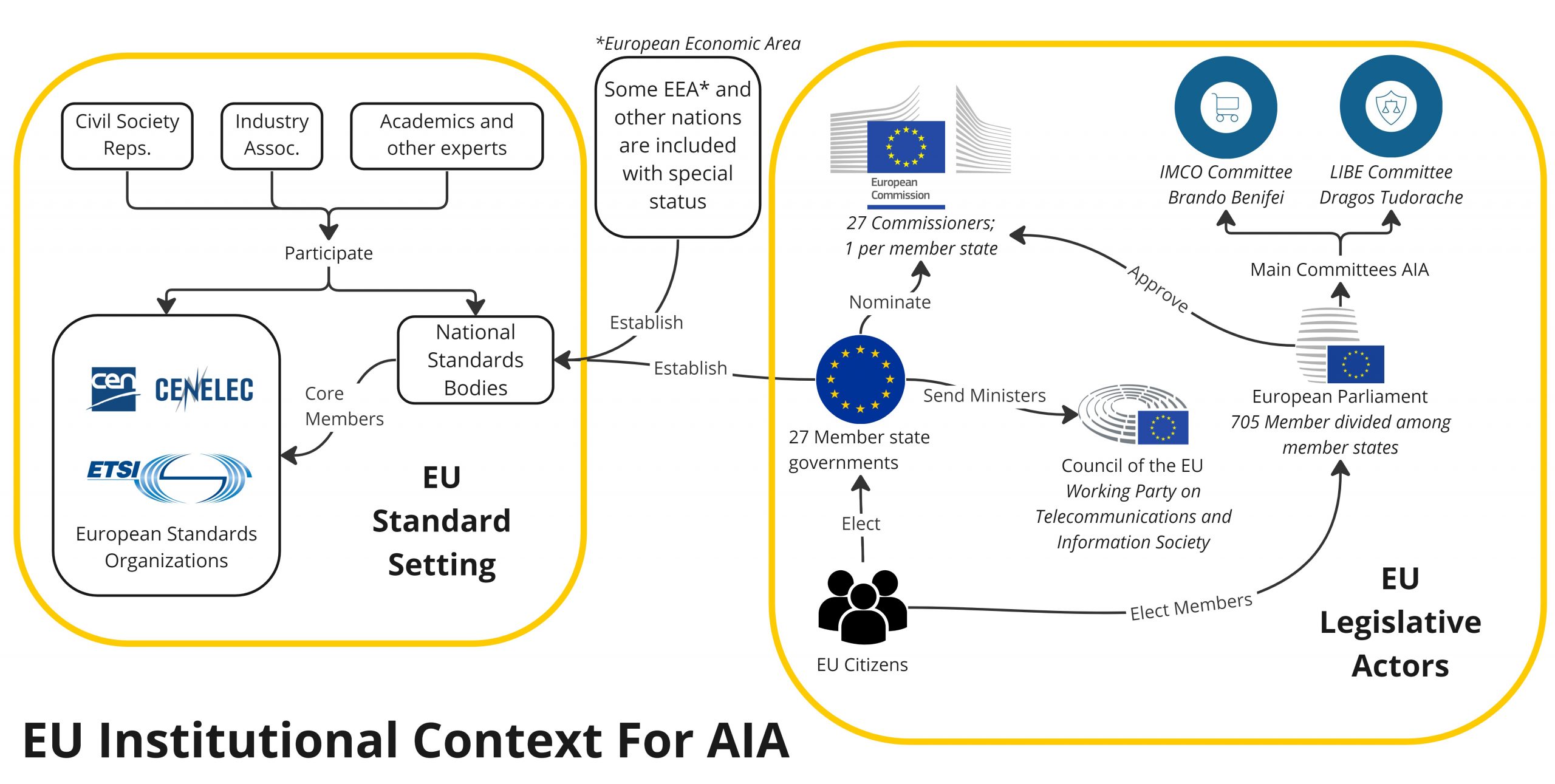
So we have the setup with European Council (heads of governments) setting the agenda, Comission (presiden of which is selected by council and approved by parliment) that makes that into law and then Parliment and EU Council (not European council!) votes for it.

A coupld of infographics how that works:

https://www.europarl.europa.eu/topics/en/article/20240524STO...

https://static.cfr.org/sites/default/files/image/2022/03/-la...

https://artificialintelligenceact.eu/wp-content/uploads/2022...

1 comments

Yup, classic, mixed EP with EC. Makes you wonder if he explained it correctly to his wife (American lawyer), or if she verified.

I don't like the way US presidents are elected either, ignoring popular vote, and including gerrymandering. I also don't like how the US president is allowed to bypass Congress.

> the US president is allowed to bypass Congress.

This is the key difference between presidential system and parliamentary system. In a parliamentary system, the head of state answers to the parliament. In a presidential system, the presidents answers to no-one (technically they answer to the people, but in practice that's inconsequential).

Strictly speaking, in the US system the President isn't allowed to bypass Congress. Congress makes the laws and sets the budget and the President is suppose to execute on what Congress decides, which is ostensibly supposed to reflect the will of the people. Even executive orders can't override existing law or the Constitution. The President isn't supposed to be able to go to war without Congressional approval. The three branches of government are supposed to be equal and mutually oppositional in their power.

The (im)balance of power we have now is very much not what was originally intended, but it can only persist because Congress and the Supreme Court are complicit in granting the Executive near absolute authority, which is only being kept in check at the moment by lower courts.

> he explained it correctly to his wife (American lawyer), or if she verified.

Are you saying I am mixing it up now? My post acknowledged I had mixed it up before: given that the Commission is so powerful, I had thought it was comprised of the heads of state. I’m aware that’s not how it’s structured. I was explaining it to my wife because the reality is very complicated!

> I don't like the way US presidents are elected either, ignoring popular vote and including gerrymandering.

Gerrymandering cannot affect a Presidential election, because the Electoral College is elected based on statewide popular votes. And the logic behind the Electoral College is the exact same as the reason why so many EU bodies have one member per member state. The U.S. President doesn’t only represent the people, he also represents the states as sovereign entities. The states have chosen to move in the populist direction by providing to allocate their electoral votes based on statewide elections, but they have never consented to abandoning the prerogative to do things differently.

Moreover, the electoral college also is deliberately designed to produce more decisive results. In every case where the U.S. electoral college vote produced a different result than the national popular vote, the President’s party still won the Congressional popular vote. In those cases, a pure popular vote for the President would have produced a divided government. Most European countries avoid that by not directly electing their chief executive at all, and instead providing various ways for the party that controls the legislature to also control the executive.

Finally, in terms of “bypassing Congress,” what you’re describing is a general feature of Presidential systems where the executive is led by the same party as the legislature. For example, the French President has limited powers in theory. But in practice he’s very powerful if his party also controls the National Assembly: https://www.lemonde.fr/en/les-decodeurs/article/2022/05/02/w...

“In most cases, these constitutional provisions end up being diluted in practice. When the president obtains a supporting majority in the Assemblée Nationale, they are less tied to following the Constitution to the letter and are able to propose legislation. In doing so, they then encroach on the role of government and in fact have significant power, often described as more substantial than that of heads of state in other countries.”

> Are you saying I am mixing it up now?

That much was clear. I was saying this:

> Makes you wonder if he explained it correctly to his wife (American lawyer), or if she verified.

Still wondering.

> Most European countries avoid that by not directly electing their chief executive at all, and instead providing various ways for the party that controls the legislature to also control the executive.

Moot comparison. Most European countries don't have a two party system. As such, there is more cooperation and consensus between involved parties. They can also easily get rid of the leader of the country, should they opt for it. Now, compare that to GOP and Trump.

> But in practice he’s very powerful if his party also controls the National Assembly

Yes, I am aware. Don't like it. Don't like IRV either. France doesn't do very well in Democracy Index (not terrible either, slightly better than USA pre-Trump IIRC).

I prefer the way the Scandinavian countries, and in lesser extend The Netherlands and Switzerland deal with politics. You can also notice these countries do very well in indices such as Democracy Indez or freedom of press ones.