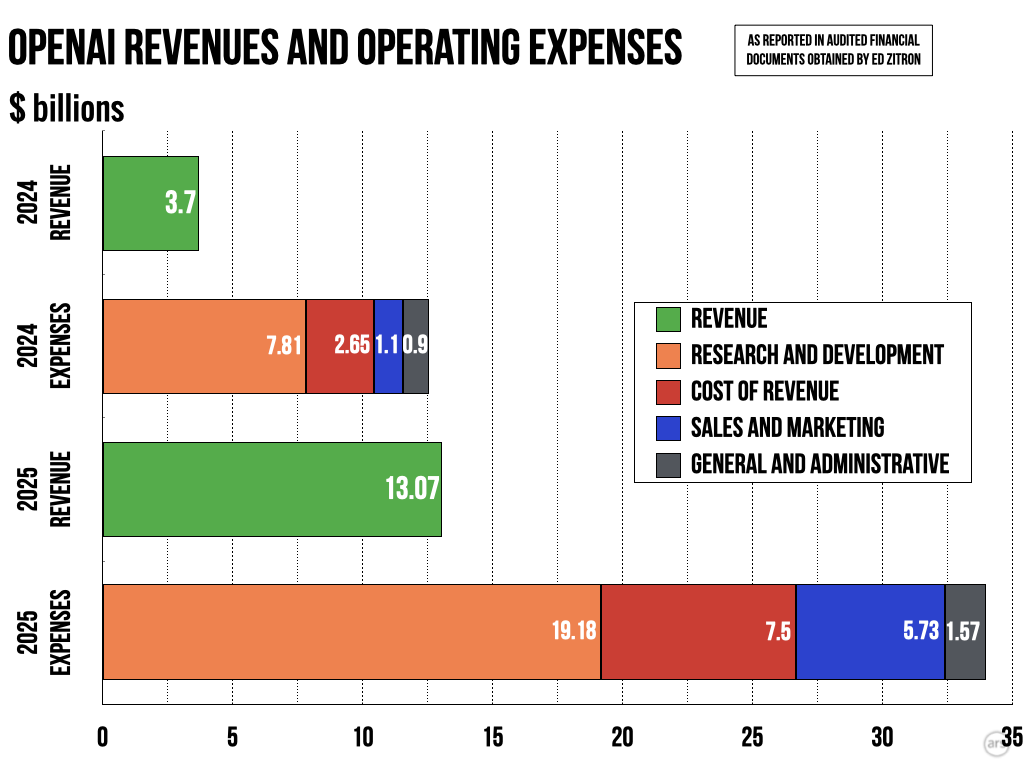
Data from OpenAI shows their 2025 inference revenue exceeded their cost of inference by a good margin (https://cdn.arstechnica.net/wp-content/uploads/2026/06/opena...). Saying this is being subsidized is like saying any investment in future productive assets is "subsidized".
Anyone can claim they are profitable, simply by reclassifying their expenses as some other thing or shuffling them to separate corporate structure. Until we will real financial audit, the CEOs claims are just a hot air.
OpenAI's leaked documents also said OpenAI was profitable on inference. The small resellers of open models have nowhere near the resources to optimise their models or inference and yet usually have a lower cost, why wouldn't the big labs?
this argument assumes that capex and training costs will go down over time. but theyll have to keep up with one another and stay on top of latest knowledge so Im not sure if thats true
I don't understand this argument. How does it make the subscription any less subsidised if the losses are only because developing the product is just so darn expensive?
Feels like arguing that it's not clear if Bugatti's losses came from selling the Veyron instead of designing and developing the Veyron.
The equivalent is when Amazon was running a loss because they were spending all their money on building warehouses. It exactly make sense, but that's the argument.
> What is happening here is that leading AI labs are charging not only for inference but also for research in model architecture, training data collection and curation, model training cost (which can be tens or even hundreds of millions of dollars), paying their employees and recovering the marketing costs.
They are not. They are necessary for the development of future models, which does not influence the availability of the current ones. Plus you have chinese models distilling current SOTA for pennies on the dollar, so as a consumer I never will be worse off in the long (1-2 years) run.
Great, but that's only a part of operational costs. A craftsman's revenue may exceed the electricity bill for the power drill, doesn't mean the business is sustainable.
Is this supposed to be some sort of gotcha? Apart from research and marketing, that's operational costs. I mean, every product could be cheaper, if you didn't have to pay for employees and means of production.