I don't have historic use of kde but I switched to it about a year ago, after a big release, and its been awesome. Very stable for me, allows custom dpi's for each of my monitors, it doesn't break itself like gnome does. I haven't bothered with other DE's since I tried it, not even xfce (old favourite of mine for tablet & low spec pc), kde performs even well on low specs. And highly configurable out of the box. Its the most stable DE I've encountered for daily driving so far.
What was so much better in the old days (besides memory consumption)?
It depended on the release. KDE 3.5.10 from Debian Sarge's backports was rock solid and more stable than several others. Ditto with SuSE, which had a golden stability. Red Hat was a disaster.
SuSE employed several KDE developers at the time while Red Hat employed many Gnome developers. In fact, Gnome was inofficially a Red Hat project back then.
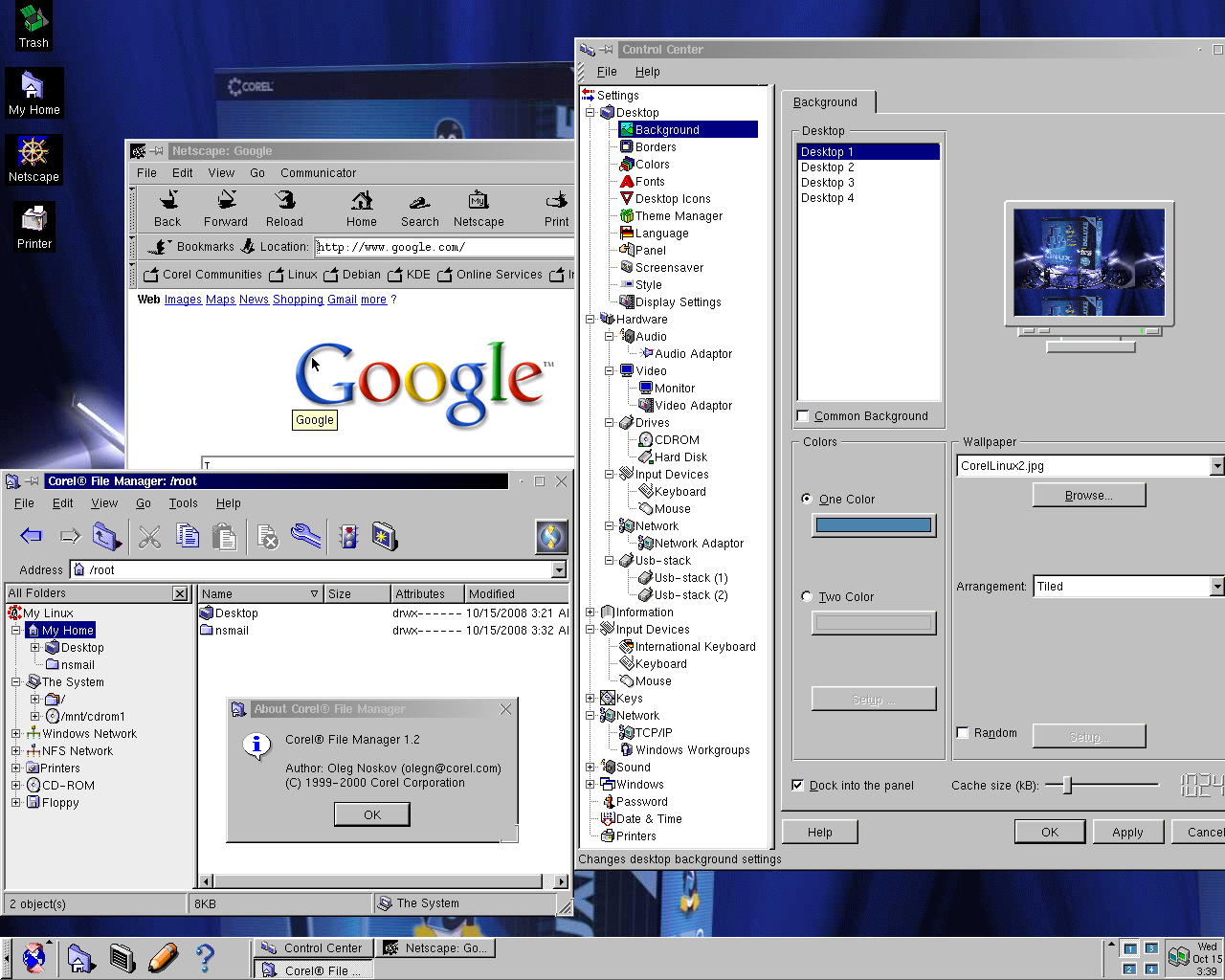
Thank you for saying this! I agree. KDE 1.x was great. KDE 2.x was cluttered but it did the job; with a major rework, such as Corel LinuxOS and Xandros gave it, it was a good desktop.
Xandros never managed to tame KDE 3. It released a tech preview, with a basically unmodified copy of KDE 3, and then stopped putting out new versions of the desktop OS.
KDE is the poster child for creeping featuritis: it has dozens and dozens of skins and app launchers and other relatively pointless chrome that does not extend its functionality.
And yet, over the major releases from 4 to 5 to 6, it has gradually lost useful features, such as tabbed title bars and window grouping; title bars on the side of windows (like in wm2 and wmx), or on the bottom; and panels that could span screens.
20 years ago, there was a parody of KDE versus GNOME:
What was so much better in the old days (besides memory consumption)?