|
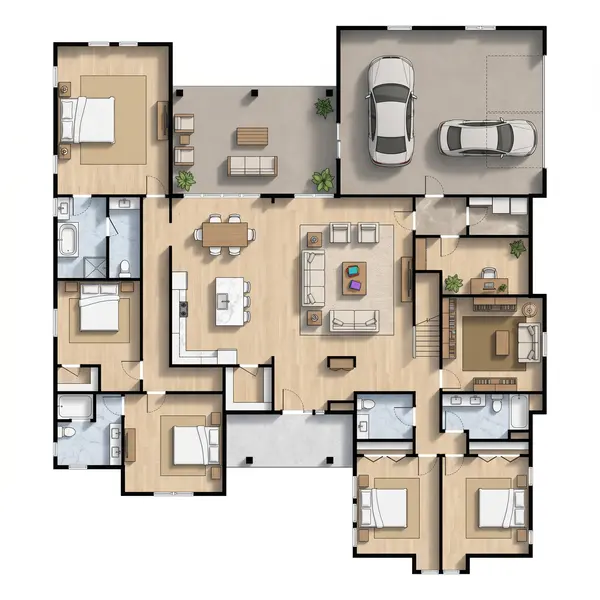
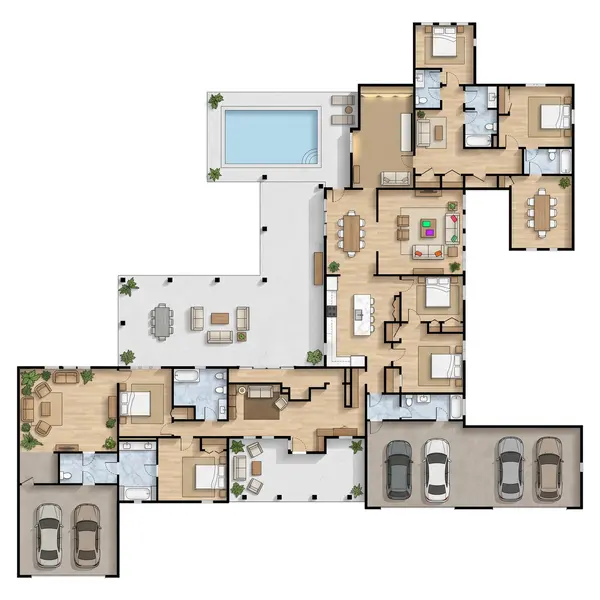
I’m Nick, founder of Drafted (https://www.drafted.ai). We’re training models that generate residential architecture from structured design constraints. Product demo: https://www.youtube.com/watch?v=8QkJ7jNU9y4 Residential architecture is still one of the most expensive, slow, and inaccessible creative processes in the world. Designing a custom home typically costs $10,000–$50,000 or more, takes months, and requires making major decisions before most people can even visualize the outcome. As a result, the vast majority of homes are built without direct architectural involvement. Our goal is to teach computers how the built environment works so anyone can imagine, explore, and eventually create physical spaces tailored to them. Today, users can design homes using simple inputs such as: - Square footage targets - Footprint shapes - Lot boundaries - Room placement preferences - Spatial relationships and constraints. Our models generate complete floor plans and matching exterior elevations in seconds. Users can explore designs in both 2D and 3D, iterate instantly, furnish interiors, experiment with materials, and export CAD, PDF, and other files for the rest of the pre-construction process. One of our newest capabilities allows users to draw any footprint shape and generate a complete home layout inside it: https://www.youtube.com/watch?v=wZJhBm7-OHI. Over the past month, more than 120,000 people have used Drafted, generating over 325,000 home designs. If you're building a home, developing property, working in architecture, construction, or AI, we'd love to hear your feedback! |
Do you have a background in homebuilding? Or have you ever built anything before?
Visualizing the design is one thing, but the feasibility must be considered -- and often vetted through engineer(s) -- from the initial design phase. And even then, despite the best planning attempts, inevitably there will be some issues that need to be addressed 'on-the-ground' during construction.
I think you may be onto something, and I believe LLM models could be capable of accounting for e.g. code restrictions, structural considerations, MEP conflicts, etc. Most of the 'knowledge' homebuilders accumulate is trainable and repeatable. And- at least in the US- most of it has been codified/standardized in the IRC. But still there are tons of little caveats & gotchas to consider. Maybe those details could be addressed directly in your system prompts?
Also curious: what kind of "other files" does Drafted export "for the rest of the pre-construction process"? IDK to what extent you've used any existing home design software, but Home Designer/Chief Architect are capable of creating a (detailed) BOM for the entire build, down to every member of framing lumber. If the user chooses to enter price information, they can also provide cost estimates. A seemingly obvious AI-assisted improvement would be gathering price data automatically- say from the Lowe's or similar Big Box Hardware nearest to the user's location. And ideally keeping it updated as lumber & other materials fluctuate in cost.
To me a really capable AI design software could also be capable of: - Basic electrical load calculations - HVAC/ Schedule D [ductwork] design - Structural considerations- e.g., recommending a joist plan: type/size/direction/spacing of floor joists + validating against IRC and/or joist manufacturer load tables - and a whole lot more
I have a number of other ideas in case you're interested. Feel free to send an email (in profile).
PS- are you familiar with BIM software (like AutoDesk Revvit)? There a lot of 3D modeling capabilities you could borrow that go way beyond floor plans and aesthetic architectural considerations.