Maybe this will be simpler for Anthropic to understand if they take their own high-minded philosophical nonsense and ego out of it and consider it the way a neutral party would.
Suppose a company calls themselves The Doomsday Device Company. They make and sell excellent-quality doomsday devices. They regularly go online to proclaim that their doomsday devices are the best and most powerful, and also that doomsday devices are dangerous and should be regulated.
The Doomsday Device Company then says they have the world's best doomsday device. (They don't, but they claim they do.)
The US Government hates the Doosmday Device Company for various political reasons, but also has a vested interest in there not being a massive proliferation of doomsday devices.
The Doosmday Device company spends a great deal of time and money telling everyone: "Our doomsday device is the most doomy of all time!" (though it probably isn't) and "Everyone can use it!" (for a lot of money)
It is completely logical, then, for the US Government to say: No, everyone cannot use your doomsday device, because doomsday is bad. (While also meaning: Only we should be able to use it, and you shouldn't be able to tell us how.)
If you do not want to be in the business of having your doomsday devices shut down by the government, well, it would help if you didn't so loudly and aggressively proclaim how doomy they are. It doesn't matter how trustworthy you claim to be, given that your business is making evil doosmday devices. You still won't be trusted!
Another neutral party might not believe it's really a doomsday device and that what currently looks like exponential growth in capability could be an s-curve that plateaus in a year or two. After that, it will be diminishing returns to invest heavily into a tech that won't get much better.
So what are the current leaders in the field supposed to do to stave off competition? They should convince the public that they do have a doomsday device, claim it must be regulated, and then they can profit from their duopoly because it's exceedingly expensive to break into the high end of the market. The government has its own nefarious incentives, not limited to collecting fees and using the unrestricted versions for surveillance or black hat stuff.
It is, but… you’ve seen the marketing material being put out?
“AGI is just around the corner and could destroy humanity if we don’t solve alignment” is something AI leadership at multiple companies have publicly said.
Sure, but the same is true of nuclear reaction research.
One camp, using the same mechanism, is trying to make devices that end the world. One camp, using the same mechanism, is trying to save the world.
That nuclear/AI COULD end the world or COULD save humanity is exactly the reason that a truly neutral party would not describe either tech as a doomsday device but would instead describe either as technologies bearing massive potential.
No one building an LLM has ever publically stated that they aim to build a doomsday device and in fact have only ever specifically said that they are trying to avoid doing so. We've no reason to beleive that their interest is any different from any other corporation with agressive shareholders: increasing profits. Dooming humanity leads to lower profits. Lower profits is outside shareholder interest. They will do anything they can to maximize profit, just as any other profit driven org does.
No objective, neutral, observer would apply such loaded terms.
It's okay to have an opinion, but having an opinion makes you...opinionated. Not neutral. The opposite of neutral.
Your example kind of proves your position wrong, no? Nuclear power--another device you are yourself admitting is widely understood to be a doomsday device in the wrong hands--is also highly regulated and I cannot just create a company that sells a nuclear power device and I extra cannot do so and sell it to foreign nationals. If you make a device that you claim is capable of ending the world, you can and should be regulated.
Why limit competition of corporations to law at all? Isn't it that we are in times where "edge case exploitation" rules and laws are regularly ignored or worked around with "payoffs"?
I completely agree with you. I think the problem is that Anthropic believes their own BS, and thinks it IS a Doomsday device which only THEY can control. I think that's what's produced this outcome.
Everything at the level of communication that consumers are receiving is marketing. We have no idea what they actually believe.
The thing about marketing is that it’s outcome based speech. It’s not really about truth or even feeling, it’s about using the right words to evoke the right outcome. So, we have to think about what Anthropics desired outcome is.
Do they want AI regulation? If so, then they might use language to make it appear as though this new, dangerous technology must be controlled.
> would you prefer they just release it as-is and everyone suffers data-breaches and more supply-chain attacks?
Yes, because then we get to use SOTA models to defend against the exact same attacks. Fable detected issues in my projects but got downgraded back to Opus before it could tell me about them or fix them. In what world could that possibly be reasonable?
I agree and don’t think they should have been forced to pull it, but what I’m surprised about is how many people are accusing Anthropic of being liars or trying to overhype the danger. It IS dangerous, which is why it can identify vulnerabilities.
Is this not the same as security by obscurity? Open source is more secure because it's more open and thus is able to have flaws found in it more easily. So I'd probably prefer more people to have Fable level models than not.
Perhaps. Open source is also more vulnerable because the source is out in the open. As we’ve seen it doesn’t matter with supply-chain attacks.
I’m not a security expert by any stretch, and I also want Fable it helped me a lot in a short time, but I don’t like that so many people are throwing shade at Anthropic for speaking the truth. Mythos and Fable are dangerous.
It's quite a bit more complicated than that. The popular narrative is not exactly on Anthropic, as the general public is far more aware of OpenAI than Anthropic. The narrative is on AI and whether everything we know about society is going to change.
Also, as far as priorities and worries go, for most people cybersecurity is way down the list.
"as the general public is far more aware of OpenAI than Anthropic"
I run LLMs on my own gear with llama.cpp (compiled from source) and I could not tell you anything about either company except they fiddle with AI stuff and that (I don't actually care). I glaze over on news about both organisations in equal measure on mention.
I think you'll find that the general public would not be able to name either company without being asked to pronounce their name from it being written down.
I know plenty of people who will put the letters A and I together and get rather confused about what on earth is going on but very few of those would mention any co apart from Microsoft, Google, Facebook or errm Twitter.
No one has a bloody clue about all this stuff apart from us lot and we have no real idea about it either!
Is your point that the name people actually remember is ChatGPT? Okay, let's say the actually popular name that threatens to become the Kleenex of LLMs. ChatGPT.
I don’t think someone running llama.cpp compiled from source is what they meant with “general public”. Everyone around me knows ChatGPT and OpenAI (the owners, no clue about what else). I don’t think any of them have a clue what Anthropic or Claude is. Anthropic is much more B2B.
I'm not sure what your personal anecdote has to do with general trends, there have always been hermits in history. I also run local models with llama.cpp but I actually stay abreast of the issues in the field as we may similarly be impacted by recent actions.
HN is a forum and as far as I am aware, anecdata is allowed here. You might disagree with me and my experience and that is fine too but please don't denigrate me.
It is a forum, yes, and anecdotes are fine, as I said I do the same as you wrt local models, but that doesn't mean an irrelevant non sequitur is useful to other readers, and pointing it out is not equivalent to denigration.
Shame on a company for sticking to their values, I guess.
The dichotomy between Anthropic and OpenAI's treatment honestly couldn't be more obvious. OpenAI has also asked for increased AI regulation, and they've also released GPT 5.5 Cyber which is claimed to have the same vulnerability-finding abilities as Mythos. OpenAI received no such notices like Anthropic. OpenAI also received a government contract, while Anthropic was banned from DoD use.
Regardless of your thoughts about Dario or his company, this treatment is obviously not based in any rational principle, and pretending it is would be stupid.
It's only a matter of months before the open source models achieve this same capability. What is the US government going to do then? Ban all people in the world from accessing the Chinese models? If you think about these arguments for more than five minutes they really do fall flat.
Their values are garbage. Paternalism, censorship, suppression. These are people who think they are the enlightened ones while we're all dangerous terrorists. They are in fact pulling up the ladder behind them, just like all the other big techs.
It's indeed quite satisfying to watch them be the first ones burned by the heavy hand of government they worshipped so much.
Well, regulating doomsday devices is a reasonable thing to want. A reasonable regulation of such devices would call for proper safeguards and safety testing. I think Anthropic would have been fine with that.
Instead what happened is a one-off nationalist decree that solves none of the two concerns.
Yes this is also why if you're building a startup in the nuclear power space (empirically demonstrated Doomsday Device), then you can expect USG to come in and apply arbitrary, opaque, and unexplained rules on you, steal your assets, and destroy your business. And also probably not do that to any of your competitors who are doing the exact same thing as you.
Consider Dario was VP of AI research and oversaw alignment and safety at OpenAI. He left in 2020. In my opinion and from direct observation, it takes time to change policy at large well funded companies, so even after he left, his influence was still being felt.
Well when OpenAI did it most prominently, it was actually Dario Amodei who did it while working at OpenAI. Although you are correct that OpenAI has also pushed for safety regulations. I doubt Sam Altman is part of the effective altruism cult though - he’s more obviously looking for regulatory capture to give him moats.
The recent OpenAI post calls for mandatory safety certification of all frontier level models:
OpenAI is happy to sell their device to the gov’t to blow things up with, Anthropic tried to tell the gov’t to pound sand, no blowing things up for you.
To be clear, Anthropic was completely okay with their tech being used in war, including current conflicts. They just wanted a human making some decisions. The military didn’t want a vendor giving them restrictions on how to operate a tool, and since Anthropic’s restrictions could be a problem anywhere they appear among other military vendors as well, the government used the supply chain risk designation to say “this can’t be anywhere in our tools”.
We don't have the actual contracts publicly. So I bet it has terms that let the government do what it wants ultimately by naming exceptions. That way OpenAI can claim it has some controls in place while the military has the freedom it needs practically.
>It is completely logical, then, for the US Government to say: No
Not sure about that one given that the US government just reversed a ban on the exports on the very chips to China that enable said technologies, you don't hear so much about the chip wars any more.
I think entrepreneurs largely approached this administration with the attitude that if you're running Doomsday Incorporated they aren't going to say, "no, don't export that", but "hell yeah baby, how do we get a 25% cut on every sale?" because that's quite literally what they did on the hardware front.
I mean I have no strong opinion on whether Antrophics statement are true or smart, but the idea that it was regulated because someone in this administration thought it posed incalculable risks is a bit funny, i"m pretty sure they wear that as a logo printed on their t-shirts, it seems to be the sole guiding principle of their foreign policies. Palantir has successfully used doom-mongering as an advertisement strategy for a decade or so
In fairness, I think this might be a case where the pure id represented by this administration happens to align with the correct and logical choice. You could be right, but for this instance, the outcome is the same.
When I read this comment I don't get "Neutral Party" from it. I'm finding it hard to decide whether to focus on the loaded characterisations or (my best guess at) the underlying substance.
To address the point I think you (and the article) are making; there's a difference between advocating that a scoped, due-process-protected power exist and endorsing any given exercise of it. This point is made in Anthropic's original statement, but it's seemingly been missed by everyone taking a position against them.
>As we have stated publicly, we believe the government should have the ability to block unsafe deployments, as part of a statutory process that is transparent, fair, clear, and grounded in technical facts. This action does not adhere to those principles. [1]
But with respect to your specific post:
>high-minded philosophical nonsense
Taking a sophisticated approach to a problem will generally improve the outcome. I suppose your point is that it can be difficult to deliniate sophisticated & good-faith reasoning from self-serving rationalisation. Much of what I've seen from Anthropic supports the former. Perhaps others could do more to build up the case for the latter.
You can look at things like the circumstances that the company was founded in, the lack of political cozying with the current admin, the lack of controversies or disgruntled ex-employees, them taking a stand against the DoD (against their business interests), positions they've taken on various issues including data centres in gulf states.
>Suppose a company calls themselves The Doomsday Device Company
Anthropic hasn't. What's the explanatory purpose of adding this to the analogy?
>They make and sell excellent-quality doomsday devices | They regularly go online to proclaim that their doomsday devices are the best and most powerful, and also that doomsday devices are dangerous and should be regulated.
Anthropic invests a reasonable amount into assuring the safety of the products they sell. No-one is claiming they sell doomsday devices. Concerns of doom relate to future iterations of the underlying technology.
>The Doosmday Device company spends a great deal of time and money telling everyone: "Our doomsday device is the most doomy of all time!"
They have what's essentially an automated vulnerability-discovering machine. They've done their best to be open about the very real implications of general availability of a system like this. Using the word "doomy" positions them as childish and unsophisticated for doing this, when it's actually the reasonable and responsible thing to do.
What does this question mean? Of course they are state-of-the-art. After all, they are the most recent and most advanced models out of Anthropic. If/when they release a new version of their models, Mythos/Fable will cease to be state-of-the-art, as the new ones become it.
Anybody who isn't at least treating this situation as possibly just an authoritarian government picking winners and losers is not paying attention to the political environment.
Companies/countries/people are paying off the government in all sorts of various ways (crypto, gifts, bogus settlements, planes, inaugurations, ballrooms). The companies that pay off the government get big fat contracts and merger agreements, and the ones that don't get increased scrutiny, lawsuits and threats.
OpenAI and SpaceX are friends of the administration, and Anthropic is (politically at least), not friends with the administration.
Could this penalty be a rational and reasonable reaction to the new model? Perhaps. Or maybe it is just a made up excuse to do what the government wants to do, which is punish its political enemies. It wouldn't be the first, second, third or 10th time that has happened so far in this administration.
Ah but you have forgotten that HN is full of people who are so aloof and "above the fray" (compliments to their raw intellect, of course) that it would be beneath them to consider the realities of the political situation.
I just think that it's dodging the question in this case. It's true that the US government is run by crooks who'd all be serving prison sentences in a just world, and that they'd certainly do whatever Anthropic wants in exchange for a sufficiently large bribe. But the US government also serves a number of important roles in American society that we can't simply turn off and come back to in 2029.
It's not dodging the question. GP's comment says that one should consider the possibility. Essentially that we should follow what several federal courts have been doing and cease offering the government the "presumption of regularity" in its conduct.
People are referencing David Sacks as an impartial government authority about 2 weeks after he went on a tirade against Bernie Sanders for some type of nationalization of AI, and then went completely radio silent when his own boss suggested the same thing a week later.
There is no political appointee in our government – not one – who can be afforded the presumption of regularity.
One should consider the possibility, but it doesn’t seem to me that the comments are full of people who haven’t. I think David Sacks is a hypocritical Trumpist, valuing his own pocketbook above all else and seeing his political connections as key to maintaining it. His perspective is valuable not because it’s impartial, but because it illustrates how hypocritical Trumpists see this very important issue with which we’re faced.
What I feel like is missing in the common discourse here is that Anthropic genuinely believes that AI poses an existential risk for humanity either in terms of literal survival or extreme mass surveillance, human disempowerment etc. So if you take these risks seriously, which the median commentor on HN obviously doesn't, what is the right thing to do?
I.e. OpenAI just went full evil corpo mode and went all in on the Leading the Future PAC [1] to try and prevent any kind of regulation.
I feel like there is a reasonable path where they might agree with OP that the government has "mostly gone insane" but also think that US getting its act together and leading the way on sane regulation will be key to getting to a good outcome with AI.
We do not know for a fact what they genuinely believe, and many of us have seen companies act in opposition to their stated goals so the burden of proof is on them.
It's healthy to suspect ulterior motives from them.
Can you be more specific on what you mean - how would you prove what anyone believes about something short of reading minds and what would proof look like to you?
Here is Dario writing about AI safety in 2016 [1]. Dario and others in the Anthropic circle have long been associated [2] with the effective altruism movement, which whatever you think about them, they are very concerned about AI existential risks. Ronan Farrow & the New Yorker did a mega deep dive on Sam Altmans history of being dishonest and manipulative, and it credibly reports that Anthropic cofounders left due to not trusting leadership there with safety.
On the other hand we have decades long evidence of Altman and co. being dishonest and employing people like Chris Lehane [3]. I have no affiliation with Anthropic beyond being a user of their products to be clear but it feels like HN is going to end up on the wrong side of this one.
It's not about proving people are honest. It's about knowing that people either die a hero or live long enough to become the villain. Not because they want to, but because it's a natural journey given this competitive game of corporations.
OpenAI and Sam Altman being dishonest (or not) really has bearing on Anthropic. It's wholly unnecessary to argue about those other parties when discussing Anthropic or companies in general. Put simply, Alice being dishonest doesn't make Bob honest. But interestingly enough, OpenAI at first was also regarded as uncompromising stewards of "AI for everyone". It's in their name!
Speaking specifically about Anthropic, being concerned with AI existential risks is incredibly self-serving because guess who owns the very powerful AI that needs to be treated carefully and not allowed into the hands of other countries or competitors? All under the guise of being for the people. Even if a hundred people within the organization are doing this out of the goodness of their hearts, the company is not actually bound to that behavior and can renege on it at any point in time—just like OpenAI did.
Besides, Anthropic cofounders left OpenAI effectively forever ago. Just after GPT-2, which was pretty useless still. It was a whole different company. And the young are often naive but that naiveté eventually fades. Investors make demands, business realities sink in, and founders compromise.
This has happened time and time again. Or did you forget how Google Chrome started? Or how the shading and labeling of ads on Google has evolved over time? Or that "Do no evil" has been dropped?
The thing about my argument is that it doesn't require a purposeful nefarious motive. Corporations exist to maximize profits. When they act perfectly according top their stated goals, they make some decisions that are not in the interest of everyone else. It's important to remember that.
Work on distributed/federated learning. The main doomsday scenario is exactly what Anthropic is enabling.
RSI within a top-down, concentrated power structure creates an unstable equilibrium and will instantly devolve into an epic power struggle. If you control the company/computers/military with the one most powerful thing, you control everything else. It will probably just be seized but then you instantly become a target to all the other dispossessed/scared/opportunistic people who think they would do a better job than you, or just want it. It’s a stupid power fantasy to think that people with guns and will just let you reign from above as some kind of benevolent researcher-king with absolute, unaccountable control over the economy. Even worse if there’s mass joblessness and nothing else keeping most people busy.
If we can build a horizontal, federated (not the performative kind like Bluesky, has to actually be performance competitive and distributed without jank) intelligence on a mix of commodity and specialized hardware - which BTW is exactly what even Anthropic would have to work with too, a bunch of datacenter gpus of different generations + traditional compute + edge compute/network devices, maybe some ASICs, then finally consumer devices and webgpu - then there is much less risk that AI will be used to concentrate power or amplify bad actors (without their actions being immediately reacted against by the overwhelmingly larger set of good or neutral-with-something-to-lose actors).
The main barrier to federated learning is figuring out how to economically structure this, it has to have a self-funding mechanism that is hopefully more grounded in actual value than something like crypto where it’s purely forward-looking demand (/speculation) or artificial/enforced scarcity. Also it obviously has to be secure, but the risks are different vs companies like Anthropic that are trying to guard their IP - in this case it’s mostly just protection from bad actors trying to pollute training data in a way that would only be noticed after it’s expensive to fork away from, plus just generally using it as a malware distribution or data collection mechanism.
I think this is a cool angle to pursue! But your model of the world definitely has a lot of assumptions here.
> RSI within a top-down, concentrated power structure creates an unstable equilibrium and will instantly devolve into an epic power struggle. If you control the company/computers/military with the one most powerful thing, you control everything else
With a more stable government you can definitely imagine a situation where someone like Anthropic would work closely with the government in a Manhattan style project to solve alignment as soon as RSI is close. This admin definitely has a more "might makes right" view of the world and I'm not sure they would go that direction.
Both companies business case is currently on being at the frontier so this is definitely bearish. OpenAI seems likely to use this to become the preferred lab of the government and maybe have them take a stake, so maybe they will succeed with regulatory capture.
I characterize the culture of companies based on who works there. Anthropic is founded by people who left OpenAI because it didn't take safety seriously enough. But if AI development has to happen, they want to be the ones leading it. People who do not feel that way, including Anthropic's former head of safety, just don't work there.
Generally, corporations spending billions of dollars on lobbyists is frowned upon. I suspect individual Anthropic employees may make significant donations to AI safety politics and charities, but I don't have proof.
If they actually believe this stuff is so dangerous, they should shut down their company, and use their fortune to buy up/shut down all the others.
But of course they don't actually believe that. It is just marketing hype.
You can't be out there selling doomsday devices, saying "maybe we should slow down development of bigger doomsday devices", while *still selling doomsday devices". That is just blatant hypocrisy. Eating cake and having it, too. Oxymoron.
No, they don't actually believe this. Not in a meaningful capacity.
(FWIW, I don't believe it, either. I think we should continue developing the technology).
Anthropic is valued a lot because they are building AI. If they stop building AI, they are worth zero. Then they're just activists - why don't you ask Yud how many AI companies he's bought out and shut down?
Even if they could somehow cash out their entire market cap, Google's is >4x theirs. AND if they quit, their competitors' valuations go up. AND there's nothing to stop those employees from leaving and founding new AI companies.
Anthropic's plan may not have great odds, but your proposal is orders of magnitude worse. There are plenty of groups opposing AI. They don't get billions in investment. They don't have a clear way to stop OpenAI or Qwen. They don't get a say in what values or safety measures the top AIs get.
You'd rather they signal their virtue and give up their ability to make a difference.
If they only opposed it they wouldn't have had these billions of dollars? Also I think they genuinely believe they cannot stop it because the Chinese companies are close behind (I also believe it's impossible to stop b/c of strong economic pressures selecting for those who will advance this tech and there are many who can)
The definition of "risk" is such that the existence of it doesn't necessarily make the thing a bad idea to pursue.
The Anthropic people probably also believe that AI has the potential to cure all diseases and reduce material poverty, which is the reason they would probably give for why they're pursuing it.
They then ring the alarm bell to mitigate the risk and increase the chances of the upside scenario coming to fruition.
Or they could take your advice up-thread and just lie to stay out of the government's crosshairs. That's another option.
It seems like a simple solution but if Anthropic was actually to dedicate all its resources this way wouldn't the investors just demand a new CEO?
I think Anthropic believe these risks, but I also think they've spent so much time talking to Claude that they've pretty much lost their minds now. Anthropic have a model welfare department and have numerous times suggested that Claude is conscious and has human like emotions.
"Are AIs conscious?" is not currently answerable because "Are humans conscious?" is not currently answerable. I know I'm conscious because I perceive (it) directly. Everyone else's consciousness basically depends on an assumption; on taking them at their word when they say they're conscious. Now I ask an AI if it's conscious and it says it doesn't know, but it sorta thinks it might be. Okay, it's probably not conscious, but it's difficult to rule out in the same way a book is not conscious.
I get the logical deduction that takes place for not being able to truly know if others are conscious but you have to put your self in a spacey place to really not be confident others might not be conscious.
It's not a difficult leap to assume a twin brother is conscious. If you think it is, why do you think this?
Healthy people are wired to respect each other. No, I don't really believe it, I'm not a solipsist. But I do not think it has been logically disproven.
You mean for AI consciousness or existential risk? I think Anthropic downplay the existential risk (they might talk about it now and then, but they still build frontier models) but are overly confident about AI being conscious, and I think these two things are pretty strongly related to each other.
I think it's a near universal phenomenon that people with extraordinary amounts of power become victims of their own hubris. Once you get sufficiently decoupled from the consequences of your own actions, it is near impossible to tether yourself to a calibrated sense of reality.
So I genuinely think that Amodei thought here that he was building a moat - set a very high bar for safety at exactly the line Anthropic but nobody else meets, and then declare anything less to be too unsafe to be allowed. That would put a permanent halt to open models, Chinese models and throw a significant barrier in front of competitors - if OpenAI is about to release something competitive with Mythos, they would have to immediately double back and implement at least equivalent safeguards. It might cost them months at the most critical juncture in Anthropic's history, when they are filing for IPO.
Having said this, I am sure they calculated in the possibility of their own model being restricted. They probably still see it as a win because it acts as a strong endorsement of them as the market leader and the model as the most powerful available model. So I think both things are true, but we are in the "plan B" scenario now rather than "plan A".
> I am sure they calculated in the possibility of their own model being restricted.
Doubt. Had they foreseen this, they would have started verifying the identity of their customers. That would have allowed them to keep their US customers when the US government banned foreign persons from accessing Fable. Since they were forced to turn off Fable for everyone, it follows that they were not prepared for that possibility at all.
The big problem Anthropic faces isn't implementing a KYC workflow, but the fact that many if not most of their own employees are no longer allowed to work on Fable/Mythos.
Also their API customers and downstream customers (e.g. Cursor users) would also need similar infra, and probably a decent amount of users would just choose another model that doesn't require ID & an immigration status check.
And API is much more profitable (relatively) than subscribers for them.
I think it will atleast take one month to set up correct flow for user authentication for both their subscribers and for API's (Cursor etc).
Others are thinking such a export control ban is good for them as it shows entire world Anthropic models are best, I disagree. It will wreck the company, IPO considerations etc, when the models may be best but their are no users to use them.
If such an export control ban stays in place for this particular model or future models of Anthropic, revenue will be affected. My guesss is around 50% of subscribers are non-US citizens, meaning direct 50% revenue loss.
Altman/Musk used to also do moral superiority, "Dangers of AI", lobbying to ban "non-safe" models etc. But they largely stopped doing it after 2025. While Anthropic/Dario increased the intensity of moral authority, and got hit back with exactly they were asking for.
> they would have started verifying the identity of their customers.
Very good point. Yes i think this part goes to hubris. Amodei probably didn't think the ban would cut along those lines if it happened. And in fact it wouldn't surprise me if the government specifically made it that way (singling out foreign nationals) as a way of punishing Anthropic for putting them in this position. It's clear they absolutely hate being dictated to by anybody, but especially Amodei and they probably thought through what would hurt them a lot to implement and deliberately made it that way.
Unless, conspiracy hat on, they wanted to be prevented from serving Fable because it's too expensive for them to run, and they want some external authority to blame for shutting down access.
I posted this comment on the other thread, but it deserves mention here too, because Anthropic also asked for this ~10 days ago, separately from the post linked in the article.
> We believe it would be good for the world to have the option to slow or temporarily pause frontier AI development to enable societal structures and alignment research to keep up with the advance of the technology.
In their subsequent post this week responding to the announcement of the export ban, Anthropic wrote:
> If this standard was applied across the industry, we believe it would essentially halt all new model deployments for all frontier model providers.
> and there must be protective measures against political favoritism or arbitrary decisions.
Didn't Anthropic say that the same jailbreak is possible with GPT 5.5?
> I believe there are: they are called “courts”. Dario is as free as the rest of us are to file a lawsuit and go in front of a judge and tell the judge that he is the victim of political favoritism or an arbitrary decision. That is, in fact, one of the primary purposes of the legal system.
This isn't realistic here. Yes, there's a system in place, but at the speed of these iterations/deployments, filing a lawsuit that will take months/years to resolve isn't a practical path forward.
Yes, they did. And the motivation is quite simple: money.
Having the US control export your flagship model is the ultimate stamp approval in the AI race. All headliners are american, but one us too poweful to be made available. It just reads like if someone was riding an IPO.
It is also, paradoxically, a wink to the 90's. But we're not in the 90's, and the cat is out of the box, and in 6-12 months everyone else will be at this tier. This is, clearly, an attempt to boost a model that isnt that revolutionary. I used Fable, and for my work, its mostly a waste of tokens. It seems a bit better than Opus 4.8 - but 4.8 the past week(s) has actually been top knotch; so lets make it a "myth" and have secops tell stories about it, so everyone will pay when the time comes; will you, ceo/cto, allow your company to fall behind? Of course not. You will pay. For modest results, apparently, but the hype is there.
Have been adding a few too many comments here but I have to add this one.
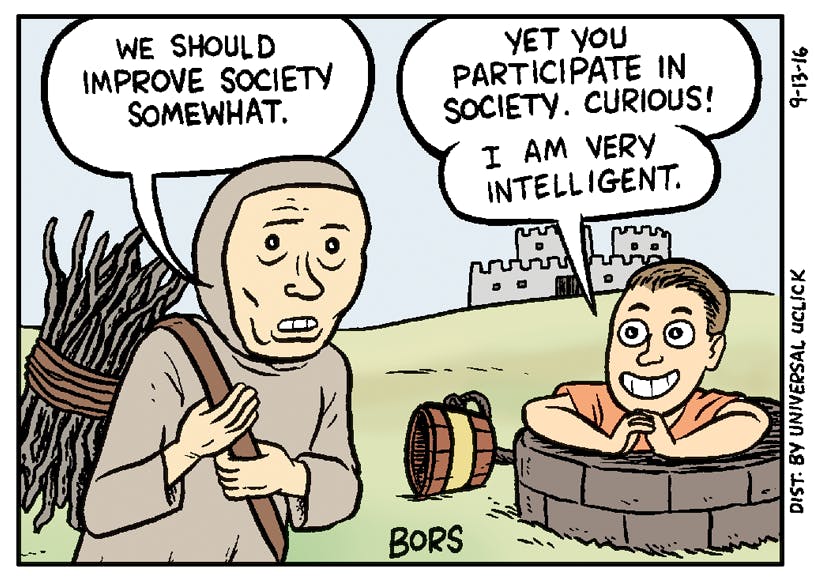
Most of the people complaining about Anthropic's behavior, while simultaneously avoiding the argument at heart about whether AI regulation is good, remind me of the "we should improve society" meme:
> In my opinion, they mostly imagined these regulations applying to other people, especially open source projects, academics and smaller companies. Now that they are being subjected to the exact sort of regulation they have proposed, they do not like it.
> I think all of this was extremely irresponsible of them, and I feel a good amount of schadenfreude that the leopard ate their face first.
Can't say I disagree. Hope this costs them many, many billions.
I think the big lesson of this that hasn't yet been learned: it literally doesn't matter how moral Amodei or anyone else is at Anthropic. When push comes to shove, the US government can step in and take it away.
They will either play ball with the US government on the US government's terms or they will be replaced or destroyed.
It is a misconception for them to believe they can dictate the terms of this technology.
In all such discussions, it is interesting to track the tipping point at which public perception of Anthropic shifted.
In my mind, as recently as February, Anthropic was considered by far “the best” company on the planet, with an insane fanbase and praise left, right, and centre. The story around the DoD contract solidified them in the public eye as “the hero the city deserved.”
Then they fell into a classic monetisation trap. Unable to sustain growth at such a discount, they started nerfing models, removing caching, and doubling costs per token to make any money here.
The lack of transparency in that process cost them public perception. By early May, all the charm of the magical, ethical super-company was gone. The entire campaign around the Mythos release, intentional or not, landed on top of that new narrative and didn’t play well for them.
What is interesting to me here is the realisation that a good chunk of the hate the company received came simply because of their most recent hostile, for-profit actions. Had it happened in March, HN and the public reaction would have been vastly different. It took them just two months of “bad actions” to ruin quite a good margin of the public praise they so desperately needed now.
> We’re proposing stronger regulation of the technology. We’re proposing giving the government the ability to, again in a narrow way, block deployment of unsafe technology.
When you are both the source of fear and hope people will always side with fear.
If you sold everyone on the idea of "safety is paramount, we urge everyone not to rush into development here" then certainly becomes hard to believe a blanket "we figured out safety, come play with our toys for 10x cost" when stuff is less than a month apart in your news page.
Half of me wonders if it was all a live simulation/drill, to practice what happens if a much more serious event occurs, and a model needed to be quickly shut down.
Under such conditions we would be looking at Amazon's actions through a much more benevolent lens.
Not saying it has been, but it certainly crossed my mind as something worth doing regardless.
Even if it's not intended to be a drill, this dynamic is why I can't take Anthropic's side here. If you believe what they claim to believe about the future of AI, which I at least do, there are going to be future cases where an emergency block is required for much more real threats than this one. Why in the world would Amodei think that the model provider, with massive financial incentives to keep the money flowing, should be allowed to make the final shutdown call?
If a team of researchers at Netflix discovers a few days after release that GPT 6.0 has a safety-compromising jailbreak, I want Sam Altman initiating a shutdown the second he gets that call, and I had thought until Friday that Anthropic agreed with me.
That's certainly one way to do it, but where would you place them?
No, but seriously, you could imagine what we witnessed playing out in a high stakes Tom Clancy or Michael Crichton style fable.
The fiery blowhard Pentagon chief, the arrogant know it all tech bro lab head, an alarm being called in from a remote office and surfaced through Amazon.
To speak my mind without filtering, Amodei looks pretty terrible in this situation.
They've positioned their company as 'We're the serious AI company that understands safety, while others underestimate the risks.' That strategy itself is understandable. They're not like OpenAI, which carved out the pioneer position in LLMs, nor do they have a trustworthy brand like Google (Gemini isn't trustworthy, but still). So branding around 'responsibility' made sense.
The problem is that they pushed that narrative with the Trump administration. Without considering that LLM strategies need to change depending on the political context, they just input the same prompt into a different context and got bad results.
The Trump administration's stance emphasizes external enemies. I guess they didn't know what would happen if they started talking about military weapons in that environment.
We East Asians know authoritarian regimes 'very' well. So I guess people from the US, a country with so much freedom that they naturally lie flat on the ground, just didn't understand the difference.
If they had advocated for AI freedom and free expression, many people might have helped them, like in the PGP situation in cryptography. But instead, they got caught up in their own claims.
If you emphasize how dangerous AI is under an administration like Trump's that stresses external enemies, of course the government will say, 'Then let us manage it.' And the moment Anthropic says, 'Why just us?' it just looks ridiculous. They're the ones who went on about how dangerous it is, and now they're acting victimized for being treated as a dangerous entity.
To be even more honest, Amodei's style of communication sometimes looks like a morality superiority hustle.
They speak in a tone of 'We're not just a money focused company, we care about humanity,' but isn't Anthropic still a company that takes investments, sells models, rides the cloud, and tries to win government contracts? So it ends up looking like they use regulatory discourse as a shield and marketing when it benefits them, but complain 'it's not fair' when it works against them.
Personally, I think Anthropic needs to hire a Korean person as their marketing lead. We Koreans know very well how to behave under authoritarian governments. If you need a marketing person, feel free to contact me. I'll prepare my resume
Well said. The funny thing is the US military uses Anthropic models for things like target selection in conflicts in the Middle East. Their marketing department is top notch however, there are people in this thread who think Anthropic is against that.
But we must not forget that the reason they are admired is that our society has rewarded people like that. Our society is fascinated by people like Amodei precisely because, despite being contradictory, we have rewarded those who make money and pull up the ladder behind them.
Also, even if a company is an evil organization, I think people can still serve that evil to make a living. Evil is easy; good is difficult. Most people, rather than being good but poor, would rather be evil but wealthy.
This is the image of an entrepreneur that our capitalist society has wanted all along, so he is simply positioning himself accordingly.
I wonder if you can just use fable/mythos to basically re-create core Anthropic research. They seem to be very touchy about using their models for LLM R&D given the guard rails they built into the product.
None of the large language model providers have a very defensible product moat yet and if the models themselves can reveal research fundamentals their position would become extremely precarious.
It would be very tempting to hide behind a national security excuse to try and preserve the research moat.
Amodei exhibits the common failure of guys on the spectrum, gleefully recounting gruesome news and portents. And that's fine, everybody's different and I like to believe he's not happy that everybody will be shaken and jobless, but you are the CEO of a "trillion" dollar company and the portentious news is being written about your actions. Presentation matters, more so when your audience is A world leaders B the entire world.
I tend to think this is all just PR and hype, baking in the idea that Fable/Mythos is so good that it attracted all these regulations and controls. So you need to spend >$20k per developer per month, or you'll fall behind. Don't try to get by on Opus, you need to really open that wallet up...
Regardless of whether they asked for it or not is irrelevant. That they released a product and encouraged use of it, then had to walk it back and now we're likely looking at proving we are US citizens to them to use it - if it returns at all - is insanity in action.
Would the US government have slapped Anthropic with this export control if Anthropic never fearmonger'ed about Mythos? I think the answer is very likely no.
But is this the type of regulation Anthropic has been asking for? Not at all.
This is a failure of Anthropic's politicking, and a warning that they need to be more careful with their communication in the future. If they truly want constructive regulations because of their fears about AI, they will need to repair their relationship with the administration, and it is still unclear to me how they plan to do that.
A government sign off on release potentially reduces liability/exposure if the models can do what it says on the box. I’m sure Anthro wants this applied to everyone and not only them, but there is a potential benefit to them.
Exactly the question I've been wondering. Anthropic has been behaving as if serving Fable is way too expensive. And now they got people's money, and don't have to serve anything. Convenient.
"The government should have the power to block or deter deployment of the model if it is determined, in light of third-party assessment, to present unacceptable risks. This power must be scoped to the above four specific risks and there must be protective measures against political favoritism or arbitrary decisions."
The article uses this as a gotcha, but I think there is nuance here. Amazon is a competitor, not an officially appointed third-party that can assess anything. And while Amodei says government oversight is needed, I think it's fair to say we would all expect something more rigorous and neutral than getting a phone call on a Friday based on vibes.
The Fable debacle will justify the imposition of a solid legislative framework to serve as a legal foundation for the entire business sector. A DMCA for AI, if you will. The other incumbent players will demand it, because they can't do business subject to the arbitrary (or worse) whims of Donald Trump or whoever follows him.
That framework is, of course, what Amodei did ask for, but he mistakenly thought he'd have a seat at a table populated by rational actors. Even after the Trump administration explicitly told him otherwise when they declared his whole company to be a national security threat.
So what happened is all Amodei's fault. It's possible that the Anthropic board will decide that this particular unforced error is his last one. In fact, given that Amazon is apparently the prime mover behind this whole train wreck, I'd almost bet on it.
> So what happened is all Amodei's fault. It's possible that the Anthropic board will decide that this particular unforced error is his last one. In fact, given that Amazon is apparently the prime mover behind this whole train wreck, I'd almost bet on it.
How it sounds like that everyone who tries to work with safety or morals will get eventually kicked out? That this is an ”error”? Like what happened with OpenAI? What a nice world to live.
I think you are correct about the legislative push, because it’s clear that US AI companies can no longer live without it. However, it is not the case that this is Amodei’s fault. His push for regulation was clearly at least partly mitigated by a desire for this precise situation to be avoided! With an appropriate regulatory framework and a transparent, apolitical certification or review process, this kind of situation would not happen. Banning Fable is not “regulation”, it’s capricious retribution, and I believe it is the single most damaging thing that has happened to the US AI industry to date.
It's aggrandizing and spares compute, I'd have to assume so... if not done so publicly. Clearly was requested. A silly title proposition: 's/Anthropic/Dario/'; he wrote the essay TFA discusses. No 'think' required, they're surprised at the shape.
    $ xdg-open fakerake.png
    Claude: regulate me
    USA: YOU ARE BEING REGULATED
    Claude: oh my god
Might believe I'm overstating compute; consider, how often does OpenAI falter? Now, Anthropic before and after their recent capacity deals. We got to see the girlfriend that goes to another school, now she can go home [with cover from Uncle Sam, the trip is ~~expensive~~ dangerous].
I haven’t used Claude in more than a year and didn’t even try Fable.
As someone that doesn’t have a dog in this race, I feel like anthropic has been very consistent with their moral stance. First, they denied the Department of war to use their AI to conduct military operations and throughout all this, Anthropic has been the one to neuter their model and make sure that it’s not able to do a lot of things that might can be destructive. So them saying that there should be a pause on new AI and then releasing this new product makes me inclined to believe them. Maybe I’ve drank the koolaid but it seems like Anthropic isn’t inherently “evil.”
> First, they denied the Department of war to use their AI to conduct military operations
They did not do this, they just wanted to ensure there was a human somewhere in the loop. Despite this, the U.S. military utilized Anthropic's Claude model in classified operations, including target selection during conflicts in the Middle East.
> if it is determined, in light of third-party assessment, to present unacceptable risks.
>Yes. This assessment was made by Amazon, a frequent and serious government contractor which is generally trusted to handle high-security government, intelligence, and military contractor concerns.
Reads as partially disingenuous. Amazon did not conduct some thoroughly vetted, responsible security audit. Someone gave them examples of a 'jailbreak' and they notified the white house rather quickly. This was nary an official process. Calling it one is ignoring the facts of what happened.
That’s not what articles on it say. They say that a team of security researchers at Amazon were able to trivially jailbreak the model and it’s not as guardrailed as claimed. Articles say in particular the model was shown to be usable for identifying security holes that it was supposed to not be able to be used for. That’s why Anthropic has only given access to Mythos to some people but not everyone, right?
Personally I don’t think we should impose guardrails on something so close to speech. But I can imagine Amazon was worried about how an explosion of cybersecurity incidents might affect the world. After all, they run AWS and have good intuition for the landscape of cybersecurity. Imagine if many of their cloud customers are suddenly facing one breach after another.
This is a terrible take. Dario obviously did not mean any old 3rd party should be able to provoke the government to shut down a model by insinuations in the directions of the given concerns.
He rather obviously is asking to establish a 3rd party specifically for this task, and to establish guidelines relating to the given concerns, and to establish guidelines for government actions based on the evaluation by the 3rd party.
It's all interesting advertising / news; however, why does it have to constantly cost me five precious vertical lines of text worth of screen real estate in Claude Code that apparently can't be dismissed? FFS
The premise here is rather ridiculous, and only entertainable if you don't know about the recent history of the admin declaring Anthropic a supply chain risk because they required the government to agree to ethical clauses that would've been considered unthinkable until recently.
Remember, all AI companies openly claimed to oppose military usage just a few short years ago. Now they all have government contracts that allow the government to use them "lawfully", while also being able to decide that anything they do with them is lawful. Anthropic is the only one who required clauses against killbots and domestic mass surveillance.
Anthropic never asked for arbitrary or opaque shutdowns. They asked for clearly defined regulations to apply equally (which would've helped their market position and advantage, coincidentally I'm sure /s), moreso to reduce their own risk and liability.
1. "Dario is known for writing about regulation and the direction of AI as an industry and Anthropic in particular, and what he says is taken very seriously and is considered a definitive statement of the company’s position." This is patently ridiculous. A CEO's blog post is not an official company statement or any sort of binding agreement.
2. "Are there protective measures against political favoritism or arbitrary decisions? I believe there are: they are called “courts”." This is so stupid. Of course Anthropic will take this to court (if it's not rescinded before then), and the government's ham-fisted "regulation" will almost certainly be overturned. And it doesn't matter! An unjust action that is overturned by the legal system does not magically become just.
3. "Is This Politically Motivated or Arbitrary? Probably at least somewhat." If the best you can muster here is "probably at least somewhat", then your head is in the sand. It clearly politically motivated, and clearly arbitrary. Perhaps a different government would receive the benefit of the doubt here, but not this one.
4. "“The government” or “society” is meant to deal with all of those things. Well, now the government is — the actual government that really exists, and not an imagined one that only does good things and never does bad things." So that's it? We just throw up our hands and say that this is natural, that it couldn't go any other way? That Anthropic was "asking for it", and it's their fault when the government lashes out?
If the government wants to regulate AI, either Congress needs to pass a law, or the Executive needs to furnish a reasonable explanation for their actions. We do not live in a fascist country. There is separation between the government and private industry. The government does not have the power to arbitrarily regulate private enterprise. I am truly baffled by the inability for people to see this as it is -- a blatant, and foolish, attempt at posturing and political intimidation. It's part of a clear pattern of behavior by this administration, and should be interpreted as such.
> A CEO's blog post is not an official company statement or any sort of binding agreement.
Uh, then what is it? We should not take the words of the leader of the company published on the company's website to be the official stance of the company??
I don't know, maybe a published press release? A signed document? I'm not saying that Dario's words are meaningless, but it is simply not true that a CEO's public speech constituents a binding agreement.
It's not an agreement but it is indicative of the company's position. Why do you go to such lengths to avoid assigning responsibility to a large corporation?
> It clearly politically motivated, and clearly arbitrary
Arbitrary, yes. Politically motivated? I think you are giving the administration way too much credit.
I think what this is are simply incompetent people with too much influence. I mean, Scott Bessent and Howard Lutnick? What the heck do they understand about this technology?
This was an opportunistic hit job by Amazon. After the SpaceX IPO, Amazon realized there was a good chance Anthropic's post-IPO market cap would exceed Amazon's. No doubt they are maneuvering behind the scenes for regulations that the big cloud vendors be the only authorized operators of LLMs for national security reasons.
Anthropic had countless ways to fight this and they chose to cave.
The government can't apply export controls based on a control that does not exist. Creating one for model inference, if at all possible, would take 3-6 months at a minimum and it even includes a public comment process. That control is not cited anywhere because it does not exist.
The president can invoke emergency powers but that requires pointing to a specific foreign threat, notifying congress formally, posting on the national register, and it only lasts six months unless congress votes to renew it.
Given how easy it would have been for them to fight this, we can only conclude this was either outright designed or incredibly convenient for Anthropic.
Given their stated goal of pulling Fable by June 22nd, it seems likely they underestimated the amount of compute they would need or, even if they had perfectly estimated it, pivoting so that "the government shut it down because it's so powerful" on June 12nd is a better story than "we shut it down because we lack the compute" on the 22nd. This is especially true because the net new revenue from Fable is just from new signups between the two dates, which is likely smaller each day elapsed since the launch.
Suppose a company calls themselves The Doomsday Device Company. They make and sell excellent-quality doomsday devices. They regularly go online to proclaim that their doomsday devices are the best and most powerful, and also that doomsday devices are dangerous and should be regulated.
The Doomsday Device Company then says they have the world's best doomsday device. (They don't, but they claim they do.)
The US Government hates the Doosmday Device Company for various political reasons, but also has a vested interest in there not being a massive proliferation of doomsday devices.
The Doosmday Device company spends a great deal of time and money telling everyone: "Our doomsday device is the most doomy of all time!" (though it probably isn't) and "Everyone can use it!" (for a lot of money)
It is completely logical, then, for the US Government to say: No, everyone cannot use your doomsday device, because doomsday is bad. (While also meaning: Only we should be able to use it, and you shouldn't be able to tell us how.)
If you do not want to be in the business of having your doomsday devices shut down by the government, well, it would help if you didn't so loudly and aggressively proclaim how doomy they are. It doesn't matter how trustworthy you claim to be, given that your business is making evil doosmday devices. You still won't be trusted!