Hacker News new | ask | show | jobs
by boppo1 40 days ago
Can anyone give me a semi-technical reason on why the hydrogen division are delusional? I'm actually convinced of it "osmotically", but I just don't know enough about it. I've got chem 101 behind me but otherwise I'm a finance & tech guy. It would be nice to actually understand why it can't be done though.
2 comments

Assuming we're talking about cars/trucks, one major reason hydrogen doesn't make sense is efficiency: https://cdn.motor1.com/images/mgl/OrLRA/s1/efficiency-compar...

If we manage to get enough solar such that energy essentially becomes infinite then the inefficiency would no longer matter. Otherwise, it would only make sense in vehicles that require high energy density like airplanes.

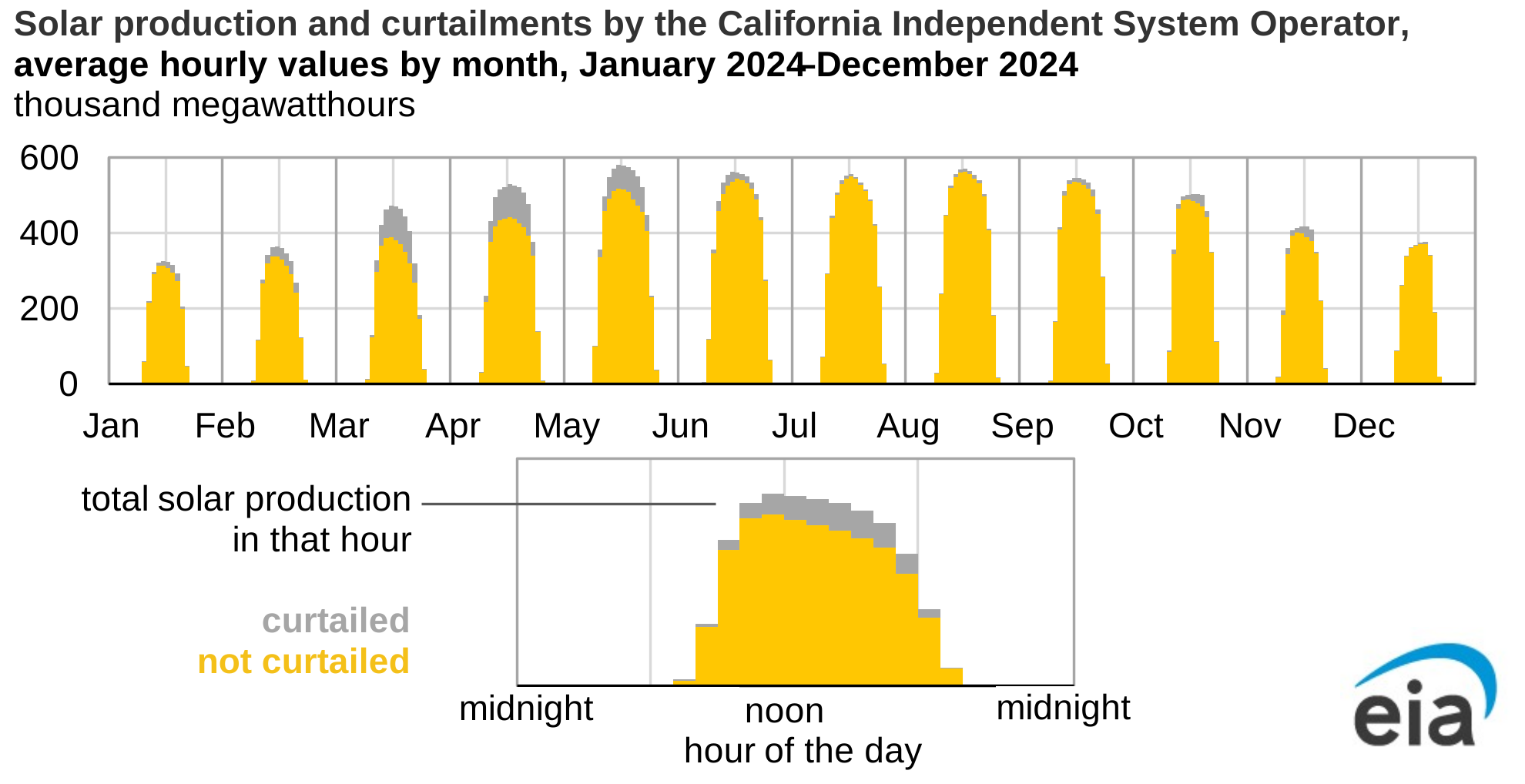
There is already free energy. In 2024, California curtailed 3400 GWh of solar. Hydrogen is one of the easier ways to load shift that to winter or processes which need something denser than batteries. I actually prefer synthetic methane (worse efficiency) because it is more immediately usable.

https://www.eia.gov/todayinenergy/detail.php?id=65364

Looking at the charts[0], load shifting all the way to winter seems unnecessary. You only need to load shift until ~6pm, in which case there are plenty of better options out there like grid-scale batteries, flywheels, pumped storage hydro, etc.

[0] The 2nd chart on https://www.eia.gov/todayinenergy/images/2025.05.28/chart2.s...

It depends on your energy mix. The more solar you go, more load shifting is required. Winter solar production is relatively crummy and you need to offset that loss somehow for the entire season.

That chart is showing some curtailment in winter because the grid knows to expect less production. It is already tuned to spin up more gas because solar will underperform relative to Summer.

Hydrogen leaks too much. You cannot transfer it without spilling a good chunk, around 8 percentage of it into the atmosphere. Now match that loss by your long term refuel needs and you'll simply run out of it. It can't scale up to anywhere near what would be considered a replacement technology for EVs.