Hacker News new | ask | show | jobs
by Conlectus 48 days ago
The thing that everyone always misses in these conversations is that screens over buttons is a cost cutting measure, not a first-principles design decision.

It means the UI can be designed and developed mostly independently of the physical controls, which helps reduce rework. I also expect it reduces costs for manufacture and assembly.

I’m in favour of more physical controls, but it surprises me that this rarely comes up. I suppose “people are idiots” is a more appealing explanation.

3 comments

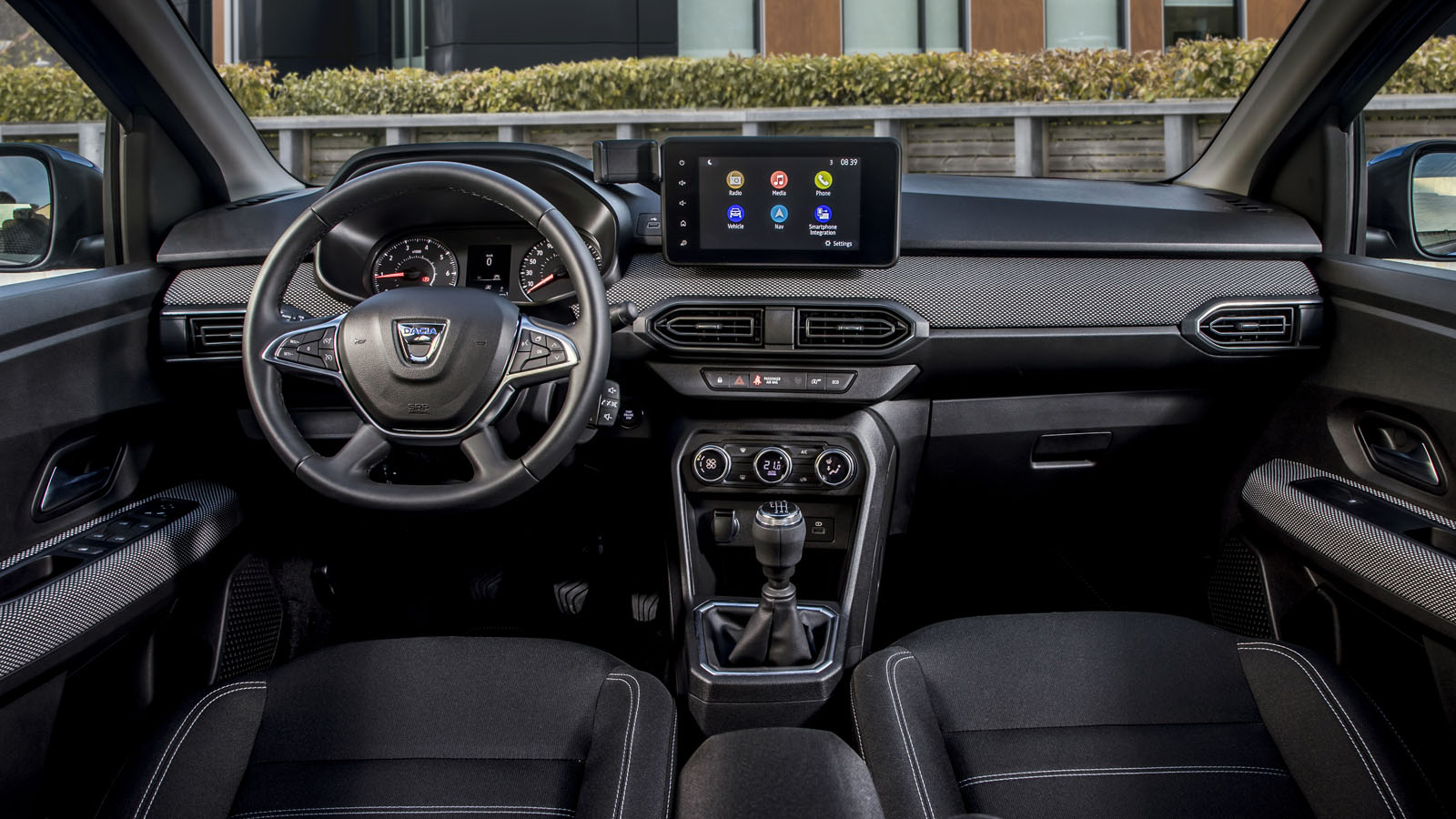
Somehow, the Dacia Sandero has physical controls for climate control and physical buttons on the steering wheel. It manages to do that whilst being one of the cheapest cars you can buy.
Having fewer functions means fewer controls are required. Fewer controls means fewer buttons. KISS tends to promote this.

If it's the choice between $50 worth of buttons and $100 worth of touchscreen, then $50 worth of buttons wins on cheapness.

And at that end of the market, it works (and it makes sense that it works).

---

But at the other end of the market: Common luxury cars have lots of features, and KISS isn't really one of the design goals (if a customer wanted cheap and simple instead, perhaps they'd be shopping for a Dacia instead). Things are still built down to a cost, but there's a greater quantity of those things.

When the choice is between $200 worth of buttons or $100 worth of touchscreen, then $100 worth of touchscreen wins.

The dacia sandero has the buttons AND the touchscreen.

https://www.topgear.com/sites/default/files/cars-car/carouse...

> But at the other end of the market: Common luxury cars have lots of features, and KISS isn't really one of the design goals (if a customer wanted cheap and simple instead, perhaps they'd be shopping for a Dacia instead).

It wasn't always like this. Mercedes-Benz used to make high quality, straightforward automobiles without all the inspector gadget james bond crap. See e.g. W123, W124, W126. Luxury meant high build quality, safety, comfort, easy maintenance, and a lifetime of reliable, dependable performance. Not features--you get the same basic features (ok, temperature regulated climate control is kind of novel for the late '70s-early '80s W123). But this stuff was minimal. Now the whole goddamn car is an iphone app. It's disgusting.

Even a W123 can be complex compared to something like a spartan 1979 Dodge Aspen.

Electric power windows, vacuum-operated power locks, telescopic steering column, power-adjustable mirrors, a radio that does AM and FM...

Fancy stuff seemed pretty common on those (awesome, stout) German luxury cars.

The more I think about it and read comments here, the less sure I am that the gilded age of simple, reliable cars has ever actually existed. :)

The self-leveling hydraulic suspension in the W123 wagon was also a complication. The climate control system was failure prone, but failed in a sensible way--when the control unit failed it would no longer maintain a set temperature, but would still work as an open-loop system. The cruise control "computer" (completely analog device) was also prone to failure. But the thing is all that stuff was implemented simply, reliably, and with an eye towards service and maintainability. Maintaining the systems on a W123 was easy. I did it for almost a decade. It was a fancy car, but in a sensible high-quality way. It was built to be understood. There were excellent printed, bound shop manuals. It was obvious that an immense amount of thought went into the UX of working on that car. It wasn't just a luxurious car to drive it was also a luxurious car to maintain. Even the fucking hose clamps were special.. like, they had a continuous metal bearing surface so they don't cause pinch points and raised bosses for the worm gear threads to ride on instead of the punched slots you commonly find. Contrast that with the situation today. Everything was a lot better before corporations started using software as a wedge to separate users from real, meaningful ownership of their machines. It didn't have to be like that, they could have done it differently. Software could have been a wonderful thing for the automobile, but the way they chose to do it made it awful instead. And now everything is an iphone app with subscriptions and in-app purchases and engagement metrics. It's disgusting what these people have done to the world.
Now it's reminding me more of the E36 I used to drive.

Dual-zone auto temperature control failed? Heat still works, at least -- the "all the way on" position for the driver's side temperature knob was not a potentiometer, but was instead simple switch that opened the valves. Not perfect, but not complete failure: Good enough to get from A to B without the window fogging or freezing in the cold.

But those manifold, solenoid heater valve assemblies would split open. The valve seats would rot. The former issue was and end-of-the-ride situation; the latter just let them bypass when they shouldn't. That was an expensive assembly.

That era of BMW allowed parts makers to brand their stuff, and the only American-made part I ever found on the car was an HVAC control module -- which, coincidentally, is the only electronics box that ever died on it. ;)

Despite the awesome hose clamps (which I understand to be DIN standard 3017 A -- you might see if those are what you remember from the W123 days), nearly everything about the car was a cooling-related system issue. The upper necks would just break off of the radiators, though they were flawless until that point. The water pump impellers were all initially made with plastic and those all failed (scattering bits to the nether regions), then they switched to metal, and then an improved plastic that seemed better. There were two cooling fans; one two-speed electric, and one crank-driven fan with a clutch -- one for each side of the radiator. The former worked well. The latter tended to eventually explode. It worked OK with only the electric one in-place, though. And the hoses were very good.

I never had a factory shop manual for it, but Bentley book was very good.

Except the instructions in the Bentley book for replacing the cabin air filter (luxury!) were wrong -- they missed a giant, black bolt at the top, center of that inside of that black, dark glove box. Those wrong instructions lead to ~every E36's glove box to eventually sag as people go WTF and start tearing way more things apart than was necessary and tugging on them in ways that they should not be tugged on.

There were more cool parts. The engine bay sure seemed crowded, but it was easy to get around that: The airbox, intake plenum, and MAF came right out, along with the Bowden-connected cruise control motor, with a couple of M8 nuts and a hose clamp from the factory toolkit and one tidy-AF twist-lock electrical connector. That made all kinds of room to get to most of the important stuff and literally took less than a minute with some practice.

Like the idle air control valve. It was under the intake manifold and it needed a drop of oil in the right spot every 5 or 10 years to keep working right, but it wasn't bad to get to at all with that area opened up.

The fuses were plug-in blade fuses that could be replaced inexpensively with a trip to any auto parts store or most 24-hour gas stations, but they were special in their own way: They were visually inspectable. Rather than appearing as a flat stamping of fusible metal that was inscrutable without pulling them out one at a time, there were two legs that supported a length of fusible wire at the top of the overall plastic body. That fusible wire could be plainly seen with the fuses in-situ. (I haven't figured out how to buy this style inexpensively, but I'd sure like to.)

BMW parts tended to be surprisingly inexpensive, and also easy to find. BMW's ETK parts index is an amazing and simple resource, and websites like realoem.com have the important bits online. Being armed with a real part number made it trivial to find exactly the right thing, and since the OE parts tended to be branded it was easy to bypass the dealership and get one from the same manufacturer that made the one that already lasted 20 years.

The grease on the window regulators would eventually turn viscous and sticky and glue-like, which lead them to break. But the part that would break was a little platic widget that was available separately, and only cost about $2.50 from the dealership parts counter. Straighten out the skeleton with some hand tools, spin the wheel on which manner of grease to use this time, snap on the new slidey-widgets and it's back rolling again.

The door cards came off easily and were principally made of a molded wood product that just didn't fail, and this lack of failure was promoted by the plastic vapor barrier being held in-place on the steel door frame with plain ol' butyl rubber so it could be removed and reinstalled over and over again without the adhesive dying, or easily-refreshed if that became necessary.

What else? Oil changes were easy and could be accomplished with factory-supplied tools (if a person could find a pit to work in, or sufficient desperation) -- the drain plug and the wheel bolts use the same size wrench. It required a new crush washer, but unlike my Honda those washers were always included in the box with a new filter. And that oil filter was top, front, and center: Open the hood and there it is, completely unoccluded.

The materials and coatings for the metals were good. Mine eventually started showing some body rust, but I drove it all winter, every winter, through the salt brine-soaked roads of northern Ohio. But the important stuff underneath -- like the stuff relating to the fuel filter and brake lines and exhaust -- simply didn't rot.

They're lovely cars to work on, which is good because there was plenty to work on as time ticked on.

I got nearly 300k miles out of mine, which is pretty good for a car that was designed with clay models instead of CAD. :)

I'm not convinced it is that easy.

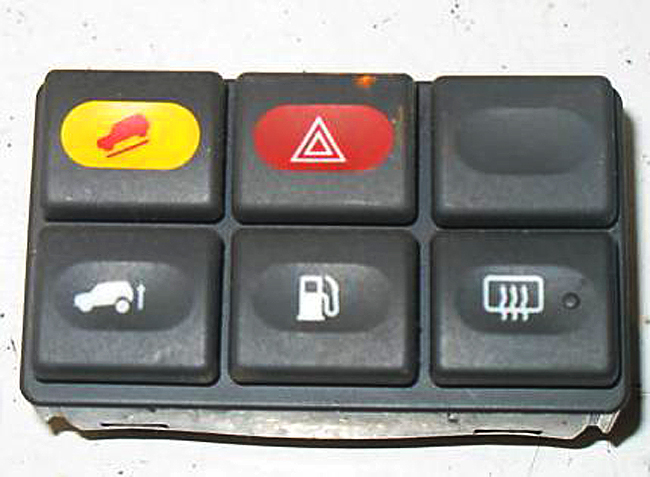
Cars traditionally have very generic button clusters, like [0]. It is even very common to have dummy buttons in there. Combine that with today's cars where those buttons are hooked up to some MCU to send a CAN message instead of being hardwired to a function-specific cable in a giant loom, and it is suddenly quite easy to change button functionality quite late in the design process for basically zero cost: you just need a slightly different label print and a small firmware patch!

Or, if you want to be 100% flexible, go with the ATM approach where physical buttons are placed next to an icon shown on a screen[1]. All of the flexibility and all of the tactile feedback! You can even go for a multi-level layout, with a top row of mode selection buttons, a bottom row of mode-specific function buttons, and perhaps even a big fat dial with haptic feedback[2]. Or even go all-out Elgato Stream Deck[3].

And sure, the fact that slapping in a giant touchscreen lets them decouple UX design from physical controls is going to play a big role. But it is by far the laziest and least user-friendly way of doing so. If that's the best you can come up with, you probably shouldn't be doing UX design at all.

[0]: https://www.classiccarstodayonline.com/wp-content/uploads/20...

[1]: https://media.istockphoto.com/id/672002868/vector/atm-machin...

[2]: https://www.youtube.com/watch?v=ip641WmY4pA

[3]: https://1.img-dpreview.com/files/p/E~TS940x788~articles/8521...

It's even more in regards to production planning. Building the production pipeline takes long and is inflexible as you need to ensure to pick suppliers which will provide spare parts for a sensible price for the whole lifecycle. Thus you limit capabilities very early in the design cycle.

A software based solution you can finalize last minute and with later updates add extra features. Thus if a competitor provides a feature you don't have to wait years for the next new design, but can deliver based on software development priorities any time, to any series you like (even add after delivery)