Hacker News new | ask | show | jobs
by weaksauce 53 days ago
> Sadly marketing drones think everybody wants a Tesla-style "everything is a screen" design whereas a 1999 Toyota pretty much had it right.

they also had to redesign the door handle and people have gotten stuck in the cars because of that and died. not just one isolated incident... more than one case of the car door not working because it's electrical only and the backup physical release mechanism is under a door panel you need to pop off and reach inside to pull after you just got into an accident and are physically disoriented.

1 comments

What the fsck possessed manufacturers to come up with that stupid recessed door handle? I think I might actually hate that more than touch screen climate controls.
Chasing very tiny fuel (or battery) efficiency gains.
Airplanes have had fully manual flush door/hatch handles for decades, and a handful of cars have imitated them. The electric retracting handles are pure gimmick.
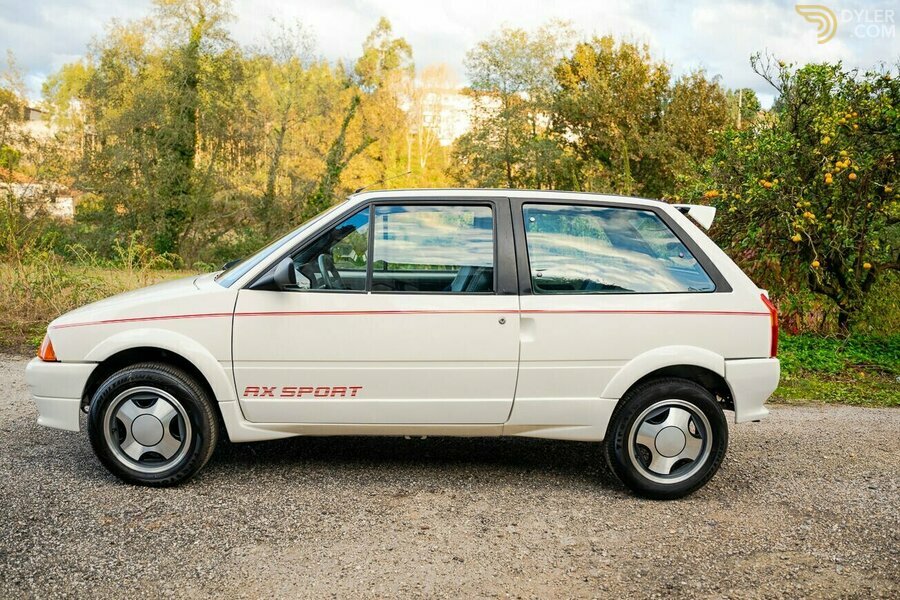
1990 Citroën AX Sport - https://assets.dyler.com/uploads/cars/406167/9080414/medium_...

Look at that door handle. Fully flush, NACA profile scoop in the bodywork to insert your finger behind the trailing edge of the door and flick the little lever up to unlatch it.

Give me that, please. I wish I'd never sold my 1991 Citroën AX GT, it was so quick and quiet. Hardly any wind noise, so it must have been very aerodynamic.

1969 Pontiac Grand Prix - maybe not actually aerodynamic, but it does have flush door handles:

https://upload.wikimedia.org/wikipedia/commons/e/ec/1969_Pon...

Super clean. We need more cars that look like that, and I bet we can make them reasonably safe too.
Apparently some engines now have a solenoid-operated shroud that pops up to surround the water pump impeller, so if the coolant is still warming up it doesn't circulate. This is supposed to reduce the parasitic load on the engine from the ancillaries.

I can't help but think that the water pump must require about 3 brake gerbil power to turn, and the weight of the solenoid, plunger, spring, shroud, and extra cabling - not to mention more seals to go hard and leak - probably takes more power to haul around.

I don't really care about a car's 0-60 time or fractions of a mile per gallon. If you want to save fuel, lighten your right foot.

I want the car to be simple enough to be reliable and repairable when it eventually does go wrong.

I agree with everything you said, but I believe the pump shroud is for faster engine warmup, not saving a fraction of a horsepower. Cold engines run rich, producing more hydrocarbon emissions, and the cold startup phase emissions are heavily penalized. There’s also additional wear on the engine due to cold oil and looser tolerances, which affects nearly every aspect of the engine.
It might be, yeah. But why wouldn't the thermostat solve that problem, since it won't let water through the rad? And wouldn't the faster warmup come at the expense of the heater taking longer?

If you really wanted to not run the coolant pump until you'd got the engine a little warmer I would have thought a magnetic clutch like an aircon compressor would have been better. Although these days, maybe even an electric pump could be more efficient.

The thermostat bypasses the radiator when cold, but not the engine. The coolant has to be allowed to flow in order for the hot coolant to fully open the thermostat. Being electronically controlled means there just needs to be a sensor near a known hot spot to trigger flow from the pump.

I’m not familiar with the impeller shroud you mentioned, but I looked it up and the description seems to agree: “This pump includes the shroud and control valve to restrict flow while the engine heats up.”

Whether or not it affects the time required for the heater core to be operational would depend on how they decided to route it, and if the solenoid offers variable positioning. I imagine it is variable, otherwise they’d create thermal shock every time the engine heated up and the pump suddenly started flowing colder coolant through the block, so technically it should be possible to fully replicate the general functioning of the thermostat and heater core. Now that I think about it, it’s most certainly variable and it’s why they didn’t go with a clutch system.

c_w

(mostly design clout though)