> Shockingly, Franklin.com, with its 85 words of unstyled HTML, still links to the latest iterations of these devices.
If you look at the source code of this page, you'll be even more shocked: looks like it's simply a MS Word document saved as HTML, it's overly complicated and contains lots of "Mso*" classes. And no, it's not unstyled either, it's just that on computers that don't have Times New Roman installed, the browser falls back to the same serif font that is used for unstyled text (and if you have it installed, it's probably the default serif font or indistinguishable from it).
I opened “view source” in Firefox and it showed the html in a different font than usual. Maybe it's just a fallback because the page contains Chinese characters, but I was quite surprised. A small page with a lot of mysteries.
Bearing in mind that Jobs famously intended to "knife the baby," referring to the cash flow from the 6502 machines, it is ironic that he fought to stop this clone.
I remember this phrase from a stage play, The Agony and the Ecstasy of Steve Jobs, but Google shows this source:
and the PowerMac clones weren't doing anything interesting and were simply cannibalizing Mac sales, cutting into Apple's profits --- really wish at least one of them had made a tablet unit w/ a Wacom digitizer, but that was too small a market as Axiotron found when they did the ModBook (which I still regret not buying).
I can remember the 16-page _Newsweek_ ad quite vividly --- the Mac was something special, and even its spiritual successor, the NeXT Cube did not reach the level of artistic flair which the Mac hit as a quick perusal of:
> But Franklin Computer Corporation’s hardware, software, and ad concepts were stolen intellectual property, which, I think, qualifies as “bad.”
"Intellectual property" is doing a lot of work in this sentence, in that it's a legal-sounding blanket term which somehow fails to mention which actual law Franklin broke. It's implying something is illegal without actually making the case. The cancerous growth of the vague concept of "intellectual property" leads to things like the DMCA, where formerly legal acts are outlawed in a kind of "penumbra" or "emanation" from acts which are concretely illegal, because they're getting "too close" to the imaginary line.
The first computer I touched was a Franklin Ace 1200 which my father bought. It had a joystick and a Sakata video monitor. The first game I remember playing is Short Circuit: https://www.youtube.com/watch?v=FoY8iWJAgVQ. It was replaced by a Canon 8088 then by an AT&T PC6300. I don't know who my father sold it to but he kept the Sakata and it floated around until I realized you could hook a Nintendo to it. Then it became our gaming/VCR monitor. That monitor is still in my mothers basement.
Years later I'm working for a small business out on LI who never threw anything out. I got really lucky and obtained a full Franklin Ace 1200 with Sakata, Mits Altair 8800b and an IBM System 23. All in boxes. All manuals and software. Crazy. I took the whole haul home. I need to setup a museum/computer room one day.
My uncles dairy had a datamaster in a back office that they used for the books, etc. I wonder what happened that that, it's no doubt stuffed into some haybarn loft.
My uncle had a business with an IBM minicomputer: a System/36. It was the size of a large freezer. It also used 8" floppies! It took a "magazine" of 10x 8" floppies and could swap between them. It looked like the system in the top photo here: https://en.wikipedia.org/wiki/IBM_System/36
I managed to score eight NeXTcubes from a small company getting rid of them one time about 1997. Similarly with all the manuals, boxes, software, etc. I wanted to share the treasure, and offered the extra to a bunch of my friends. Only I mathed wrong, and ended up promising all eight away. Oops. But at least I've still got my extremely early serial number C64.
I worked at Franklin and was one an early hire. Using the Apple ROM code was an explicit choice. There was no real defined API so a lot of apps called random routines in ROM or referenced arbitrary ROM data and if it wasn’t there the app broke. Franklin’s argument was that the ROM was the API and if you wanted to be compatible it had to be identical.
Court didn’t agree, probably rightfully so. But Franklin was a fun place to work. It survived for years after the court decision and pivoted to making handheld gadgets. Their electronic Bible was apparently really popular in some circles.
Honestly their argument works for me. It truly cannot be "100% compatible" without sharing the same memory layout/contents in this case.
Unfortunately for Franklin, that also meant that full compatibility comes hand and hand with trademark & copyright violations. I find it more "sad" than "upsetting" as the original author implies in this piece.
Personally, I love cloned hardware and software. I seek out clones when I can and even make my own (for fun, not profit.) I have a few Atari 2600 hardware clones I designed and built along with eprom cloning software and burning hardware. Not for any real reason, just because I like figuring out how hardware and software works and cloning is often a means to that end.
Right, but it took a couple tries to get the courts to understand this. The idea of "software compatibility" was completely novel to copyright judges, and there's no parallel in other creative endeavors. The closest thing I could think of would be writing in someone else's creative universe, but in that case, it's crystal clear you don't get to do that without a license[0]. The courts just decided - later on, when defendants armed with better arguments and copyright hygiene[1] showed up - that software copyright has to be thinner than other copyrights, else there is no way for the owner of a program to legally separate themselves from the software libraries, ROM code, or OS they run on.
Even then, you don't get to just say "we need this for compatibility", you have to actually find software that breaks if you do it any other way. The act of reimplementation is both reverse engineering technique as well as legal technique - you are building up a series of excuses for specific acts of copying. What Franklin did the first time around was go straight for the conclusion they wanted, which courts really, really don't like. Courts want to see your struggle.
[0] In fact, Oracle's argument against Android in Google v. Oracle hinged on their ability to make reimplementation of Java functions sound like plagiarizing Harry Potter.
[1] The words "clean room reimplementation" get thrown around all the time, but it's not strictly necessary to be clean-room. The precedent for compatible reimplementations includes Sony v. Connectix, where the latter was very much copyright-tainted and won anyway.
> Unfortunately for Franklin, that also meant that full compatibility comes hand and hand with trademark & copyright violations.
Franklin eventually released a couple of clones which were compatible and had a clean BIOS (the 500 and 2000). I'm not sure about full compatibility but I never encountered anything that wouldn't run on my 500. To be fair, I got the thing in the mid nineties and only ran a few programs on it...
"Copy protections" back in the day often looked for fixed strings in seemingly random places. In the worst cases, this even went outside the machine's memory addresses. Several programs I had would farm this task out to the users and ask for specific words from specific pages in manuals on particular lines. I had to hex dump the binary's lookup tables to even get older software to run many a time ;-)
I'm not sure why copy protection came up on this thread but when it came to the Apple II, one of the more effective methods was to intentionally include a damaged or unreadable sector at a predictable place on the software's floppy. A standard copy would bomb out on one of these disks, but of course special copy software could do something with a disk like that.
I assume they used clean-room techniques after those were judged by the courts to be viable. I wonder if that happened because of Franklin's efforts or because of what happened in the IBM PC clone industry.
Apparently my terse sister comment is beyond the edit timeout threshold, I had meant to follow up with more details.
If there's interest around general "chip emulation" techniques I've employed, I could try and do a blog write-up. The first attempt was using a PIC32 with a bunch of lookup tables a couple decades ago. Then I played with fpgas (the cheap lattice ones.) My latest attempts relied on a combination of SoC and inline rom dumps using all the known bank switching schemes, which tbh was a pita to validate until I finally bought a harmony cart (I was eproming up until a decade ago.) The SoC design allowed me to use a ARM that could output HDMI (via daughter board) with various filters to mimic CRTs artifacts and the like which I found fun.
Very interesting read and a neat product from a technical perspective. I'd like to know the specifics of the data structure used to compress and index the text.
How big was the Franklin back then? My uncle worked there in the 1980s, but I was a kid and have no concept of if it was a scappy startup or a midsized company.
When it started it was a scrappy startup, a handful of people. I went there because my old boss, Dave McWherter, essentially was the engineering department. Grew slowly to maybe a hundred people. Then exploded to several times that at least. At the end there were active projects for: a portable Apple II clone, a PC clone, portable CP/M machine (think Osbourne One), MSX game machine, and probably more. Way too big way too fast.
So I have to ask, who is your uncle and where did he work in Franklin?
That's how I feel about clones in general. Ok, I owned a real Commodore 64, but all my PCs during my formative years were clones.
Actually, this wasn't such a good example since I believe PC clones were legal. Let me change it to something more controversial:
I feel the same way about software piracy. All my games and software growing up were pirated. I didn't even understand this, because you got software by going to a store and buying it, e.g. C64 games... but it was all warez. Same with DOS or Windows (which one usually got from someone else). All of my early programming languages were pirated too: QuickBasic, GW Basic, Turbo C, Turbo Pascal, etc.
And this is how people got acquainted with computers, and then got into programming (games, systems, business software) as a job. So piracy was a net win.
I do recall the assistant at the store when I first showed up said wait for the upcoming Commodore 64 more stuff for much less money. But as a 14 year old I wasn't ready to wait after being exposed to Apple the summer before. That professor really advocated for the Atari 800 and I really considered it, but the Apple's easier to copy floppies along with a much larger user base won me over.
I did this with some proprietary hardware. It's an HDMI encoder lor the original Xbox. I designed a PCB to be electrically compatible along with being compatible with running a binary provided by the original maker. I used the same microcontroller so it could be flashed using his binaries that I was able to extract from an app he distributes. Normally, you'd run the updater app on the Xbox which sends a firmware update over the SMBus to the microcontroller but it's easy to slice up the updater app to extract the firmware image. Then you can use an ST programmer to flash the image to my clone. Despite what it says on my GitHub, I did actually get it working but there's some irregularities between original Xbox revisions that make my design not universal. Oh well, at least it works for me and I didn't have to give this guy any of my money.
The whole project started because this guy changed the design of his HDMI encoder to move the microcontroller off the board and into another board he sells that provides an alternative BIOS for the Xbox. Meaning instead of paying $60 for one board, you now pay $50 for the neutered board plus $100 for his other board. Someone released a barebones board that had the same microcontroller (running his firmware) on it that could be connected to this neutered board and this guy sent a DMCA takedown notice to a site hosting the instructions on how to build it. A lot of people in the original Xbox modding community got upset so some people were looking for ways to build open source HDMI encoders as a means to kick the proprietary junk from the community. I took it a step further and just built a clone.
And honestly what’s wrong with the ads? Sure, they’re a bit cheesy, but not really that much out of the ordinary for magazine ads back then. There were certainly much worse (sensational, sexiest) ones…
Let’s not forget, IBM themselves used Charlie Chaplin’s “Little Tramp” [0][1][2] in their home computer ads for quite a while back then, so this isn’t that different.
The whole article is just plain weird. They make it sound like a personal slight, and not a legal battle pitting two companies with a history of questionable behavior against each other.
As others have noted, it was far from a slam-dunk case that what Franklin did was illegal or unethical. "You could even pull a card out of an Apple and plug it in" is not exactly the rhetorical death blow that the author of this article was aiming for.
From a modern context, I think it's hard to appreciate that in 1981 it wasn't clear that a computer BIOS would be copyrightable. Franklin even won the initial court case.
> Apparently, when Steve Wozniak first got his hands on an ACE 1000-series machine, “he felt that Franklin had even copied the circuit-board layout, right down to how the chips were arranged.” Reviewers were even able to pull cards out of an Apple ][ motherboard, plug them into an ACE machine, and they’d work without any other modifications. And while I couldn’t verify this claim anywhere else, one retro hardware forum had a comment claiming “they outright stole the Apple BIOS code, including -- bad move -- the copyright notice, itself.”
Building a functional equivalent is one thing, making a direct copy in a different case is another.
It is now determined to be "bad" but the whole area wasn't as clearly legally defined as we think it is now. The courts could have almost as easily ruled for Franklin and determined that "BIOS" is a hardware implementation and not copyrightable.
Indeed. There was a movie about the guy who invented the intermittent windshield wiper and I remember being surprised that one question that had to be addressed by the court in the patent trial was whether a circuit design was a patentable invention.
> Reviewers were even able to pull cards out of an Apple ][ motherboard, plug them into an ACE machine, and they’d work without any other modifications.
My God, such an Architecture might have become an Industry Standard!
> The ISA term was coined as a retronym by IBM PC clone manufacturers in the late 1980s or early 1990s as a reaction to IBM attempts to replace the AT bus with its new and incompatible Micro Channel architecture.
Most pirates are careful to strip out any copyright notices, but if Franklin did not consider themselves as pirates, then obviously the smart move is to retain the notice intact, because that is giving proper attribution. That seems like a good and ethical choice, considering the landscape at the time.
> Reviewers were even able to pull cards out of an Apple ][ motherboard, plug them into an ACE machine, and they’d work without any other modifications
Which was kind of the point? If I remember correctly Woz had patents related to the video generation hardware which Franklin did change to try to avoid infringing but I can’t remember if the court agreed that it did it successfully.
Exactly what I was thinking when reading the article. The author implies "the nerve of them", when they're simply providing exactly what they advertise: a 100% compatible machine.
I got the computer with an 80 column graphics card one floppy drive and an amber monitor. It was less than a similar Apple bundle. I got mine in December 1980. I also got a disk of copy programs and a floppy with a few pirated games. Those two got me started as an early pirate video game collector. That was freshman year of high school. I grew out of video games a few years later. I did use it for word processing in college. I had a decent dot matrix printer which had a parallel interface but I chose to take floppy to a study location with a small printing lab. I would copy my file from the 5.5" to a 3.5" pro-dos formatted disc. Then open the doc in Word on a Mac and get it formatted nicer. I don't recall if Word had Auto-Format back then. And laser print my paper for a sharp look. I still keep a licensed Word on hand just for that single feature. I printed a few papers using my Franklin to Smith Corona typewriter via a cable, had an english teacher who didn't want dot matrix and that was more fun than typing manually. Whew this brought back a flood of my early tech memories.
I dunno, the more I age the more I think that the wild west that was created during the initial boom of personal computers was the best thing that probably ever happened. Without it the 'PC' (and by this i mean personal computers) revolution may not have even happened (the ibm pc clone ecosystem BECAME the ECOSYSTEM and IBM was denied a monopoly). I think we would have been in the walled garden computing ecosystem immediately and it would have become much more extreme that even where we are today, cross compatibility would be shit, linux may never have happened, etc.
How many kids who's parents couldn't afford an apple computer got a franklin instead allowing that kid to grow up and invent great things both open and closed source.
I'm guessing Apple had stopped putting board schematics and ROM listings in their reference manuals by the time the ACE came out, or perhaps soon afterwards.
> The ACE 1000 also had a built-in power supply and 64k of RAM while Apple’s machine did not.
The Apple II series (except for the later //c) all had quality switching power supplies built-in. That was already something Apple was doing to set it apart from Commodore, Atari and Tandy.
Never used a Franklin, but I remember the Albert which was a IIe clone. Had a voice synthesizer which you could type words into and it would say them back (poorly) which as a young kid was a good time. Also had a stylus/drawpad for graphics which was kinda neat. https://en.wikipedia.org/wiki/Albert_(computer)
I remember the text Games Apples Play and typing the code manually in from the pages on that machine in Basic. Some of them were pretty fun. https://archive.org/details/gapa2
My friend, who's data was a swapmeet/fleamarket/gunshow guy, brought one home (a franklin 500, the //c clone) for him. Seemed to run all the pirated floppies that I the friend group had accumulated for our //e's just fine. I remember liking it's black and grey case/keyboard colorscheme.
The Franklin product I always wanted but never had was the REX. This was what PCMCIA slots were made for, a mini-organiser that was just cool in pre-iphone times, when any other organiser/PDA needed to be plugged in with some very slow cable.
Citizen made the REX and they sold it on to Xircom, so it wasn't as if Franklin did much apart from to add their peculiar style of marketing to it.
Ralph Archibold, the Ben Franklin impersonator the article mentions, was a legend in Philadelphia and a really nice guy. I met him back in 1999 when I was working for a city tourism agency.
That was a great read, and I loved the retro computer ads. It really makes me nostalgic for the heady days of the "wild west" of home computers and the internet.
The sheer amount of bull$h!+ power granted to AAPL over clones and emulation is one of the early reasons we cannot have nice things now. I'm trying to post the sad saga of David Small and The Magic Sac but apparently that story is behind paywalls because of course it is. But despite AAPL crushing The Magic Sac, no one could crush emulation in the end so there's hope.
Is there no end to the burgeoning websites using fixed-width fonts for text? We're not using ASCII terminals anymore... oh, to be able to read text more easily.

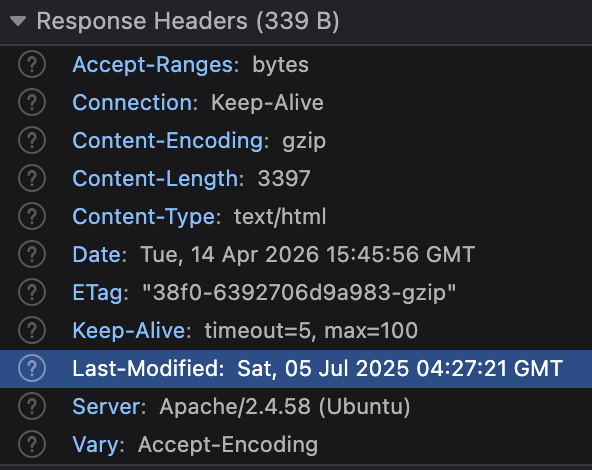
If you look at the source code of this page, you'll be even more shocked: looks like it's simply a MS Word document saved as HTML, it's overly complicated and contains lots of "Mso*" classes. And no, it's not unstyled either, it's just that on computers that don't have Times New Roman installed, the browser falls back to the same serif font that is used for unstyled text (and if you have it installed, it's probably the default serif font or indistinguishable from it).