|
|
|
|
|
|
by vbernat
114 days ago
|
|
|
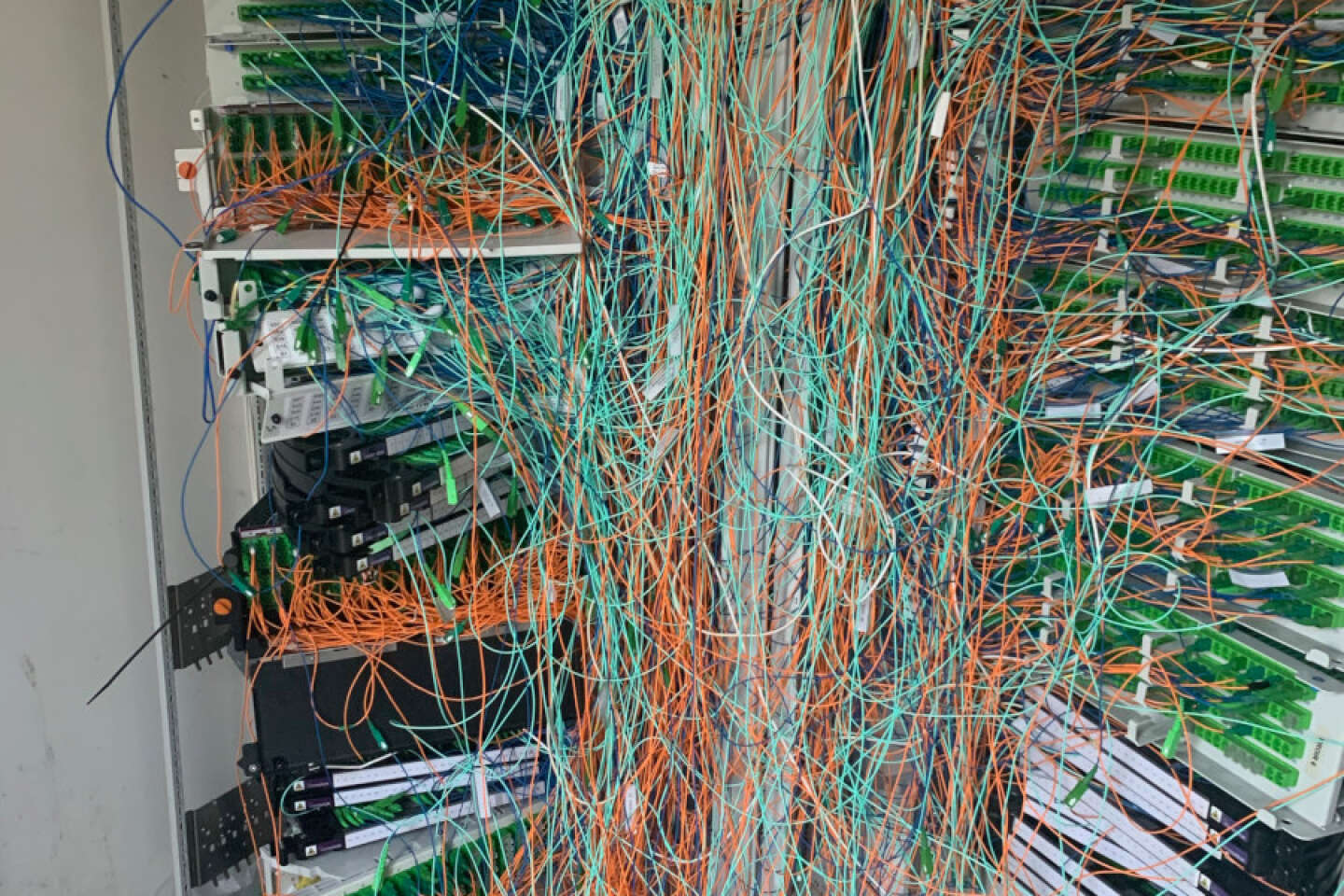
France has 90% FTTH coverage in 2025, with 60% of households over 1 Gbps. One of the incumbents, Free (my employer), deployed P2P fibers in very dense areas but is switching to P2MP for economic reasons (and because this was not a competitive advantage). It's unclear to me if Switzerland plans to achieve this coverage with P2P. What looks great in Switzerland is not that each household has four dedicated fibers to the CO, but that Swisscom has responsibility for these fibers. In France, we have competition between operators for both services and infrastructure. In very dense areas, each building can have its own infrastructure operator (with an obligation to share); in less dense areas, this is by district (with an obligation to share); and in rural areas, this is a subsidized network (with an obligation to share). The downside is that there are "mutualisation points" where each ISP can go to plug or unplug subscribers, and they become a mess (https://img.lemde.fr/2020/06/04/300/0/900/600/1440/960/60/0/...). BTW, I am also disturbed by AI-generated images. The ones with the three workers laying cables look highly unrealistic and made me pause for a couple of minutes, wondering if they lay cables that way in Germany. The ones about how households are connected to CO look like you get multiple 720-fiber cables to the same household. |
|
|
It’s not like we’re super rural, either - small village, about 8km from two middling towns. The cell network isn’t much better - it’s 5g in the towns, and 2G or nothing as soon as you’re a few km out of them.
There is a fibre trunk running down the main road, 1.5km from the village, but when we enquired France telecom quoted about €250,000 to extend the fibre up to us. We passed.
Edit: same kinda deal with free.fr. If I check availability by address, it fails, as while the commune exists, the village does not, never mind the roads within it. If I enter the land line number, it says it is a mobile number and refuses to proceed.
So: your figures say 90%, but I suspect that’s a theoretical number rather than a real one.
Maybe it’s 90% of the 60% of addresses which got included in the statistics.
Edit edit: Ah hah, yes. I’ve looked at arcep’s methodology. That 90% is inventoried premises (homes & businesses) which:
- could be connected to FTTH, theoretically.
- exist in the arcep database
- are within several km of a live fibre
My home would be counted as “connected” by their methodology, even though there’s a quarter million euro bill to pay to make it so, and several km of fibre to run.
So - the stat is self-aggrandising bullshit, sorry.