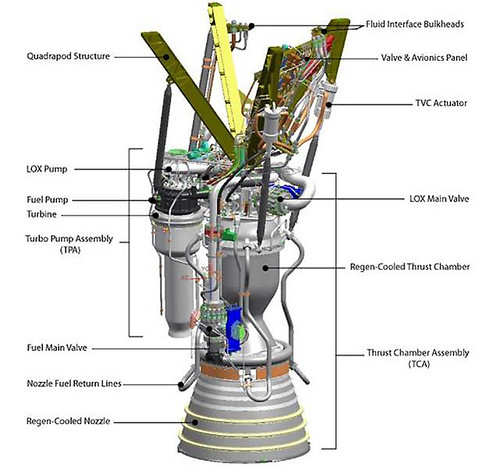
| They probably refer to breakaway panel fairings above the engine isolation armor. Space X has an armor "cup"around the dangerous parts of the engine, and put fittings on top of that for some reason; aero probably. Their statement suggests these came off when pressures radically changed during engine cut off, which is plausible. It was at max aerodynamic pressure, and removing all the pressure the motor generates is a big swing. I find it more likely that the nozzle (bell) shattered, as it is more exposed to both aero and combustion pressures. Maybe both happened. A visual guide: 1) naked engine: http://farm3.static.flickr.com/2355/2230438397_487afd40a2.jp... When a liquid engine fails energetically, it's usually going to be a failure in the chamber. Nozzle or throat burn-through or other failure may also happen. The turbo pump might also let go and shred some stuff nearby. Plumbing failures may also kill the engine, but not destroy much; there are plenty of valves to fix leakage before it gets bad. 2) un faired: http://www.spacenews.com/images/Falcon9engines_SpaceX02.jpg Here you can see the armored tub around the chamber section of each engine. It is meant to contain any problems. Mostly these would be hot gas from holes burned in the chamber or throat, fuel or oxidizer from leaks in the plumbing, or shrapnel from the turbo pump coming apart. Note that the other major failure mode, excessive vibration, cannot be armored against, but that is more a design thing than a random failure. Most to all of these failures are easily detected by various pressure and flow sensors, and usually before they become big problems. Turn off the propellant valves, and the engine rapidly becomes safe, though off. But the armor does keep the neighbors safe from any problems, presuming it holds.
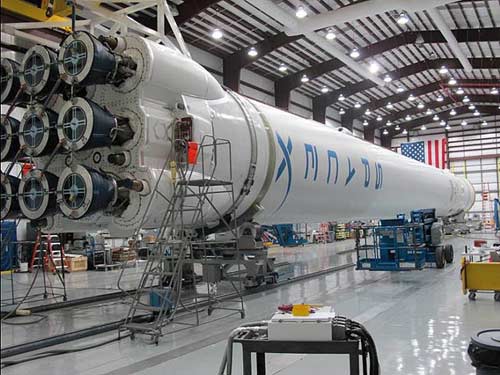
I would guess it is good enough for most failures. 3) faired vehicle: http://www.brendans-island.com/blogsource/20101015ff/falcon-... Here you can see pretty white fairings hiding everything but the nozzles. Note that they appear to be a bunch of different pieces. Probably that is because they are meant to break away individually if something goes wrong. Those are what I think the statement refers to. I doubt they are actively jettisoned, but may certainly be designed to pop off in an over-pressure situation. One could probably compare vs the video to see if the pieces look like that, the nozzle, or other engine parts. The corner fairing might also have failed under some circumstances. Having seen the video in slow mo a few times, I think their assessment is plausible. Probably they will be able to tell what happened by telemetry. I don't know if they are still trying to recover stages, but if they are, they might get their hands in some physical evidence. Whether we will ever see any of this data, though, I don't know. They've been reasonably open in the past. |