|
|
|
|
|
|
by drewg123
269 days ago
|
|
|
I come from a very different world (optimizing the FreeBSD kernel for the Netflix CDN, running on bare metal) but performance leaps like this are fascinating to me. One of the things that struck me when reading this with only general knowledge of the linux kernel is: What makes things so terrible? Is iptables really that bad? Is something serialized to a single core somewhere in the other 3 scenarios? Is the CPU at 100% in all cases? Is this TCP or UDP traffic? How many threads is iperf using? It would be cool to see the CPU utilization of all 4 scenarios, along with CPU flamegraphs. |
|
|
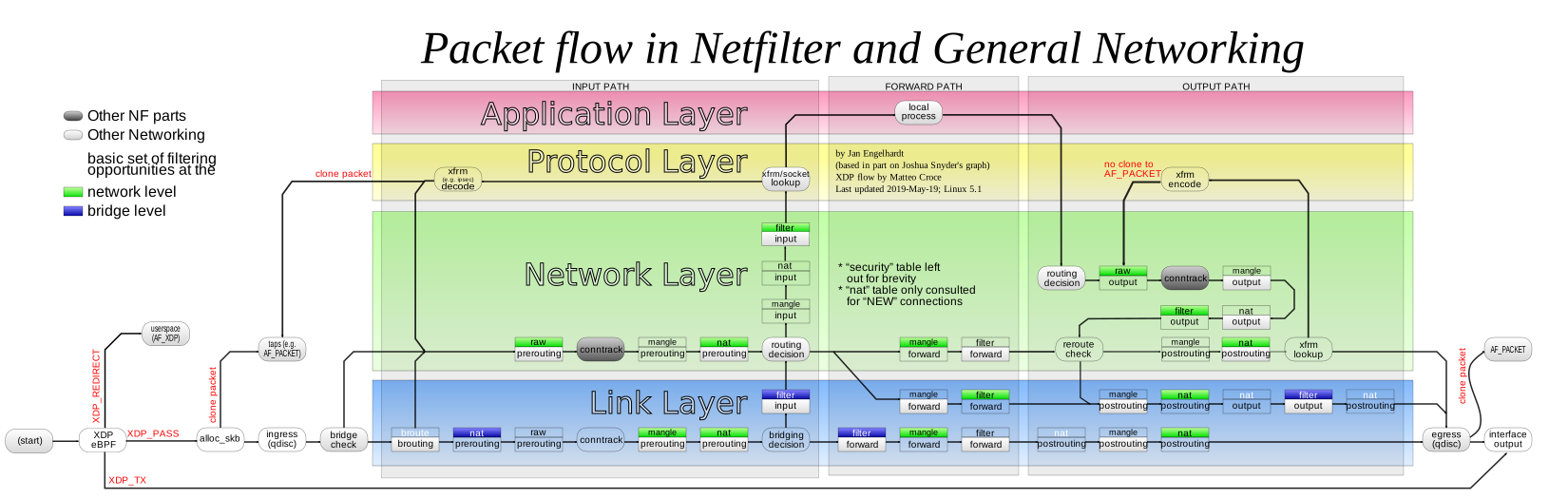
In the non XDP case (ebpf on TC) you have to allocate a sk buff and initialize it. This is very expensive, there's tons of accounting in the struct itself, and components that track every sk buff. Then there are the various CPU bound routing layers.
Overall the network core of Linux is very efficient. The actual page pool buffer isn't copied until the user reads data. But there's a million features the stack needs to support, and all of these cost efficiency.