How does one distinguish between all the tiny devils in the details between all possible chargers to have the maximum efficiency in ones iPhone charging?
There really aren’t any nuances to be aware of here. If the charger can provide 45W or more, it will charge your iPhone 17 Pro as fast as it can go. If you have an older iPhone, you don’t even need that much.
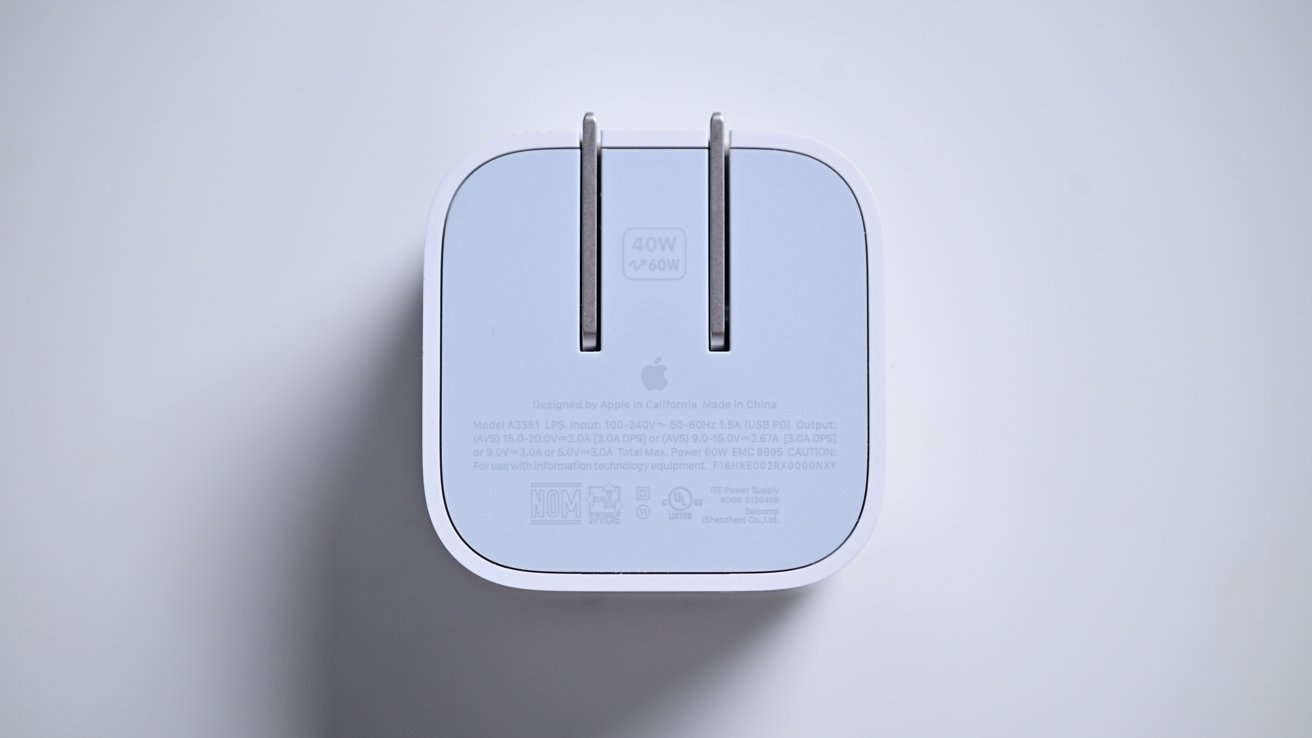
The Apple charger is mildly interesting because they made a slightly smaller than usual one that displays a dynamic behavior where it boosts up to 60W. That’s it.
(If you actually mean efficiency of energy delivered, and not time efficiency… the energy efficiency of charging your own personal phone is completely irrelevant to anything. You could save many times that amount of energy per year by switching to a heat pump water heater, or a heat pump clothes dryer, but most people haven’t.)
There was some speculation that chargers would need the AVS spec to full speed charge the new iPhones, rather than just any USB-PD. Has that been tested yet?
I could definitely see maximum sustained charging speeds only being sustained with optimal supply voltages, which minimizes converter loss (and thereby heat, which is the actual limiting factor for fast charging these days) in the phone.
I didn’t say the charger doesn’t support AVS. AVS is fine, but the practical impact on charging time is going to be difficult to notice in this specific case, if it exists at all. Apple does not even hint that AVS is needed to meet their charging time claim in their official documentation: https://support.apple.com/en-us/102574
Apple simply says “For iPhone 17 models, you can charge up to 50% battery in around 20 minutes with a 40W adapter or higher.”
Sure, it would be fun to see someone do a thorough test on this. No, I don’t agree with all the posts that are fear mongering people into believing they need some super fancy charger to reach the charging speeds Apple claimed, when Apple themselves doesn’t claim that, and the original 9to5Mac article no longer claims this true. There is simply no reason to believe that AVS is required, and anyone saying that has the burden of proof here.
It could of course also be included only for power efficiency without being strictly necessary for optimal charging performance, but cooling performance can vary between cases and with environmental conditions, so I suspect it might be at least partially a functional requirement.
The Apple charger is mildly interesting because they made a slightly smaller than usual one that displays a dynamic behavior where it boosts up to 60W. That’s it.
(If you actually mean efficiency of energy delivered, and not time efficiency… the energy efficiency of charging your own personal phone is completely irrelevant to anything. You could save many times that amount of energy per year by switching to a heat pump water heater, or a heat pump clothes dryer, but most people haven’t.)