Hacker News new | ask | show | jobs
by dtjb 279 days ago
Norms and goalposts aside, what’s the value in adopting a formal policy of harassment against non-criminal, non-violent workers?

Congress can debate immigration laws on the books, but this cultural shift seems to be something else entirely. Instead of measured enforcement, it appears to be the normalization of cruelty. We're punishing people who are part of the workforce contributing to our country's economic output.

Seems like the real question is, what do we get out of this? Because it doesn't appear to be aligned with security or prosperity. It's just needless suffering, bureaucracy, and wasted resources.

2 comments

>Norms and goalposts aside, what’s the value in adopting a formal policy of harassment against non-criminal, non-violent workers?

Deterring irregular economic migration? If the government adopts a non-formal policy of not prosecuting non-criminal non-violent workers, it's implicitly saying it's fine to people to violate immigration laws and come here to work, as long as you don't cause trouble. You might think this is fine because free movement of labor is good or whatever, but that's not what most Americans want.

Americans don’t want economic growth, or don’t want foreigners in the country?

I feel like we should be honest - Americans are perfectly comfortable picking and choosing when laws get enforced. We do it all the time. We don’t treat every law as sacred. Enforcement is selective in a million other areas, from antitrust to wage theft to pollution. Nobody insists those must be pursued to the letter every single time.

So why single out immigration as the one area where “the law is the law” trumps any rational or humane appeal? It starts to look less like a principled stand on legal consistency and more like a cultural preference. One that just happens to line up with race and class anxieties rather than some universal devotion to the rule of law.

>It starts to look less like a principled stand on legal consistency and more like a cultural preference.

I think there's an implicit cultural preference when people argue in favor of more immigration though. It's also just assumed immigrants themselves don't have cultural preferences when it seems they do. On the one hand there's an argument made against cultural preferences but on the other we see things like ethnic neighborhoods such as barrios develop and then those are defended and diversity is said to be our strength. So I don't think it is consistent to be pro immigration and anti cultural preference.

> It's also just assumed immigrants themselves don't have cultural preferences when it seems they do

Of course we do! We don’t even pretend otherwise. I went to a Bangladeshi wedding in Toronto a couple of years ago. A friend of the groom’s family said to my dad that it was too bad my brother and I couldn’t find Bangladeshi women to marry. This is probably not the median view among Bangladeshis in Canada, but it’s within the Overton window—to the point where our response to this comment was to say something ambiguous about the place where we live having few Bangladeshis. And most Bangladeshis I know still marry within the community even in the U.S.

But of course there is a double standard here. Brown people aren’t treated as having moral agency. Bangladeshis in America can express extreme in-group preference and nobody will say anything. But it’s utterly taboo for whites to do the same.

You're attacking a strawman. Immigration law is like any other quota law. The point isn't whether a single person has satisfied a legal formality. The point is to regulate the aggregate scale of the activity through a legal procedure. It's like county fishing or park visitor licenses that are made available for a nominal fee or for free. The point isn't the license itself, it's to control the aggregate volume of fishing or visitors to the parks.

Similarly with immigration, the purpose of the legal formalities is to constrain immigration volume. If you think those volumes are not high enough, you can advocate to increase them. In 60% of polling this issue, Gallup has found that the support for increasing immigration has never exceeded 34%, and was under 10% from 1965-2000.

As to the rationales for limiting the volume of immigration, they are two-fold. One, people don't buy the argument that immigrants are good for them economically. Economists have lots of theories about public policy that people don't buy, like the idea of getting rid of corporate taxes: https://www.npr.org/sections/money/2012/07/19/157047211/six-.... Two, people have cultural preferences and want to limit the scope of cultural change. That's a perfectly legitimate rationale for limiting immigration. People in the Bay Area would be pretty upset if internal migration made Mountain View culturally more like Alabama. People in Wyoming would be upset if immigration made their town more like New Jersey. And those are people in the same country!

> In 60% of polling this issue, Gallup has found that the support for increasing immigration has never exceeded 34%, and was under 10% from 1965-2000.

From 2016 until now, Gallup polling has found that over 50% of the country supported increasing immigration or keeping it at the same levels.

In 2024 (height of anti immigrant sentiment in Gallup polls) only 47% supported “ Deporting all immigrants who are living in the United States illegally back to their home country”, eroding to 38% in 2025.

https://news.gallup.com/poll/692522/surge-concern-immigratio...

Anyone who purports to believe in the primacy of popular will should raise an eyebrow at the discordance between popular opinions and the political discourse surrounding immigration - unless of course their appeals to populism are merely fig leaf rationalizations?

> From 2016 until now, Gallup polling has found that over 50% of the country supported increasing immigration or keeping it at the same levels.

The factual trend over that period has been ever-escalating immigration levels. So it does not make sense to lump the people who support keeping immigration at the same level along with the folks who support increasing it.

> You're attacking a strawman.

You are defending a criminal.

- it is not normal for the military to be sent to cities and locations that are run by political enemies to round up people

- putting people in concentration camps (that's what they are) is not normal.

- deporting people without due process is not normal

- using the military for policing duties is not normal

You're a lawyer. All of this should horrify you.

The USA was on the right path with decreasing immigration by making its neighbors more wealthy. Guess who ended that? The Trump regime creates problems which then only the Trump regime can solve, which is a game older than politics. And you're falling for it, hook, line and sinker.

Your country has detention centers as well: https://www.government.nl/topics/return-of-foreign-citizens/.... The U.S. is an outlier in allowing deportable people to remain free pending their deportation proceedings.

For deportation the only "due process" is checking that someone is not in the country legally.

Many European countries use the military for policing, including your own.

As a lawyer, what horrifies me is six decades of non-enforcement of our immigration laws.

Yes, I know we have detention centers. Believe me I'm not happy about them.

> The U.S. is an outlier in allowing deportable people to remain free pending their deportation proceedings.

The US is an outlier in relying wholesale on an illegal workforce without representation and without healthcare or access to the legal system to keep their economy afloat.

> For deportation the only "due process" is checking that someone is not in the country legally.

Sorry, and given that this is a point of law, you are utterly wrong on this, which makes me wonder what else you are wrong about where you are so confident.

https://www.vera.org/news/what-does-due-process-mean-for-imm...

Have a read, and maybe adjust your priors a bit.

> Many European countries use the military for policing, including your own.

You keep saying that, here and elsewhere. But it just isn't true.

> As a lawyer, what horrifies me is six decades of non-enforcement of our immigration laws.

That is very much not true and you know it. The biggest problem with US immigration law is that it is (1) ridiculously complex (2) dealt with by understaffed entities (3) kept in place because industry and agriculture more or less depend on it and (4) effectively makes the country a vast amount of money.

If you're so horrified by it then you can blame your parents for picking a country to emigrate to that was soft on emigration. You can't pin this on the emigrants, many of whom were in the USA well before you were even born.

Meanwhile, you're on the record as a lawyer that argues incessantly on behalf of a government that is doing their level best to destroy the justice system that you've grown up in and that you - ostensibly - support. An extrajudicial assassination or two - let alone 11 - doesn't even cause a raised eyebrow, and mass deportations without so much as a chance of legal review doesn't either.

Republican voters are not most Americans
see: https://harvardharrispoll.com/wp-content/uploads/2024/10/HHP...

Note that what I said was that most americans do not support "it's fine to people to violate immigration laws and come here to work, as long as you don't cause trouble". That's not the same as "ICE raids as currently implemented" or even "don't offer current pathway to citizenship for current undocumented workers".

The difference is more about the appetite for aggressive enforcement than the underlying policy. There is little appetite in either party for increasing the volume of legal immigration.

Also, you can’t lump non-voters in with the immigration proponents. Multiple studies have found that Trump would’ve won by an even larger margin if everyone would have voted: https://www.npr.org/2025/06/26/nx-s1-5447450/trump-2024-elec...; https://data.blueroseresearch.org/hubfs/2024%20Blue%20Rose%2...

> Congress can debate immigration laws on the books, but this cultural shift seems to be something else entirely. Instead of measured enforcement, it appears to be the normalization of cruelty.

That's because Congress has been promising "measured enforcement" for 60 years, but in that time the foreign-born population has ballooned from 4.7% in 1970 to 15.6% in 2024--higher than it ever was in the 20th century. The goal is big, visible enforcement actions that will disincentivize people from immigrating above the limits set forth in the law.

I fail to see how the percentage of foreign born citizens is a problem in any way.
It's only a problem for white supremacists.
It's only "white supremacy" if you'd object to, e.g. a majority-Bangladeshi town or neighborhood where people behaved indistinguishably from people in Idaho, Wyoming, or Vermont. But if assimilation was real--if people could be transplanted from one cultural context to another seamlessly--opposition to immigration would be almost non-existent.
It is interesting how far the American Overton window [0] has shifted. With white supremacy now being featured on HN.

I truly never could comprehend how Hitler got to power. Now we’re seeing it in action, and it scares me.

[1]: https://en.wikipedia.org/wiki/Overton_window

> I truly never could comprehend how Hitler got to power.

There are two great movies about this. 'The Third Wave' and 'Er ist wieder da'.

Of course we have reality now and we see how ostensibly smart people are lured in by soundbites and simple solutions to complicated problems. The dumb ones I can't really blame but the smart ones are a much bigger problem. They twist and turn like eels on a hook to try to justify that which can't be justified at all, not even in the abstract. And yet, they persist. And in doing so they normalize the language and the attitude that goes with that. It's like watching something viral replicate.

> Now we’re seeing it in action, and it scares me.

Yes, it scares me too. It scares me in ways that I did not think I could be scared. It scares me to the point that I wonder if we're not already past the point of no return, that this - like WWII - has to burn out before things can get better again. Assuming there will be anything left. Too many forces are working really hard to destabilize the world that we've come to take for granted.

What I have realized though is that at the head of these movements are a relatively small number of people, each with their own agenda. And you have to wonder: if it hadn't been Hitler, who would have come to power there? None of the cast that we know had the power of oration that Hitler had, his ability to make people believe that he had the answers, when he clearly did not. The dissatisfaction of the German populace with the outcome of WWI and the finger pointing are very much reminiscent of what is happening right now in many places all over the world. The exact same patterns. And instead of radio (which never lost its power) we now have the TV and the internet to push our buttons and make us act against our own interests.

'May you live in interesting times' always was a curse, not a blessing.

You're welcome to your belief, but that puts you in an extreme minority not only among Americans, but among people anywhere in the world. It's simply a fact that culture is real, that it shapes the society, and that immigrants bring foreign culture with them in ways that change the destination society. https://www.sup.org/books/economics-and-finance/culture-tran... ("In The Culture Transplant, Garett Jones documents the cultural foundations of cross-country income differences, showing that immigrants import cultural attitudes from their homelands—toward saving, toward trust, and toward the role of government—that persist for decades, and likely for centuries, in their new national homes. Full assimilation in a generation or two, Jones reports, is a myth. And the cultural traits migrants bring to their new homes have enduring effects upon a nation's economic potential.").

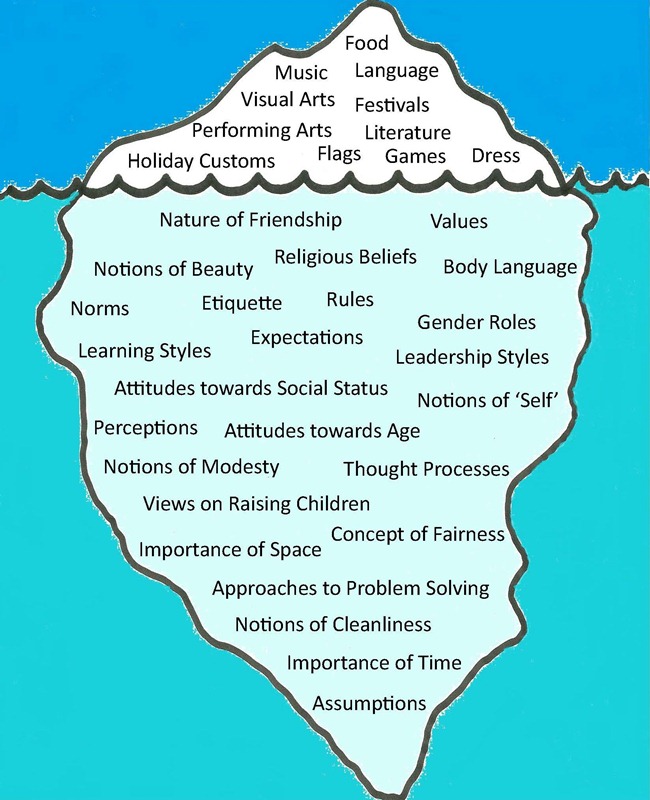
I'm a foreigner myself. Even though I grew up in the U.S. since age 5, the cultural difference between me and my wife (whose family immigrated here from Britain before the American Revolution) are stark. I think most Americans have a hard time understanding just how foreign their foreign-born acquaintances are, because many of the differences are below the surface: https://opengecko.com/geckoview/wp-content/uploads/2011/03/C....

This argument has no weight. First, a lot of people in the US are in favor of multi-cultural society: from St Patrick's (Irish) to Cinco de Mayo (Mexican), ... If anything, the US is a multi-cultural nation from the beginning: German was almost the official language of the US. Railroads would not have been built without the Chinese. NY pizza wouldn't exist without the Italians. And more. We need some laws obviously, but let's stop pretending the US is a single culture