Hacker News new | ask | show | jobs
by _delirium 5035 days ago
I do think what Apple does is important, but I don't think profits are really distributed in proportion to contribution, because the final product is an accumulation of work done by different people and companies, but there's no real accounting mechanism to distribute the profits accordingly (patents are a largely failed attempt at one).

The best place to be in business for profitability is to do that last 10-20% that produces a finished product, and Apple is great at that. The worst place is to do the first 50%, basic science which may enable great stuff in 20 or 40 years, but won't do much for your profits today. Hence why much of Silicon Valley is based around mining uncommercialized academic and research-lab work for raw material that can be turned, with additional work, into successful products. I don't think that means the raw material wasn't necessary or important (sometimes even key) to those products, though, so just looking at profits doesn't tell you the story.

1 comments

The last 20% of the work takes 80% of the Effort

--The 80/20 rule [Old saying]

Monetization does seem to be maximized at a bottleneck or stumbling block. Like bridge tolls. Or that final thing that makes the whole worth more than the sum of its parts. Apple does seem to do both.

I would say that closeness in time to commercialization is more important than bottlenecks per se: doing research that will enable great products in 20 years is rarely lucrative, because it's difficult to capture any of that future value (especially if it's further out than the length of patents, and often even if it's within that length).

So it's smarter (if you want to make a profit) to let someone else do that, e.g. someone who's paid as a researcher and isn't trying to turn a profit, and instead look for things that are 1-3 years out. You even see it within academia; applied math pays a lot more than pure math, for example, even though both are quite important to mathematical progress.

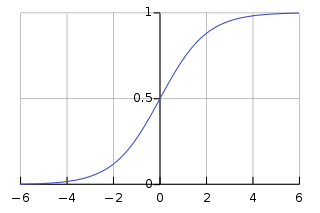
An interesting example of your case: the Art dealer. Despite doing none of the work of art, they collect 50% of the sale. I think the missing link here is that the effort involve in innovation is S-shaped. [1] Like in your idea of original research, The original idea or creative spark, overcoming inertia. etc. Next, there is a lot of stuff to do to get it roughed out, but many competent people that would not have the genius to originate the idea, can/do help move it along. But then their is finishing and integration, and again for this you need a master (eg, steve jobs). Likewise, with a business. In business, the last step is sometimes looking like the art dealer. A bottleneck? Yes. But being an art-dealer is still a bit of work. They have to make it marketable. They have to market it. There is a needle in a haystack problem. There is knowing about the haystack (rolodex), doing the legwork to meet clients. Then running the shows, exhibiting, writing about the "value" and context of the work. Etc. The pay (like you say) is higher than what seems reasonable. (Although, perhaps not as easy as it seems.)

[1] http://upload.wikimedia.org/wikipedia/commons/thumb/8/88/Log...